
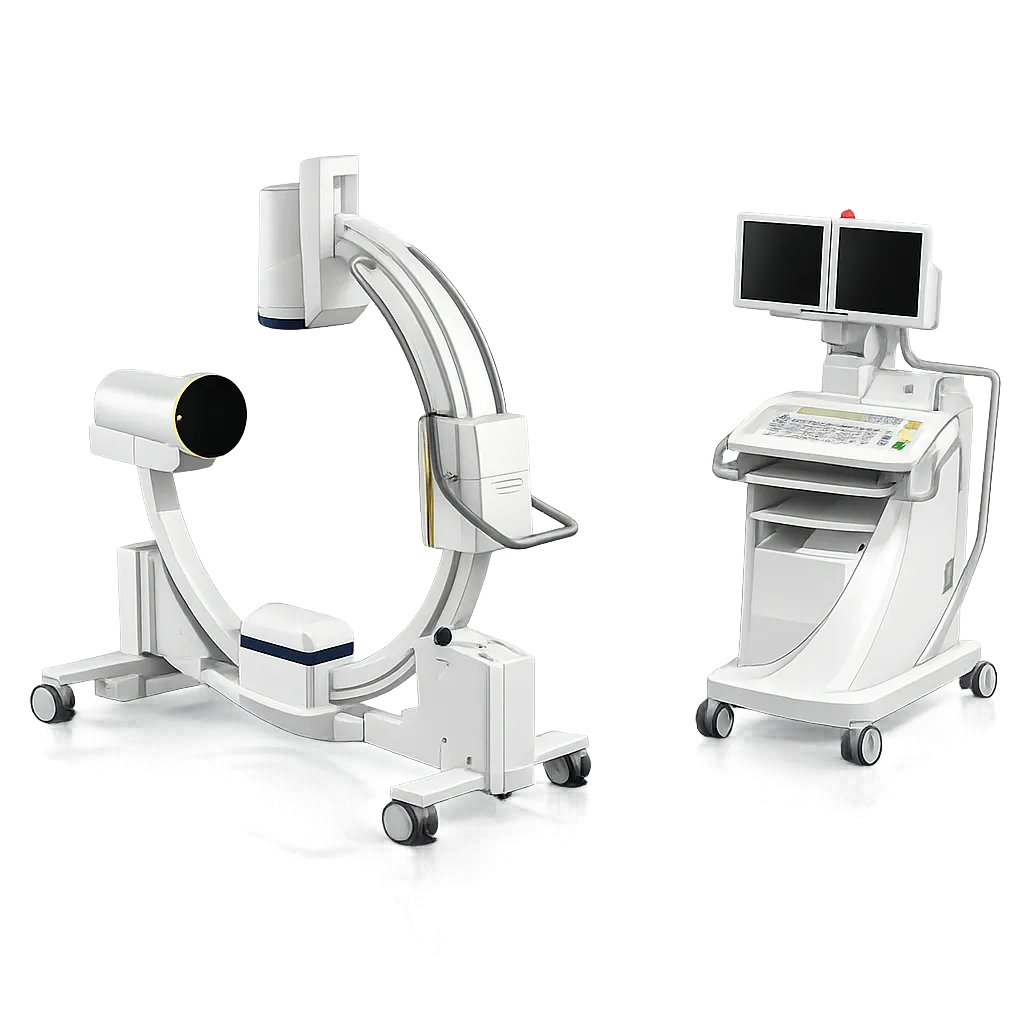
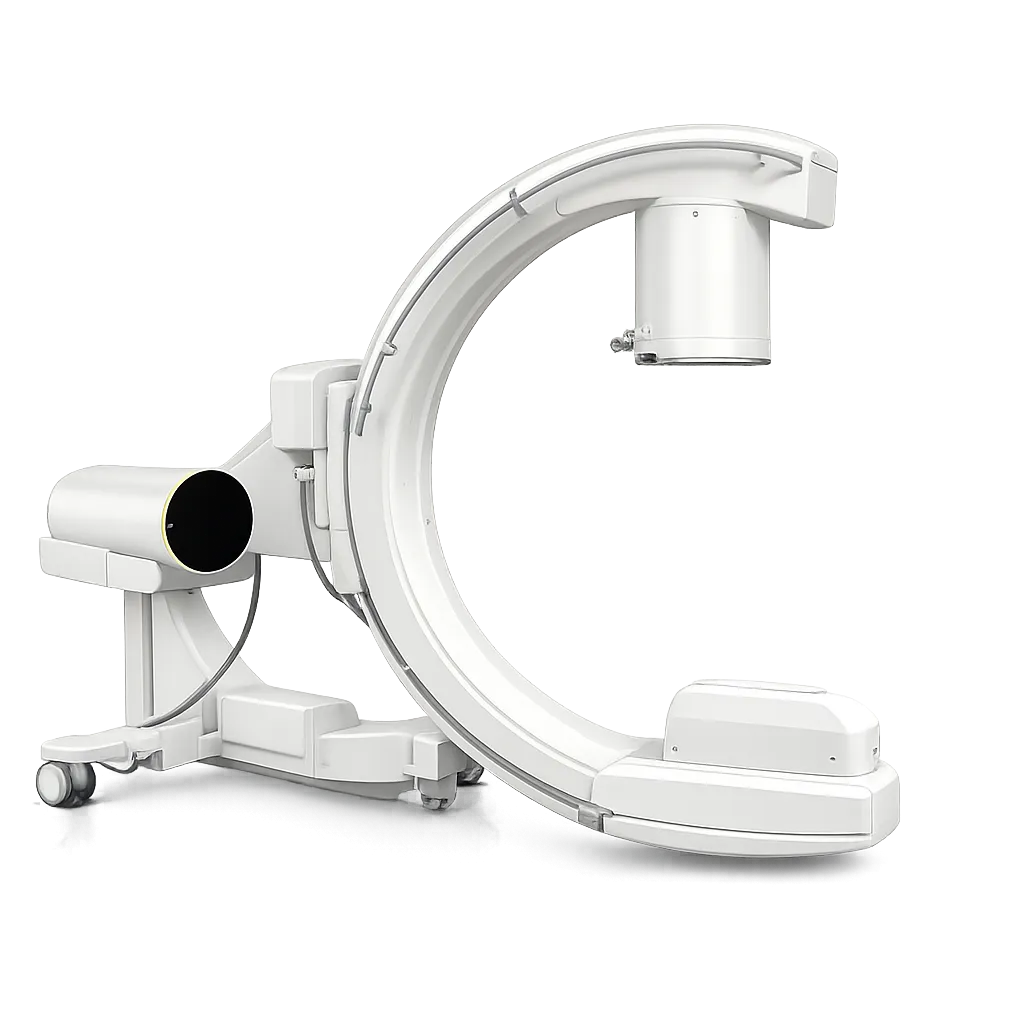
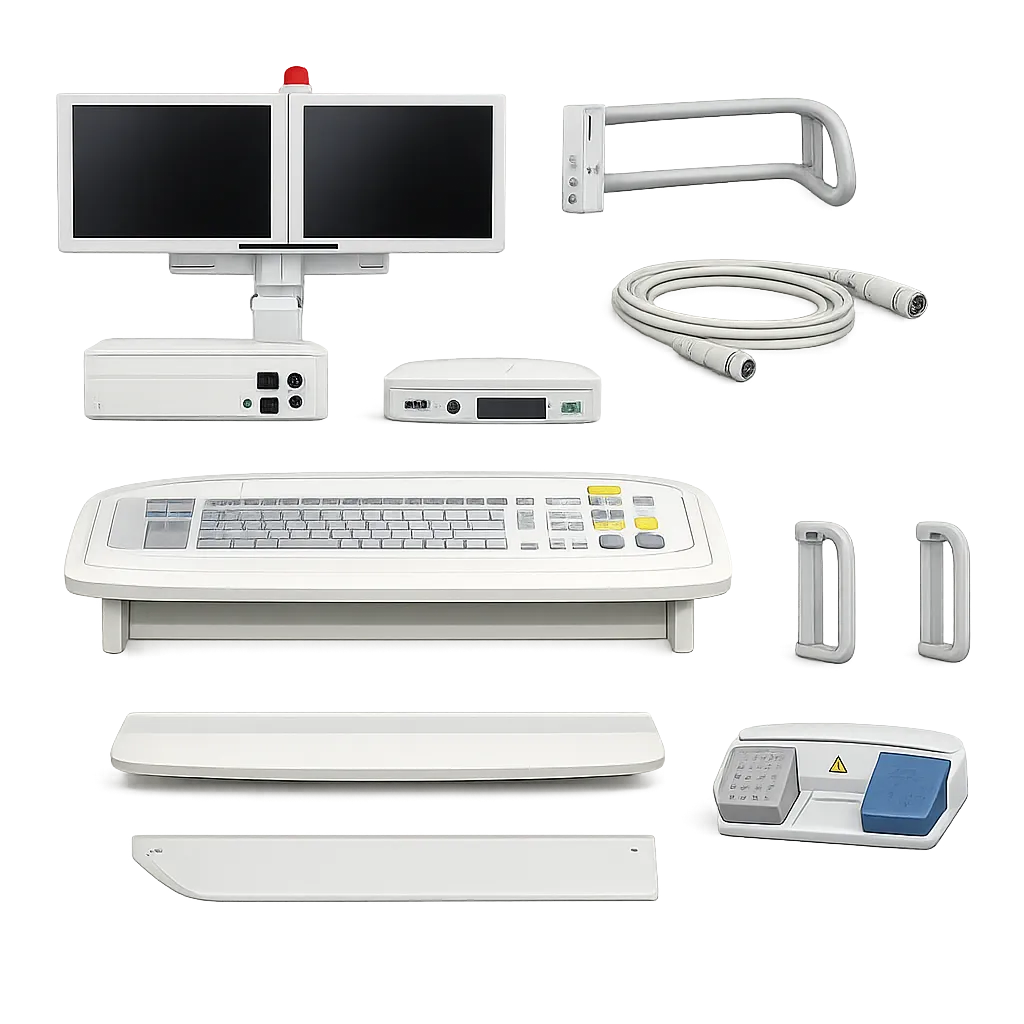
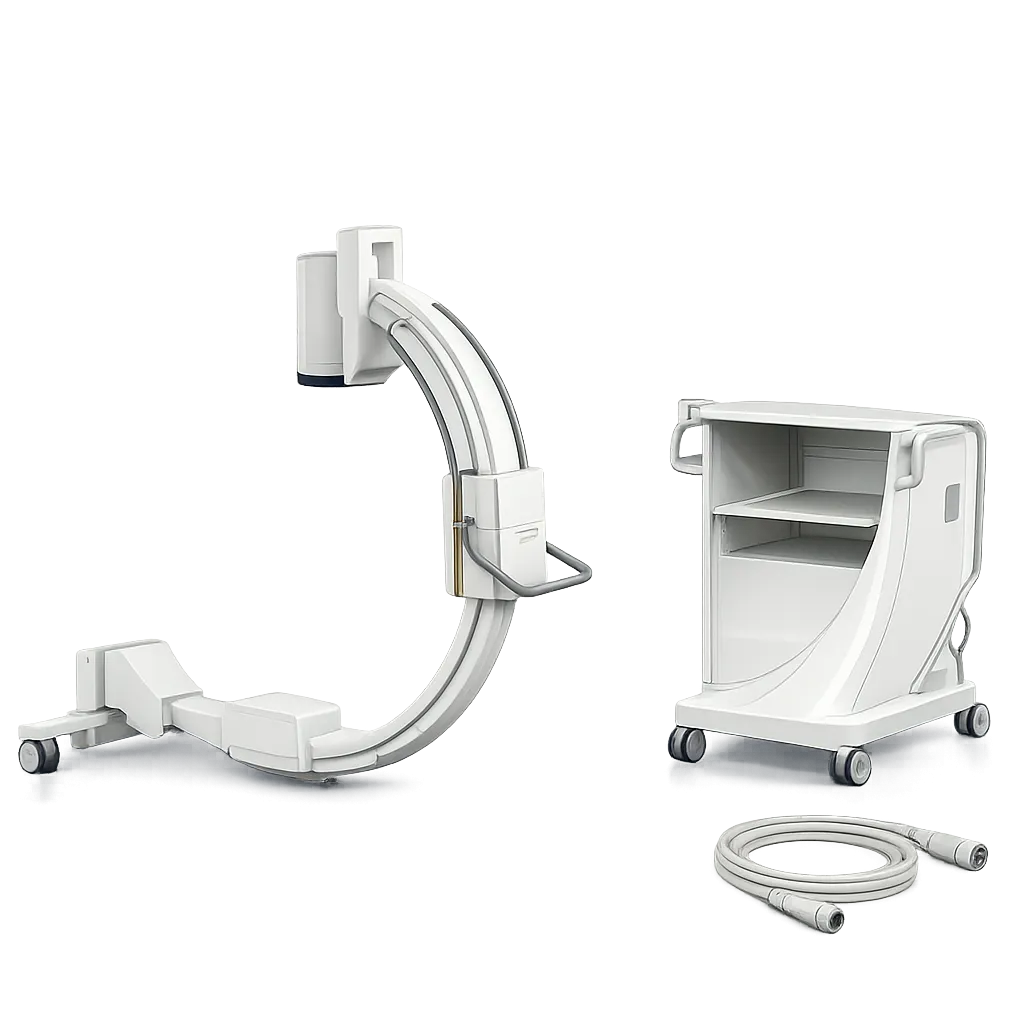
Orthopaedic and trauma surgery is the environment the manufacturer built this for, and guide wire and implant placement is where simultaneous planes matter most. On a conventional system a wire is advanced, the arm rotated to check the second plane, and rotated back, repeatedly. With both projections available at once the advance can be watched in both planes as it happens rather than checked in one and verified in the other. All clinical judgement, including whether an exposure is justified, remains with the operating surgeon, and Medigear.uk supplies configuration and condition detail rather than clinical guidance.
Theatres concerned with sterility should weigh the draping point seriously. A stand that stays fixed through a case is draped once, where a rotating arm sweeping through the operative field presents a contamination risk on every rotation. That risk is normally managed through care and time rather than removed, and a fixed stand removes the mechanism itself.
Services counting dose benefit from what the fixed geometry avoids. Repositioning an arm under live screening is exposure spent finding a view rather than examining one, and eliminating the rotation eliminates that expenditure at every plane change. Across a procedure involving repeated changes between planes, that accumulates rather than occurring once.
Buyers should plan a different condition assessment from a single-plane system. Two X-ray tubes and two imaging chains mean twice the wearing components, and Medigear.uk reports each chain separately in figures rather than assessing the machine as a whole. A system performing well in one plane and poorly in the other is not delivering what was bought.