
The MOBILETT XP Digital is commonly used for:
- Bedside radiography in hospital wards
- Intensive Care Units (ICU)
- Emergency and trauma imaging
- Post-operative examinations
- Chest and lung imaging
- Abdominal X-rays
- Orthopedic imaging for immobile patients
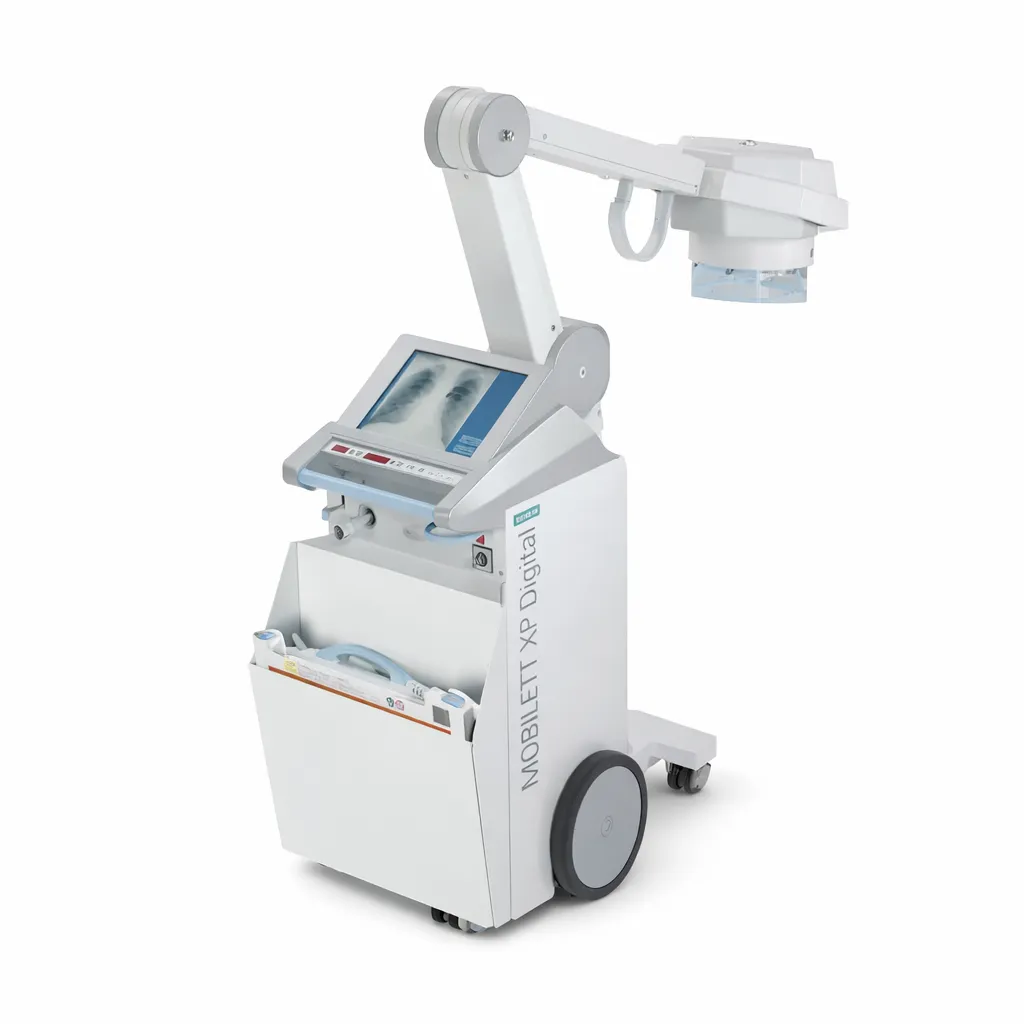
Trusted digital imaging, wherever the patient is.
The MOBILETT XP Digital is a mobile digital X-ray scanner designed for reliable bedside imaging in hospitals. It delivers consistent image quality, smooth mobility, and efficient digital workflow for routine and emergency radiography.
The MOBILETT XP Digital mobile scanner is built to support fast and accurate radiographic examinations directly at the patient’s location. It is especially useful for patients who cannot be easily moved, such as those in intensive care units, emergency rooms, or post-surgical wards.
The system combines a proven X-ray generator with digital imaging technology to produce clear diagnostic images while maintaining controlled radiation exposure. Its compact structure and well-balanced design allow easy movement through hospital corridors and tight clinical spaces.
With simple controls and dependable performance, MOBILETT XP Digital helps radiology teams complete daily imaging tasks efficiently while maintaining patient comfort and safety.
Key Features
The MOBILETT XP Digital is commonly used for:
1. What is the MOBILETT XP Digital used for?
It is used for mobile digital X-ray imaging at the patient’s bedside.
2. Is it suitable for ICU and emergency use?
Yes, it is designed specifically for ICU, emergency, and ward imaging.
3. Does it support digital image storage?
Yes, images can be stored and shared through digital systems such as PACS.
4. What examinations can be performed?
Chest, abdomen, orthopedic, and general radiographic examinations.
5. Is the system easy to move?
Yes, its compact and balanced design allows smooth movement in hospitals.
6. Does it reduce patient transport risks?
Yes, bedside imaging minimizes patient movement and associated risks.
7. Is special training required?
Only basic operator training is needed due to its user-friendly controls.
8. Is the image quality suitable for diagnosis?
Yes, it provides reliable image quality for routine clinical diagnosis.