
- Assessment of urethral strictures
- Detection and surveillance of bladder tumors
- Investigation of recurrent urinary tract issues
- Biopsy of suspicious lesions
- Post operative monitoring in urology patients
Richard Wolf Urethrocystoscope 8654.403
- Home
- Shop
- Medical Diagnostic Equipment
- Richard Wolf Urethrocystoscope 8654.403
Medical Diagnostic Equipment
Richard Wolf Urethrocystoscope 8654.403
Precision visualization for dependable urethral and bladder diagnostics
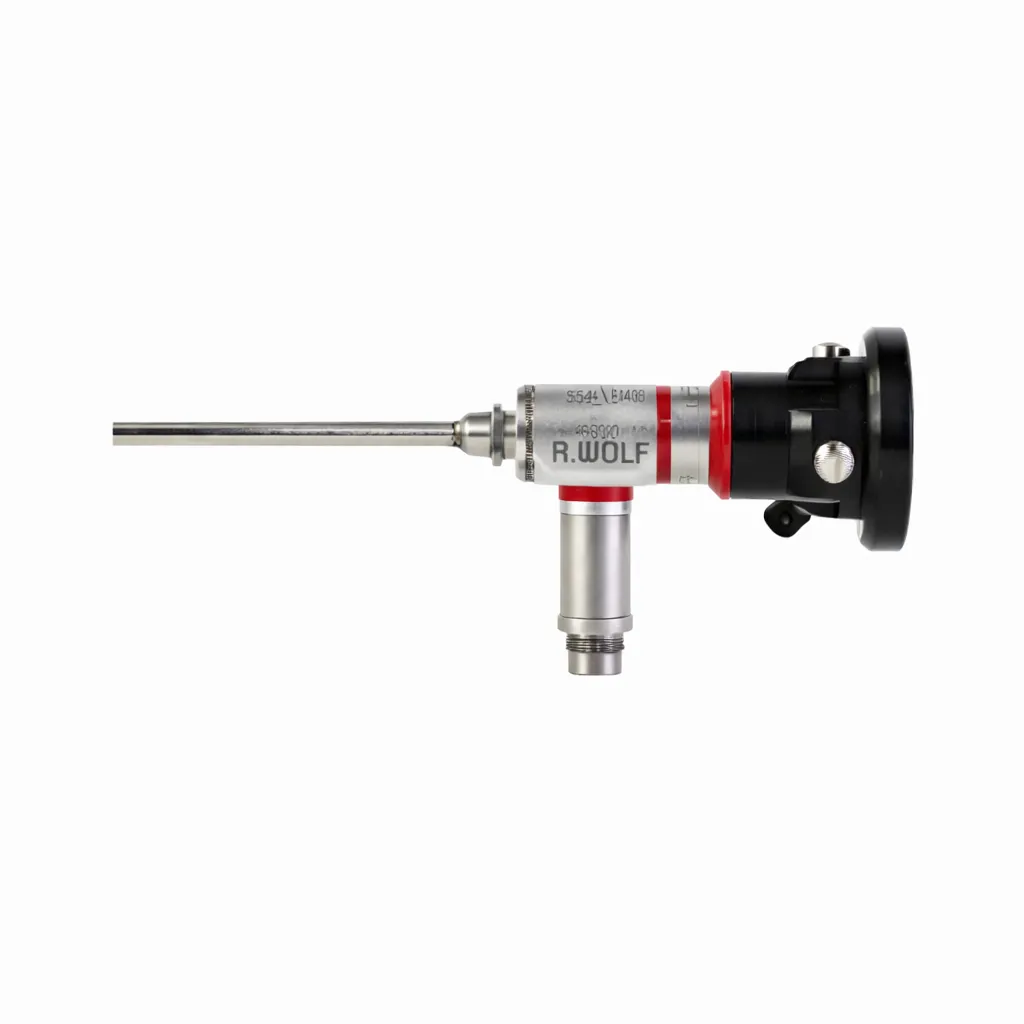
Richard Wolf Urethrocystoscope 8654.403 is a high quality rigid endoscope designed for clear and accurate visualization of the urethra and bladder. It delivers bright imaging, reliable handling, and consistent performance for routine and advanced urology procedures.
Richard Wolf Urethrocystoscope 8654.403 is a precision engineered rigid cystoscope created to support detailed evaluation of the lower urinary tract. Built with advanced optical components, it provides bright, sharp, and distortion free visualization of the bladder and urethral mucosa, enabling clinicians to detect lesions, strictures, stones, inflammation, and other pathologies with confidence.
The scope is designed with a durable stainless steel construction for long term clinical use. Its ergonomic body ensures stable handling, while the smooth insertion tube enhances procedural control. The instrument is compatible with standard sheaths and working elements, supporting the use of biopsy forceps, graspers, and other diagnostic accessories when required.
Ideal for hospitals, urology clinics, and ambulatory procedure units, the 8654.403 offers dependable performance for both diagnostic and selected therapeutic procedures.
- Rigid design provides stable and precise control
- Versatile compatibility with accessories
- Reliable performance in high volume clinical environments
- Durable construction for long service life
- Suitable for both routine and advanced urological evaluations
1. What is Richard Wolf Urethrocystoscope 8654.403 used for
It is used for visual examination of the urethra and bladder during diagnostic cystoscopy and urethroscopy.
2. Does this instrument offer clear visualization
Yes, it provides bright and sharp imaging using high quality optical components.
3. Is it a rigid cystoscope
Yes, it is a rigid endoscope designed for precise, controlled navigation.
4. Can biopsy instruments be used with it
Yes, it is compatible with standard working sheaths and biopsy accessories.
5. Is it suitable for detecting bladder tumors
Yes, it supports identification and monitoring of bladder lesions and abnormalities.