
The BV ENDURA is commonly used in:
- Orthopaedic and trauma surgery
- Spine procedures
- Fracture fixation and reduction
- Pain management imaging
- Vascular and soft-tissue imaging
- Intraoperative procedural guidance
- Emergency surgical imaging
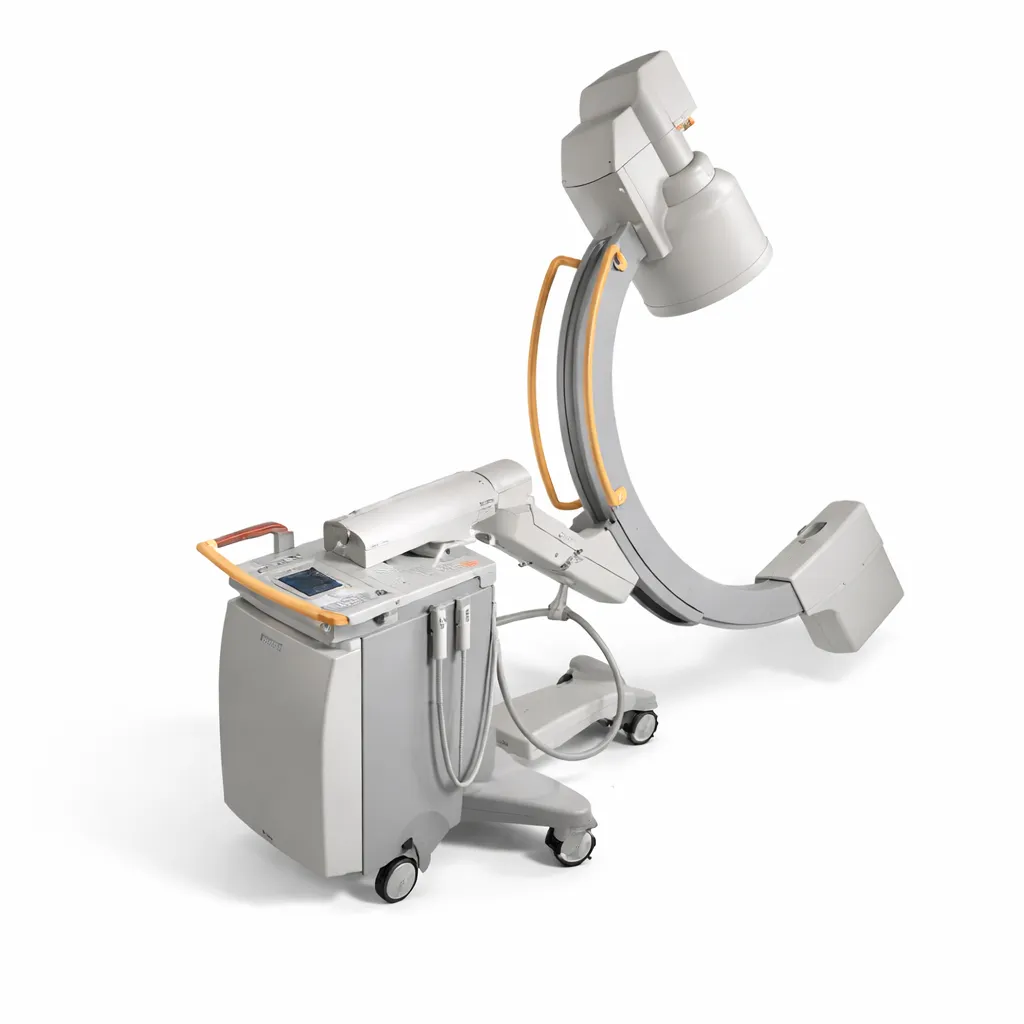
Dependable surgical imaging with real-time clarity.
The BV ENDURA is a mobile surgical C-arm fluoroscopy system designed to provide real-time imaging support for a wide range of intraoperative procedures. It is valued for its stable performance, dependable imaging quality, and ease of use in busy surgical environments.
The BV ENDURA mobile C-arm is a proven fluoroscopic imaging solution used in orthopaedic, trauma, spine, and general surgical procedures. Its robust mobile design allows surgical staff to position the C-arm around the patient with ease and obtain continuous real-time images displayed on high-contrast monitors.
Engineered for operating room performance, the system combines intuitive controls with reliable imaging workflow. The curved arm (C-arm) rotates smoothly to capture multiple projection angles without moving the patient, helping surgeons monitor progress and confirm implant placement or bone alignment during procedures.
The BV ENDURA supports digital imaging and integration with hospital PACS systems, making it suitable for clinical environments where consistency, reliability, and operational flexibility are priorities.
Key Features
The BV ENDURA is commonly used in:
1. What is the BV ENDURA used for?
It is used for real-time fluoroscopic imaging during surgical and interventional procedures.
2. Can it be moved easily in an OR?
Yes, it is designed with a mobile base for smooth positioning.
3. What specialties use this C-arm?
Orthopaedics, trauma, spine surgery, and pain management procedures.
4. Does it provide continuous imaging?
Yes, it delivers live fluoroscopic images during procedures.
5. Can images be stored digitally?
Yes, the system supports digital output and integration with PACS.
6. Is training required?
Basic surgical imaging training is recommended for safety and accuracy.
7. Does it improve procedural workflow?
Yes, its intuitive controls and mobility help streamline imaging.
8. Is it reliable for frequent use?
Yes, it is designed for consistent performance in clinical settings.