
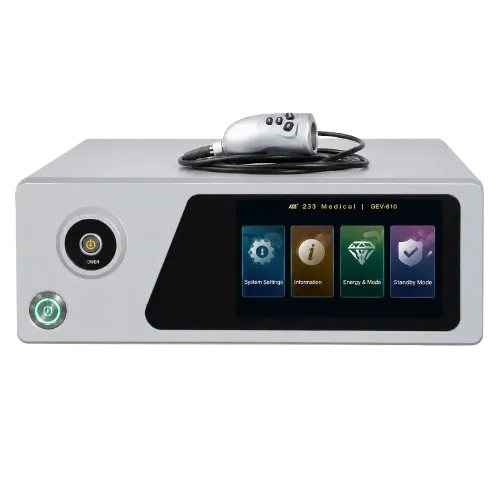
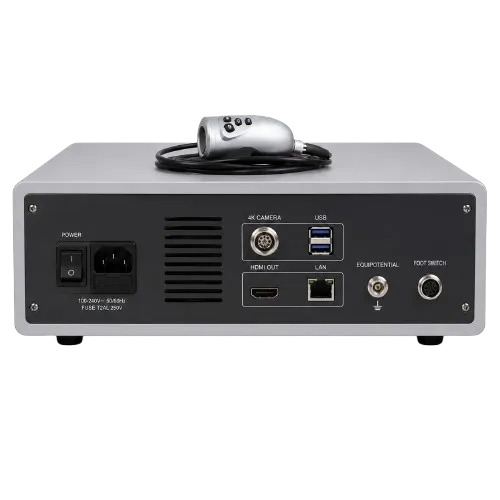
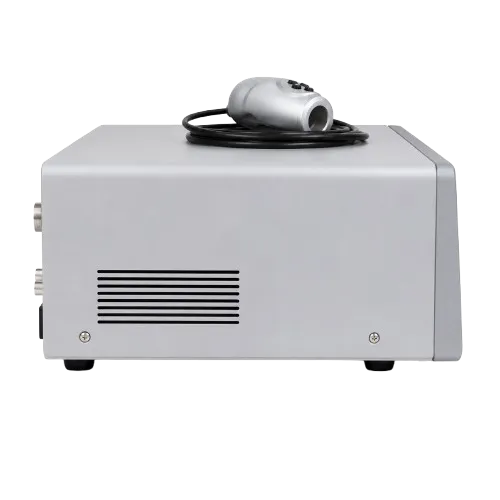
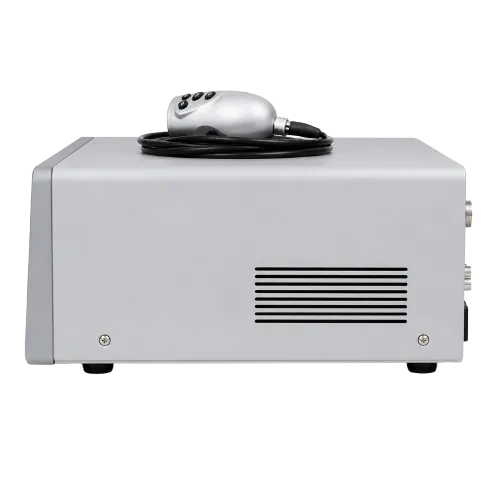
The GEV-610 / GEV-620 4K UHD Endoscopic Camera System serves UK NHS endoscopy units, day-case GI centres, hepatobiliary surgery teams, and private gastroenterology practices building or upgrading their endoscopy suite imaging chain to 4K UHD standard. The system addresses two clinical roles in a typical UK endoscopy suite: direct visualisation through eyepiece-coupled scopes used in specific GI procedures, and broader endoscopy tower display, recording, and integration infrastructure that sits alongside the main chip-on-tip flexible scope workflow.
In ERCP (endoscopic retrograde cholangiopancreatography), the GEV-610 / GEV-620 pairs with eyepiece-coupled cholangioscopes for direct bile duct visualisation during difficult stone management, indeterminate biliary stricture assessment, and selective duct cannulation. Direct cholangioscopy (mother-baby scope technique with SpyGlass or equivalent eyepiece-coupled cholangioscope), choledochoscopy during open or laparoscopic common bile duct exploration, and percutaneous transhepatic cholangioscopy (PTCS) all benefit from the 4K resolution improvement in mucosal pattern visualisation. Hepatobiliary surgery teams running an integrated ERCP and surgical bile duct exploration service find the multi-modality coverage particularly useful.
For older fiberoptic flexible scope inventory still in service in some UK endoscopy units, the GEV-610 / GEV-620 provides a path to extract 4K-grade imaging from existing eyepiece-coupled gastroscopes, sigmoidoscopes, and bronchoscopes — supporting transition strategies where full chip-on-tip scope replacement is staged across multiple budget cycles. The 0.3 lux low-light sensitivity matters here particularly because older fiberoptic scopes deliver less light to the eyepiece than modern chip-on-tip designs.
In rigid sigmoidoscopy, oesophagoscopy, and anoscopy procedures performed in outpatient and day-case settings, the eyepiece-coupled imaging chain supports photographic and video documentation of findings for medical record, MDT review, and patient consultation purposes. The compact CCU footprint suits the smaller cart layouts typical in these outpatient settings.
For the broader endoscopy suite role, the CCU acts as recording, display routing, and integration infrastructure alongside the proprietary chip-on-tip processors used for modern flexible scope work. The dual USB 3.0 recording supports BCSP (Bowel Cancer Screening Programme) audit archive, JAG (Joint Advisory Group on GI Endoscopy) accreditation evidence files, MDT preparation video, and training material capture. The LAN streaming output supports integration with endoscopy reporting systems (Endobase, Endosoft, and equivalents), PACS connectivity, and remote viewing for teaching and second-opinion review.