
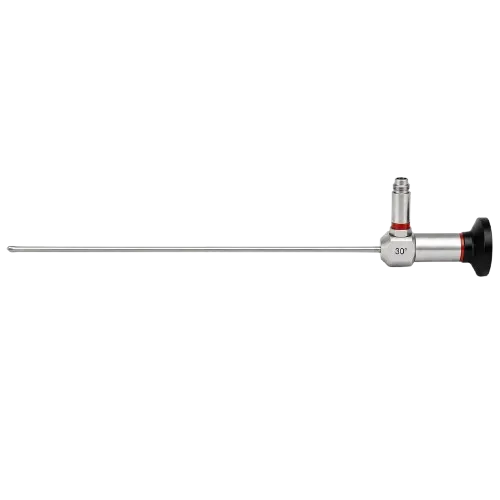
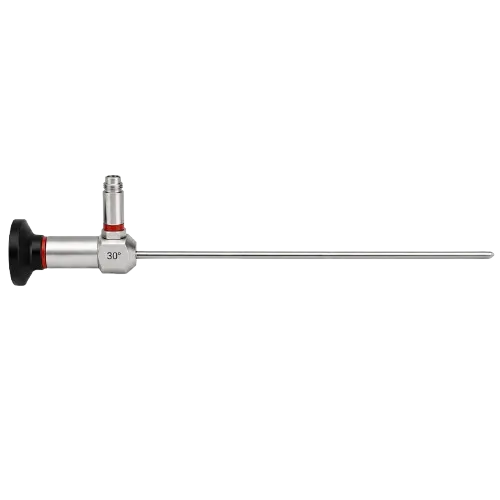
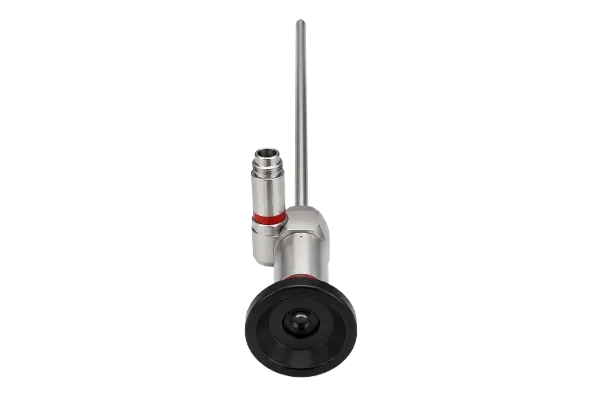
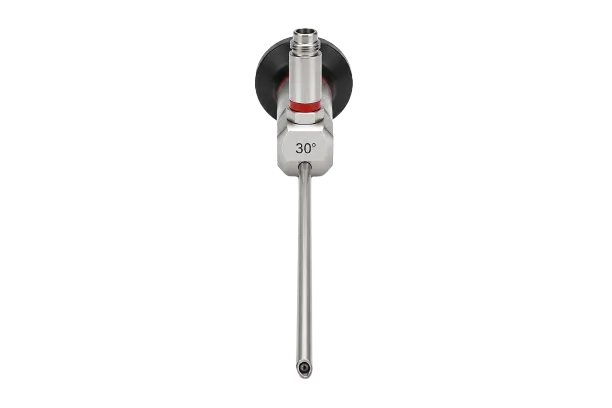
The 233 Medical G-F0002 serves UK orthopaedic theatres, paediatric surgical units, gynaecological practices, and mini-laparoscopy and single-port surgery centres. The 5 mm 30° angled configuration is the workhorse rigid telescope choice across these specialties, supporting the daily case mix where 10 mm laparoscopes are oversized and smaller-anatomy access is the defining requirement.
In orthopaedic arthroscopy, the G-F0002 supports knee arthroscopy (the highest-volume arthroscopic procedure in UK surgical practice — diagnostic, partial meniscectomy, anterior cruciate ligament reconstruction, chondroplasty), shoulder arthroscopy (rotator cuff repair, labral repair, subacromial decompression, capsular release), ankle arthroscopy, elbow arthroscopy, and selected hip arthroscopy cases. Joint cavity anatomy curves away from arthroscopic port entry, making the 30° angled view essential for thorough cavity inspection and instrumented work.
In paediatric surgery, the 5 mm telescope is the standard size across most procedures because paediatric abdominal cavities accommodate it comfortably while adult-size 10 mm scopes are oversized for many children's procedures. Applications include paediatric appendectomy, pyloric stenosis repair, undescended testis (orchidopexy and intra-abdominal testis assessment), inguinal hernia repair, gastro-oesophageal reflux surgery (Nissen fundoplication), and diagnostic laparoscopy across the paediatric age range.
In gynaecology, the 5 mm telescope supports operative hysteroscopy (with appropriate outer sheath system for fluid management and operative-channel access), mini-laparoscopy for cosmetic-priority procedures including tubal ligation and ovarian cyst removal in slim patients, and diagnostic laparoscopy where small-anatomy access is preferred. Some gynaecological suites stock both 5 mm and 10 mm scopes for case-specific selection.
In adult general surgery, the 5 mm scope finds growing use in mini-laparoscopic cholecystectomy and hernia repair where cosmetic priority drives smaller-port technique. Single-port surgery and reduced-port approaches use the 5 mm scope as the visualisation telescope alongside 5 mm instruments through a single fascial entry point. These advanced technique approaches require additional operator training and specialised port systems beyond the telescope itself.