Modern healthcare is increasingly adopting wireless medical equipment to improve patient mobility, operational efficiency, and data-driven clinical decision-making. Wireless technologies reduce reliance on cables, enable remote monitoring, and facilitate communication between medical devices and healthcare information systems.
For medical equipment procurement professionals worldwide, wireless medical equipment offers opportunities to improve healthcare delivery but requires careful consideration of connectivity, cybersecurity, interoperability, maintenance, and long-term operational reliability. Large teaching hospitals, specialist clinics, diagnostic centres, emergency services, and community healthcare providers continue investing in wireless healthcare technologies.
Why Wireless Medical Equipment Matters
Healthcare environments require flexible equipment that supports efficient patient care and operational workflows.
Improved patient mobility — Wireless devices reduce cable management challenges and allow greater freedom during patient care. In practice, procurement teams often evaluate connectivity reliability alongside clinical performance.
Operational efficiency — Wireless communication supports automatic data transfer and equipment management.
Connected healthcare delivery — Wireless technologies integrate medical devices with hospital information systems and digital healthcare platforms.
Healthcare organisations sourcing through regulated and certified equipment suppliers worldwide increasingly assess wireless capabilities alongside compliance with applicable local regulatory standards.
Wireless Patient Monitoring Systems
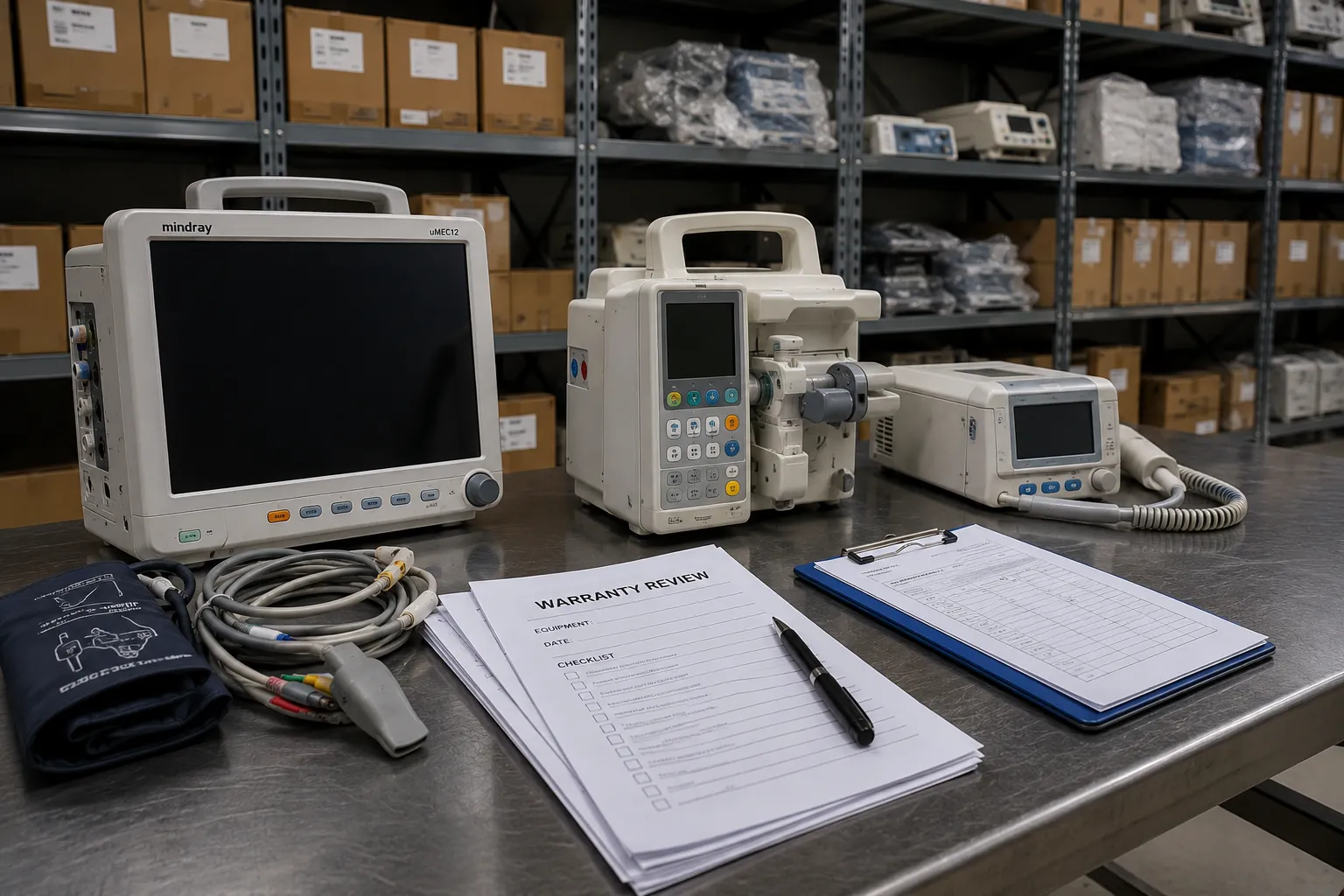
Patient monitoring remains one of the largest applications of wireless medical technology.
Continuous physiological monitoring — Wireless monitors collect and transmit patient information in real time.
Flexible patient management — Portable systems support inpatient, outpatient, and home healthcare environments.
Clinical workflow support — Experienced procurement managers compare connectivity options, battery life, and interoperability.
Common applications include:
-
Cardiac monitoring
-
Blood pressure monitoring
-
Pulse oximetry
-
Respiratory monitoring
-
Temperature monitoring
Wireless Infusion Pumps
Infusion technology increasingly incorporates wireless communication.
Connected medication delivery — Wireless systems communicate with healthcare information platforms.
Operational efficiency — Healthcare teams can monitor equipment status remotely.
Technology integration — Facilities often evaluate software compatibility and cybersecurity requirements.
Healthcare organisations commonly compare:
-
Connectivity standards
-
Battery performance
-
Alarm systems
-
Software integration
-
Technical support
Wireless Portable Ultrasound Systems
Portable ultrasound technology continues to become more compact and connected.
Point-of-care imaging — Wireless probes improve mobility across healthcare environments.
Rapid diagnostic capability — Portable systems support emergency medicine, critical care, and outpatient services.
Operational flexibility — Experienced clinical supply managers evaluate image quality, connectivity, and software support.
Wireless Wearable Medical Devices
Wearable healthcare technologies continue expanding across modern healthcare systems.
Continuous patient monitoring — Wearable devices collect physiological information throughout daily activities.
Remote healthcare support — Wireless communication enables long-term patient observation.
Patient engagement opportunities — Healthcare facilities compare comfort, battery life, connectivity, and cybersecurity.
Applications include:
-
Cardiac monitoring
-
Activity tracking
-
Sleep assessment
-
Rehabilitation monitoring
-
Chronic disease management
Wireless Asset Tracking Systems
Wireless technologies support healthcare equipment management.
Real-time equipment location — Wireless tags track medical equipment throughout healthcare facilities.
Operational planning — Healthcare organisations improve equipment availability and resource allocation.
Asset management integration — One aspect that surprises first-time buyers is the importance of integrating tracking platforms with existing biomedical engineering systems.
Wireless Surgical Equipment
Wireless technologies are gradually being incorporated into surgical environments to improve workflow flexibility and equipment management.
Cable-free operation support — Wireless connectivity reduces cable congestion within operating theatres and supports equipment mobility. Experienced surgical teams often value systems that simplify equipment setup and positioning.
Integrated surgical workflows — Wireless communication allows equipment to exchange information with operating room management platforms.
Technology planning — Healthcare organisations frequently evaluate connectivity stability, cybersecurity, and compatibility with existing surgical infrastructure.
Healthcare facilities commonly compare:
-
Wireless protocols
-
Equipment compatibility
-
Data transmission
-
Security features
-
Technical support
Wireless Remote Patient Monitoring
Remote patient monitoring continues to expand through wireless healthcare technologies.
Continuous patient observation — Wireless devices collect physiological information from patients outside traditional healthcare settings.
Real-time communication — Healthcare professionals receive patient information through connected digital platforms.
Extended healthcare delivery — Wireless monitoring supports chronic disease management, rehabilitation, and post-discharge follow-up.
Healthcare organisations commonly evaluate:
-
Device compatibility
-
Connectivity reliability
-
Battery performance
-
Data protection
-
Platform integration
Wireless Smart Hospitals
Smart hospitals increasingly depend on wireless communication between healthcare systems.
Connected medical devices — Wireless equipment exchanges information across healthcare departments.
Operational efficiency — Healthcare facilities use wireless networks to improve patient flow and equipment utilisation.
Resource management — Connected technologies support hospital asset tracking and workflow optimisation.
Healthcare facilities often compare:
-
Network infrastructure
-
Device compatibility
-
Data management
-
Analytics capability
-
Cybersecurity measures
Artificial Intelligence and Wireless Medical Equipment
Artificial intelligence increasingly complements wireless healthcare technologies.
Advanced information analysis — AI systems process data collected from wireless medical devices.
Predictive healthcare support — Combined technologies assist healthcare professionals with operational and clinical planning.
Equipment management optimisation — Experienced procurement managers often evaluate AI integration alongside wireless connectivity and software support.
Healthcare organisations commonly assess:
-
AI compatibility
-
Data analytics
-
Software integration
-
Security controls
-
Technical updates
Wireless Healthcare Asset Management
Wireless technologies support medical equipment management across healthcare facilities.
Real-time equipment tracking — Wireless platforms monitor equipment location and operational status.
Predictive maintenance support — Connected systems assist biomedical engineering teams in scheduling maintenance.
Operational visibility — Healthcare organisations use wireless asset management systems to improve equipment availability and resource planning.
Procurement considerations include:
-
Tracking technology
-
Reporting platforms
-
Maintenance integration
-
Analytics capability
-
Cybersecurity protection
Choosing Wireless Medical Equipment
Healthcare organisations investing in wireless technologies should balance innovation with operational requirements.
Clinical and operational priorities — Large healthcare networks may require enterprise-wide wireless infrastructure, while smaller facilities often prioritise portable patient monitoring and connected diagnostic equipment.
During procurement evaluations, many healthcare equipment vendors advertising across global markets recognise that healthcare organisations increasingly request evidence regarding interoperability, wireless security, software support, battery performance, and long-term technical assistance.
Infrastructure compatibility — Procurement teams carefully evaluate integration with hospital information systems, digital healthcare platforms, and biomedical engineering operations.
Lifecycle planning — Experienced clinical supply managers assess software updates, maintenance schedules, connectivity standards, training requirements, and scalability before purchasing decisions.
Healthcare organisations operating multiple facilities frequently discover that establishing international healthcare distribution partnership programmes supports technology standardisation and coordinated technical support.
Emerging Trends in Wireless Medical Equipment
Fifth-Generation Wireless Connectivity- Advanced wireless communication technologies continue to expand healthcare applications.
Faster information exchange — Improved connectivity supports real-time healthcare operations.
Internet of Medical Things- Wireless medical devices increasingly form connected healthcare ecosystems.
Continuous communication — Connected equipment improves operational visibility across healthcare facilities.
Artificial Intelligence Integration- AI and wireless technologies increasingly work together.
Intelligent healthcare operations — Combined technologies support data-driven decision-making.
Home Healthcare Expansion
Wireless equipment supports healthcare delivery beyond traditional hospital settings.
Flexible patient care — Portable wireless technologies improve healthcare accessibility across diverse environments.
Final Thoughts
Wireless medical equipment is transforming healthcare delivery by improving mobility, connectivity, operational efficiency, and patient monitoring capabilities. From wearable devices and portable imaging systems to smart hospitals and remote patient monitoring platforms, wireless technologies support more flexible and connected healthcare environments.
In practice, procurement teams often achieve the best long-term value by selecting wireless medical equipment that combines interoperability, cybersecurity, battery performance, technical support, predictive maintenance capabilities, and scalability. Healthcare facilities that align wireless technology investments with clinical and operational objectives are generally better positioned to support modern healthcare delivery.
Disclaimer
Medigear.uk is a global medical equipment supplier, exporter, and distributor. The content published on this site is intended for educational and product awareness purposes only. Nothing on this page constitutes medical advice, clinical guidance, or treatment recommendations. All healthcare procurement and clinical decisions should be made by qualified medical professionals and compliant procurement teams operating within the regulatory frameworks of their respective countries.