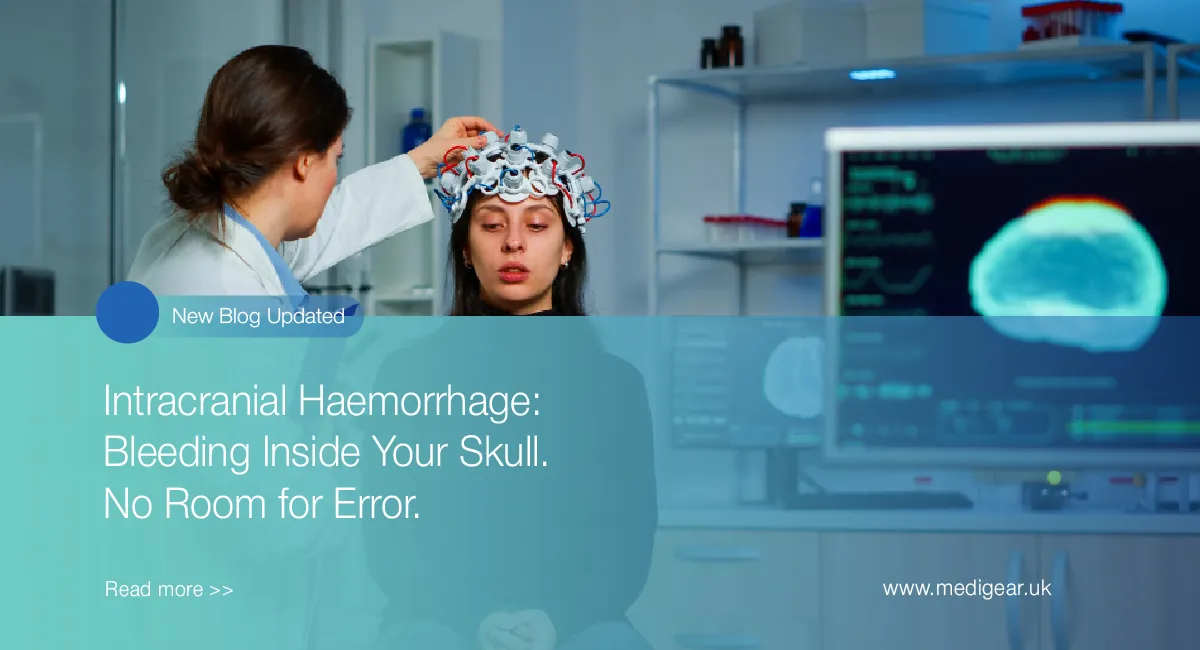
What happens when blood goes where it was never meant to be? Inside the skull. Outside the vessels. Pressing on the brain. The skull is a closed box. Fixed volume. The brain fills it. Blood leaks in. Compresses. Displaces. Crushes. The brain controls everything. Breathing. Heartbeat. Consciousness. Movement. Speech. Pressure rises. Space runs out. Function fails. That is an intracranial haemorrhage. Blood inside the skull. No room for it. No room for error. Intracranial haemorrhage does not wait.
He was sixty-two. Hypertensive. Poorly controlled. Collapsed at home. Kitchen floor. The right side is not moving. Not speaking. Eyes pulled left. Ambulance within minutes. CT within thirty. Large left basal ganglia bleed. Midline shift. Blood torn through brain tissue. Pressure rising. Neurosurgery reviewed. Too deep to evacuate. Medical management. ICP monitoring. BP control. He survived. But the right side that stopped moving on the kitchen floor never fully moved again.
This guide explains intracranial haemorrhage with the urgency it demands. How bleeding starts, what pressure does to the brain, who is at risk, what the signs are, how diagnosis works, and how the right clinical equipment supports the emergency care of patients with intracranial haemorrhage. Medigear supplies certified monitoring and diagnostic equipment to hospitals and clinics across the UK — because an intracranial haemorrhage diagnosed and managed within minutes changes outcome. Delayed, the pressure rises, and the brain that could have been saved is lost.
Extradural and Subdural
Intracranial haemorrhage — bleeding inside the skull. Classified by where. Extradural — between the skull and the dura. Usually arterial. Usually trauma. Middle meningeal artery tears. Blood pools fast. Classic pattern — lucid interval. Knocked out. Wakes up. Then deteriorates as blood expands. Neurosurgical emergency. Evacuate, or the patient herniates. Dies. Subdural — between the dura mater and the brain surface. Usually venous. Acute follows trauma. High mortality. Chronic develops weeks after a minor bump. Elderly. Anticoagulated. Confusion. Headache. Slow decline. Hospitals and neurosurgical units sourcing certified monitoring equipment can explore the Medigear buyers portal, a pricing and procurement platform built for neurocritical care.
Subarachnoid
Subarachnoid haemorrhage — SAH — is bleeding into the space between the brain and the surrounding membranes. Classic cause — ruptured berry aneurysm. Thunderclap headache. Worst of the patient's life. Maximum in seconds. Neck stiff. Vomiting. Light hurts. Consciousness fading. A third die before hospital. A third was left disabled. The rest do well — if treated fast. CT head is first-line. CT negative, but suspicion stays? LP for xanthochromia. CT angio finds the aneurysm. Clip or coil. Bleed stopped. Every hour raises rebleed risk. Rebleed kills more than the first.
Intracerebral
Intracerebral haemorrhage — ICH — is bleeding directly into the brain tissue. Commonest cause — hypertension. Chronic high BP weakens small arteries. They rupture. Blood tears through brain tissue. Basal ganglia. Thalamus. Pons. Cerebellum. Classic sites. Bleed expands. Brain swells. Pressure rises. Midline shifts. The brainstem gets compressed. Breathing stops. Heart stops. Talking an hour ago. Dead now. Diagnostic equipment makers wanting to list CT scanners, monitors, and neurocritical care tools where emergency departments are searching can reach buyers through the Medigear advertising platform.
Risk Factors
Risk factors for intracranial haemorrhage overlap but differ by type. Hypertension is the dominant risk for ICH. Anticoagulants — warfarin, DOACs — increase risk across all types. Amyloid angiopathy causes lobar bleeds in the elderly. AVMs bleed at any age. Aneurysms cause SAH bleeds. Trauma causes extradural and acute subdural. Cocaine and amphetamines spike BP. Vessels rupture. Bleeding disorders drop the threshold. Patient on warfarin. INR of 8. Falls. Hits head. Intracranial haemorrhage risk demands CT. Even if they feel fine.
CT Imaging
CT head is the investigation. No delay. No waiting for symptoms to declare. Non-contrast CT shows acute blood as white. Inside the skull. Location. Volume. Shift. Hydrocephalus. All there. CT takes minutes. The diagnosis it gives changes everything. Extradural with shift — theatre now. SAH — angiography and clip or coil. Large ICH with herniation — medical or surgical, depending on location and volume. Thirty-minute scan saves. A four-hour scan may not. Our guide to cauda equina syndrome covers the emergency imaging protocols used when time-critical neurological conditions demand rapid diagnosis — the same urgency applies when blood is filling the skull.
Blood Pressure
Blood pressure management in intracranial haemorrhage is the balance between perfusion and expansion. Too high — bleed expands. Too low — unbled brain loses supply. Target systolic below 140. Labetalol IV. Nicardipine. Arterial line for accuracy. BP's years of ignoring caused this. BP in the first hours decides — grow or hold. Our guide to rhabdomyolysis covers the acute monitoring tools used in metabolic emergencies — the same arterial lines, vital signs screens, and hourly assessments tracking the intracranial haemorrhage patient through the critical first twenty-four hours.
Anticoagulant Reversal
Anticoagulant reversal is urgent when the bleed occurs on blood thinners. Warfarin — vitamin K. Prothrombin complex. INR reversed fast. DOACs — idarucizumab for dabigatran. Andexanet alfa for rivaroxaban and apixaban. The drug that stopped the stroke now feeds the bleed. Reverse it. Stop the bleeding from expanding. Reach out to our team for guidance on matching neurocritical monitoring and resuscitation equipment to your intracranial haemorrhage protocols.
Surgery
Surgery depends on the type and location. Extradural — craniotomy. Acute subdural — craniotomy. Chronic — burr holes. ICH — Surgery for superficial lobar bleeds is getting worse. Not deep. Surgery there does more harm. SAH — clip or coil. Prevent the rebleed. The decision is not whether to operate on the bleed. It is whether operating improves the outcome that surgery cannot promise. Suppliers of ICP monitors, CT-compatible equipment, surgical instruments, and neurocritical care devices can register via the Medigear supplier portal to connect with hospitals that manage intracranial haemorrhage pathways.
CT Speed
Can your A&E guarantee a CT head within thirty minutes for every patient presenting with sudden severe headache, acute neurological deficit, or reduced consciousness? Fast scan. Fast intracranial haemorrhage diagnosis. Delayed scan — the brain loses the window. Companies seeking long-term collaboration on neurocritical monitoring and diagnostic supply can explore the Medigear partnership programme for ongoing opportunities beyond a single order.
Rehabilitation
What does your rehabilitation team offer the intracranial haemorrhage patient who survives with a deficit? The right side that does not move. The speech that does not come. The swallow is unsafe. The bladder that does not control. Survival first. Function second. Starting rehab in week one gives the brain a chance to rewire. Start in month two, and the window for recovery has already narrowed.
GP Recognition
Does your GP know when to send a patient with a sudden headache for an emergency CT? Not every headache is an intracranial haemorrhage. But the one that arrives like a thunderclap — worst ever, instant, severe — is SAH until the CT says otherwise. GP who sends saves. Paracetamol and wait? Rebleeding may kill before diagnosis arrives.
Ambulance Pre-Alert
Can your ambulance service identify the signs of intracranial haemorrhage in the field and pre-alert the hospital? Sudden collapse. Focal deficit. Reduced consciousness. Vomiting. Hypertension. Crew calls ahead — CT team ready. Does not — adds the wait the brain cannot afford.
Anticoagulated Falls
Does your emergency department have a protocol for the anticoagulated patient who falls and hits their head? CT within one hour — even if the patient is alert and talking. An intracranial haemorrhage on anticoagulation may not show symptoms immediately. Bleed starts small. The drug keeps it growing. A delayed scan means the bleed declares itself before anyone finds it.
Surgical Judgement
Can your neurosurgical team distinguish the intracranial haemorrhage that surgery will save from the one it will not? Superficial and accessible — operate. Deep and devastating — manage medically. Operating on a deep basal ganglia bleed causes more harm than the blood did. Operating on an expanding extradural saves a life. Not about courage. Clinical judgement.
First Seventy-Two Hours
What does your ICU do for the intracranial haemorrhage patient in the first seventy-two hours? BP control. ICP monitoring. Neurological observations every fifteen minutes. Seizure prophylaxis where indicated. Glucose control. Temperature management. The brain that survived the initial bleed may not survive the secondary injury that poor management allows.
Stroke Differentiation
Does your stroke team differentiate intracranial haemorrhage from ischaemic stroke before giving thrombolysis? Thrombolysis saves in ischaemic stroke. In intracranial haemorrhage it kills. One CT separates them. Scan before treating — save. Treat before scanning — may destroy.
Every Minute
Every minute with blood pressing on the brain is a minute of brain dying under the pressure. The team that acts in minutes saves tissue. The one that acts in hours saves less. Intracranial haemorrhage is not a condition that waits for the morning round. It is the emergency that defines whether the brain the patient woke up with is the brain they will live with after.
Why Choose Medigear
Medigear supplies certified monitoring, diagnostic, and neurocritical care equipment to hospitals, emergency departments, and neurosurgical units across the UK. Whether you are equipping an acute stroke and haemorrhage pathway, upgrading neurocritical monitoring, or building emergency readiness for brain injuries, our team matches the right tools to your clinical need. Reach out to our team for guidance built around the patients whose skull is filling with blood — and the clinicians who must act before the pressure takes the brain.
Conclusion
What happens when blood fills the skull and the brain has nowhere to go? He was sixty-two. Collapsed. Right side gone. CT within thirty minutes — large basal ganglia bleed with midline shift. Too deep to evacuate. He survived. But the right side never fully moved again. The skull is a closed box. Blood leaks in. Pressure rises. Function fails. Extradural — evacuate or die. SAH — clip or coil before the rebleed. ICH — BP below 140 and watch or operate. CT in thirty minutes changes everything. Anticoagulant reversal within minutes stops the expansion. Every minute of blood on brain is a minute of brain dying. Medigear stands alongside neurocritical and emergency teams with certified monitoring and diagnostic equipment. Speak to our team today — because the skull has no room for the blood, and the team has no room for delay.
⚠️ This post is for general information only. We do not sell medications or provide prescriptions — Medigear.uk is a medical equipment supplier only.