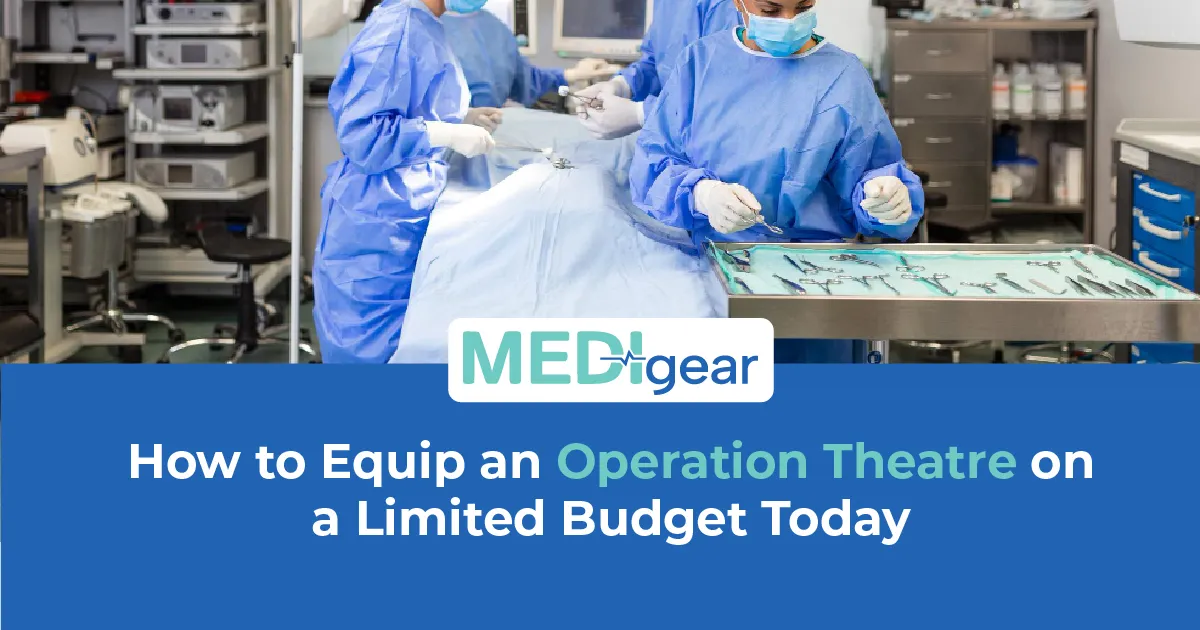
What does an operating theatre actually need — and what can wait? That is the question every clinic owner faces. Budget tight. The equipment list is long. The answer: buy the right things first. Not everything at once. The operating theatre, which opens with essentials, performs surgery on day one. The one waiting for every wish-list item never opens.
He was building a day surgery unit. Three theatres. Budget for two. Equip two fully and leave one empty? Or equip three smartly? He chose three. Tables — mid-range, electric, certified. Lights — LED, ceiling-mounted. Anaesthesia — new, ventilator, monitoring. Monitors — multiparameter. Diathermy — reliable, not top-range. Suction — wall-mounted. Autoclave — Type B. Skipped the control panels. Skipped laminar airflow. Skipped video recording. All three open. All three are performing. What mattered was there. What could wait did.
This guide covers how to equip an operating theatre on a limited budget with the honest detail that clinic owners, surgical planners, and procurement teams need. Medigear supplies certified operating theatre equipment to hospitals and clinics across the UK, and every point here comes from real clinical procurement. Facilities sourcing certified theatre equipment can explore the Medigear buyers portal for pricing, availability, and procurement built for surgical purchasing.
Operating Table
The operating table is the foundation. Every procedure happens on it. Electric height. Trendelenburg. Reverse. Lateral tilt. Sections for head, back, and legs. Radiolucent for imaging. Weight capacity matched to the patient population. Mid-range does everything premium does — without features used once a year. Buy for every day. Not for the brochure.
Surgical Lighting
Lighting must be bright, shadow-free, and cool. LED. Ceiling-mounted. Adjustable. Colour rendering above ninety-five CRI. Single dome covers most general and day work. Dual dome for deep cavity. Clear view saves patients. Shadows create doubt. LED lasts decades. No bulbs. No heat. Reach out to our team for guidance on matching operating theatre lighting to your surgical case mix and room layout.
Anaesthesia Machine
The anaesthesia machine keeps the patient alive during surgery. Ventilator. Vaporisers. Gas delivery. Monitoring is built in. New. Certified. Non-negotiable. Safety does not take shortcuts. Refurbished — fine if certified, tested, and warranted. Not the place to cut. Every breath comes through this device. Equipment manufacturers wanting to list operating theatre products where surgical units are searching can reach buyers through the Medigear advertising platform.
Patient Monitoring
Patient monitoring covers what the anaesthetist watches throughout. ECG. SpO2. NIBP. Capnography. Temperature. Five parameters cover the most general and day surgery. Invasive BP. Cardiac output. BIS. Add cost. Only for complex cases. Buy for the case mix. Not the catalogue. Five essentials for every patient cost a fraction of what they do for the rare one who needs them.
Diathermy
Electrosurgical units — diathermy — cut and coagulate tissue. Monopolar and bipolar. Mid-range handles general surgery, gynae, and ortho. Premium adds vessel-sealing. Day case mix may never use it. Buy the function needed now. Upgrade when the list grows.
Suction
Suction must be reliable. Strong enough to clear the field. Wall-mounted if piped. Portable if not. Backup in every operating theatre. Suction fails mid-procedure — flooded field, no alternative.
Autoclave
The autoclave sterilises the reusable instruments the theatre uses every day. Type B — wrapped, porous, hollow. Tested daily. Logged every cycle. Not optional. The autoclave is the backbone of infection control in the operating theatre. Second unit — even smaller — backup when the first is down.
Instruments
Instrument sets must match the procedures the theatre performs. General tray. Gynae tray. Ortho basics if needed. Buy trays for the first six months. Not every tray in the catalogue. Instruments unused in a cupboard cost the same. Return nothing. Our guide to cauda equina syndrome covers the emergency diagnostic equipment that must be available in every surgical unit — because the operating theatre must be ready for the complication, not just the planned procedure.
Furniture
Theatre furniture fills the gaps. Mayo tables. Trolleys. IV stands. Kick buckets. Linen skips. Bowl stands. Low cost. Cannot function without them. Buy quality. Not cheap that rusts and wobbles.
Recovery
Recovery must be budgeted alongside the operating theatre — not as an afterthought. Recovery trolley or bed. Monitor — SpO2 and NIBP minimum. Oxygen. Suction. Patient leaves the operating theatre, enters recovery. Unequipped recovery is an unsafe recovery. Our guide to rhabdomyolysis covers the acute monitoring tools needed when post-operative patients deteriorate — the same vital signs screens and oxygen systems that recovery rooms must have from day one.
Total Cost
Can your procurement team compare the total cost of ownership — not just purchase price? A cheap table serviced every six months costs more over five years than a mid-range table serviced yearly. Proprietary spares cost more per patient than universal ones. Total cost — purchase, service, consumables, lifespan. Only honest way to compare. Suppliers of operating tables, lights, monitors, anaesthesia machines, and surgical instruments can register through the Medigear supplier portal to connect with hospitals equipping operating theatres on managed budgets.
Phased Upgrade
Does your plan include a phased upgrade pathway — not just the opening day list? Phase one — essentials. Open. Operate. Phase two — advanced monitoring. Phase three — cameras. Digital records. The operation theatre that plans for growth equips smartly today. Upgrades when revenue justifies it. Companies seeking long-term collaboration on operating theatre supply, phased procurement, and servicing can explore the Medigear partnership programme for ongoing opportunities beyond a single order.
Training
Does your budget include training for every piece of equipment the theatre team will use? The nurse cannot position the table. Monitor the ODP that cannot be set up. With diathermy, the surgeon cannot troubleshoot. Equipment without training is equipment that the team works around. Training costs a day. Confidence lasts the life of the device.
Service Contracts
Does your procurement team negotiate service contracts at the point of purchase — not after? The supplier who includes two years of servicing in the capital price gives the operating theatre predictable costs from day one. The one who sells the device and charges separately for every service call creates surprises that the budget cannot absorb.
Opening Checklist
What does your operating theatre checklist include before the first patient enters? Equipment tested. Monitors calibrated. Suction confirmed. Anaesthesia machine checked by the anaesthetist. Surgical lights positioned. Autoclave validated. Instruments sterile and laid. Emergency drugs drawn. The first patient trusts that everything in the operating theatre works. The checklist proves it.
New vs Refurbished
Can your team distinguish between equipment that must be new and equipment that can be certified refurbished? Operating tables — refurbished, acceptable if certified. Anaesthesia machines — new preferred. Monitors — refurbished acceptable. Surgical lights — new preferred for LED longevity. The operation theatre that mixes new and refurbished smartly stretches the budget further than the one that insists on new for everything or risks uncertified for anything.
Replacement Timeline
Does your operating theatre have a clear equipment replacement timeline built into the business plan? Year one — operate with what was purchased. Year three — replace consumable-heavy items showing wear. Year five — reassess monitors, diathermy, and suction. Year seven — operating table service or replacement review. The operation theatre that plans replacement avoids the year when everything fails at once, and the budget collapses.
Donations
How does your team handle donations of operating theatre equipment from other hospitals or charities? Donated equipment must meet the same standards. Certified. Tested. Serviced. Warranted. No service history? Liability. Not a gift. Accept only what meets the standard that the patients deserve.
Consumables
Does your operating theatre budget include the consumables needed for the first three months of operating? Drapes. Gowns. Gloves. Sutures. Swabs. Blades. Anaesthetic drugs. IV fluids. The operating theatre that opens without consumable stock opens and immediately stops. Budget the first ninety days of consumables alongside the capital equipment. Not as a surprise on day two.
Contingency
What does your operating theatre contingency fund cover? The light that fails in month two. The monitor needs a replacement cable. The autoclave requires an unplanned service. Five to ten per cent of the capital budget is held back as contingency keeps the operation theatre running when the unexpected arrives. And it always arrives.
Leasing
Can your team identify which operation theatre equipment can be leased instead of purchased? Leasing spreads the cost. Frees capital for the items that must be owned outright. Monitors. Diathermy. Even anaesthesia machines in some cases. The operation theatre that leases smartly opens with more capability than the one that buys everything upfront on a budget that cannot stretch.
Budget Is a Sequence
The theatre that opens on budget is not the one that bought the cheapest equipment. It is the one that bought the right equipment at the right time and planned the rest for later. Budget is not a limit. It is a sequence.
Why Choose Medigear
Medigear supplies certified operation theatre equipment, surgical instruments, and clinical accessories to hospitals, day surgery units, and clinics across the UK. Whether you are equipping a single theatre, opening a multi-room unit, or upgrading ageing equipment within a fixed budget, our team matches the right tools to your surgical need — with honest pricing, certified quality, and phased procurement as standard. Reach out to our team for guidance built around the theatres that must open on time — and the budgets that must stretch without compromising the surgery that happens inside.
Conclusion
What does an operation theatre actually need — and what can wait? He had budget for two. Needed three. Prioritised. Mid-range tables. LED lights. New anaesthesia. Five-parameter monitors. Skipped the extras. All three open. All performing. The operating table is the foundation. Anaesthesia is non-negotiable. Five parameters cover most cases. Buy for the case mix. Not the catalogue. Recovery alongside — not as an afterthought. Compare total cost of ownership. Phase the upgrades. Essentials first. Revenue funds the rest. Budget is not a limit. It is a sequence. Medigear stands alongside surgical teams with certified operation theatre equipment, honest pricing, and phased procurement as standard. Speak to our team today — because the theatres that must open on time deserve the budgets that stretch without compromising the surgery inside.
⚠️ This post is for general information only. We do not sell medications or provide prescriptions — Medigear.uk is a medical equipment supplier only.