
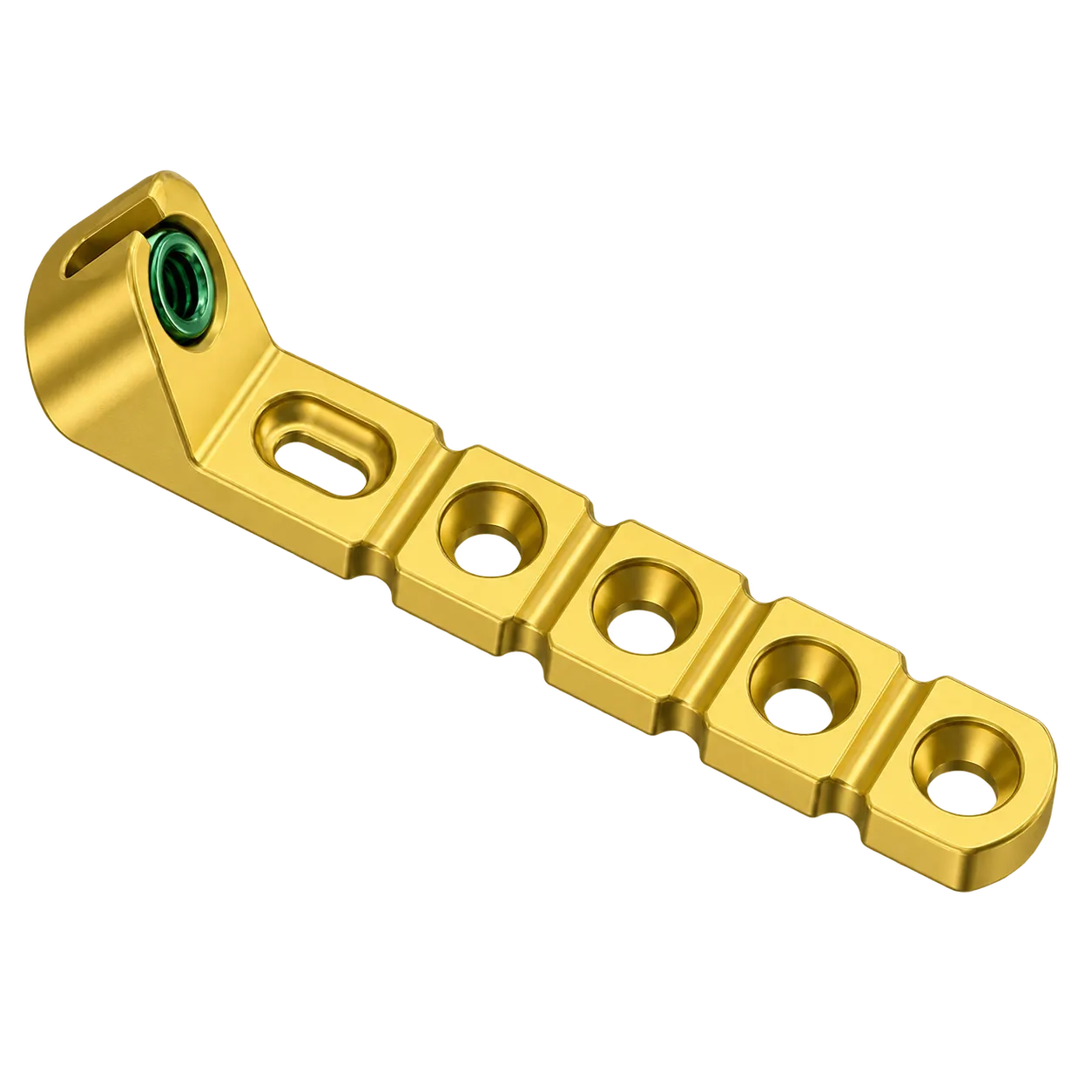
Occipitocervical junction instability is the primary setting for the Occipital Plate-II, used wherever a posterior construct needs to be anchored to the occiput rather than relying on cervical fixation alone. Procurement governance matters here as much as clinical fit: NHS spine units evaluating occipitocervical fixation need the plate stocked reliably alongside the rest of the Posterior Cervical Fixation System, which is where Medigear.uk's role as a combined component supplier matters to tender decisions.
Craniocervical junction trauma and tumour reconstruction form a second setting, where surgeons may need additional anchor points beyond a standard cervical construct to achieve stable fixation to the skull base. The choice between the 4, 5, and 6-hole Occipital Plate-II configurations gives a surgeon flexibility to match anchor point count to the loading demands of the specific case. Medigear.uk stocks all three hole counts so this decision is not constrained by availability.
Revision and complex reconstruction surgery represents a third setting, where a construct extending to the occiput may be needed after a prior cervical-only fixation has failed or where deformity correction requires occipital anchoring. Medigear.uk can supply the Occipital Plate-II alongside matched rod, screw, and crosslink stock for these combined constructs.
Private and day-case surgical centres make up a fourth setting, as more complex posterior cervical and occipitocervical cases increasingly move into specialist units alongside standard NHS trust provision. These buyers typically order in smaller batches than a trust-wide contract, and Medigear.uk supports single or small-quantity ordering of the Occipital Plate-II alongside the bulk distributor accounts it also serves, so a specialist clinic is not required to commit to trust-scale volumes to access the matched component.