
Verifying Dispensed Spectacles
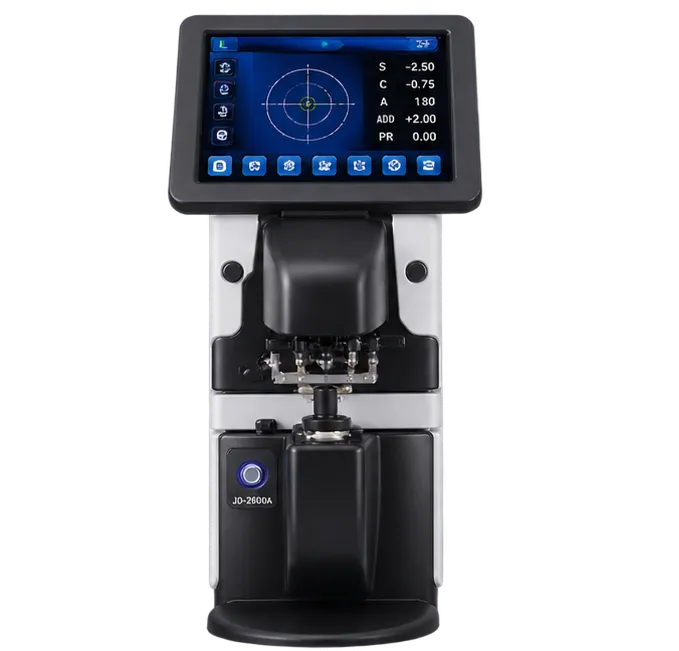
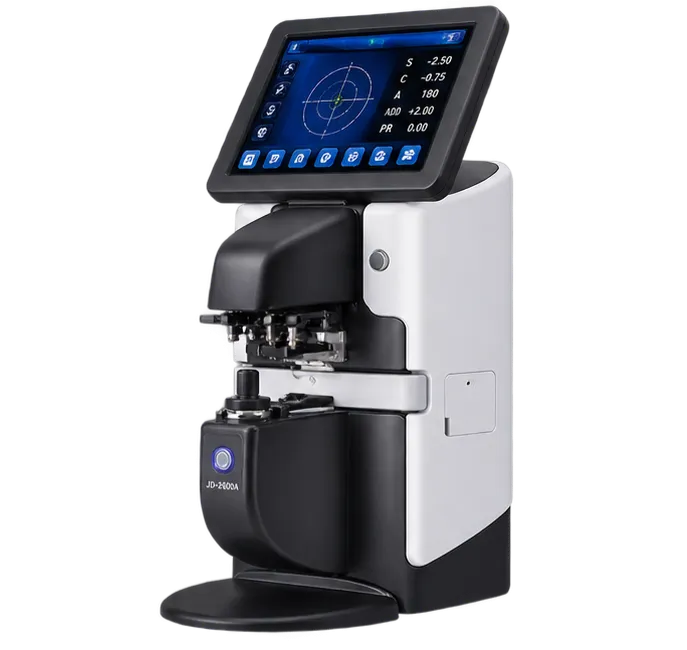
The core use is checking that a glazed pair matches what was prescribed. Sphere to 25D, cylinder to 9.99D and a 0.01D step where it is wanted give the resolution to confirm a lens properly, and a 0.1s measurement means the check adds almost nothing at all to a collection appointment. For a practice that verifies every job before handover, speed and resolution together are what make that discipline sustainable over a full working week.
Progressive Lens Work
Progressive lenses are the difficult case for any lensmeter, and this instrument provides both a progressive mode and automatic recognition of one. The manufacturer describes a graph assisting the operator with accuracy and speed across near and far vision. Reading the near and distance portions of a varifocal reliably is where a weaker instrument costs a practice time and produces avoidable disputes with a glazing laboratory.
Reading an Existing Prescription
Where a patient arrives without a prescription, measuring their current spectacles gives a starting point for refraction, and a record of what they have actually been wearing. Prism to 15D in either convention and cylinder presentable three ways mean the reading can be recorded in whatever form the practice already works to.
Contact Lens and Laboratory Checks
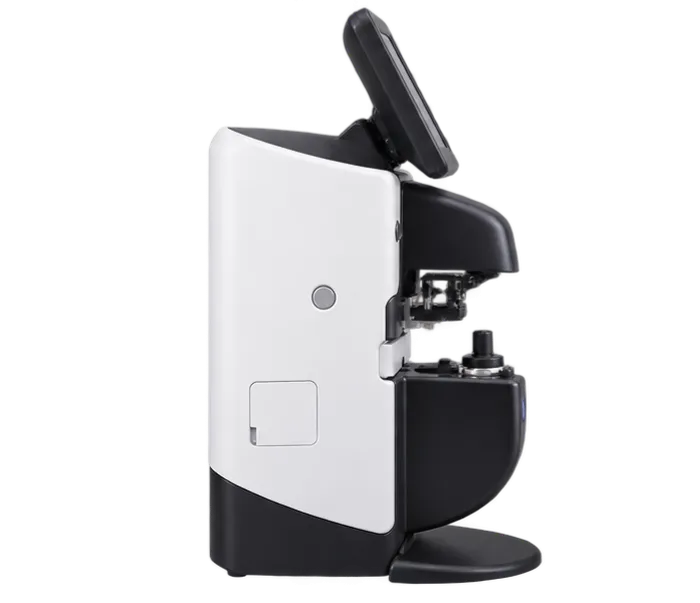
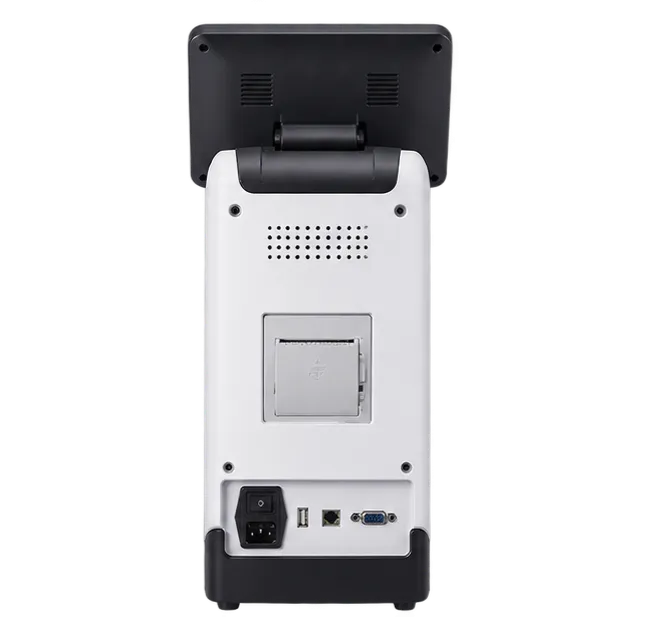
Soft and hard contact lens measurement extends the instrument to a contact lens clinic, and a built in thermal printer produces a record for the file or the laboratory. For a practice or a glazing lab dealing with returns and remakes, a printed measurement is often the very evidence that settles where a job actually went wrong.