
Objective Refraction Before Subjective Testing
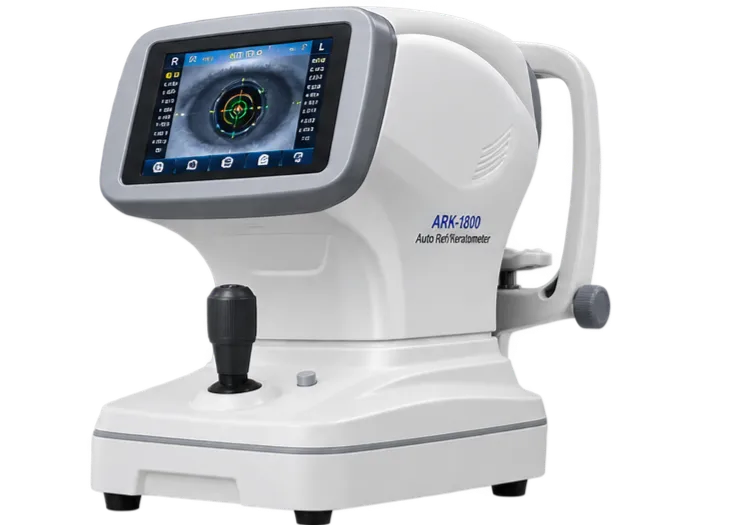
An objective starting point shortens the subjective refraction that follows, because the practitioner begins from a measured value rather than from scratch. Spherical coverage of minus 20 to plus 20 dioptres and cylinder to plus or minus 8 spans essentially the whole range a practice meets. Auto focusing and a motorised chinrest keep the acquisition brief, which matters when it is repeated on every patient through a testing day.
Contact Lens Work
Keratometry is what contact lens fitting depends on. Radius of curvature from 5.0 to 10mm at 0.01mm increments, corneal astigmatism to 8.0 dioptres and corneal diameter from 2.0 to 14.0mm together describe the surface a lens has to sit on. Having those figures alongside the refraction from the same sitting gives the practitioner both halves of the fitting picture at once, with no need to move the patient between two instruments.
Screening and Pre Testing
Where a practice runs a pre test station before the consulting room, an instrument that measures quickly and prints its own record fits that workflow directly. Ten stored values per eye allow repeated readings to be taken and reviewed rather than accepting a single measurement, which matters most with children and with patients who find it hard to hold fixation for long.
Records and Handover
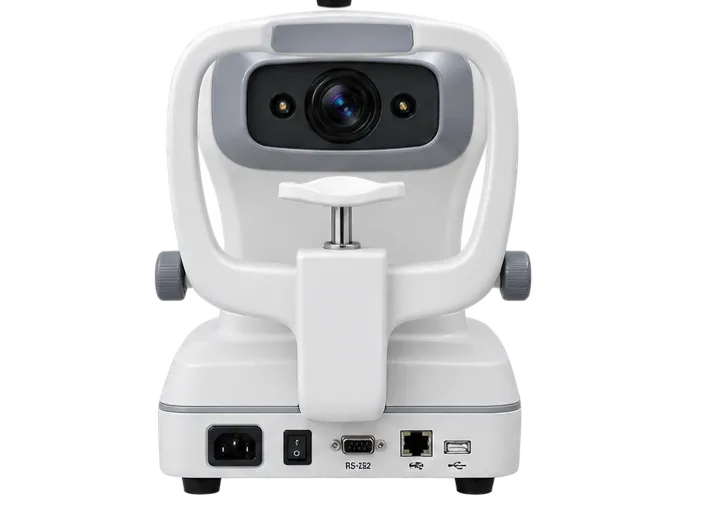
A thermal printer produces a record that travels with the patient into the consulting room or into their notes. For a practice where the person operating the instrument is not the person performing the eye examination, a printed handover removes the transcription step where errors most commonly enter a clinical record.