
The Tomey OA-1000 is used for:
- Cataract surgery planning
- IOL power calculation
- Toric IOL assessment
- Pre-operative eye evaluation
- Refractive lens exchange
It helps improve refractive accuracy and patient satisfaction after surgery.
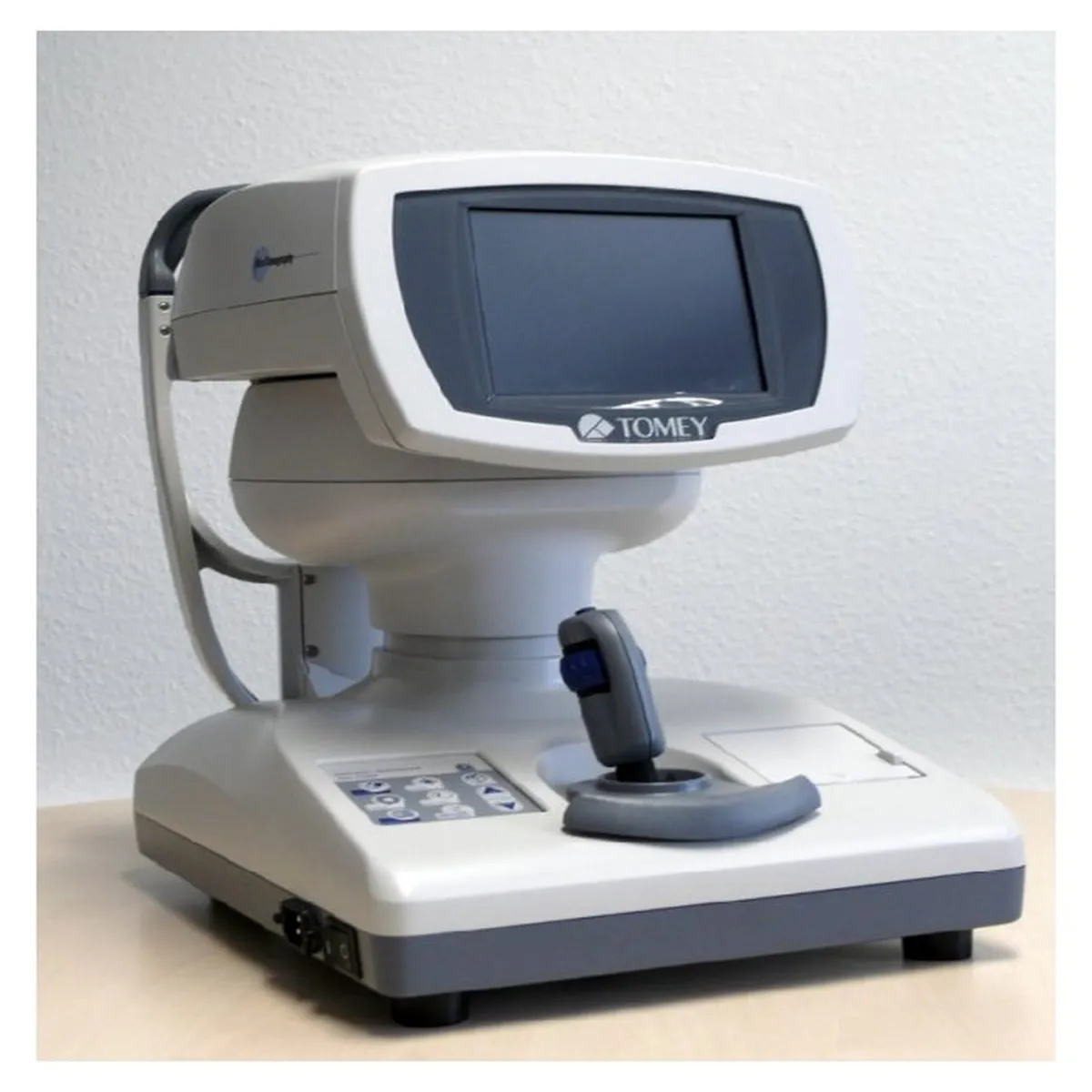
Reliable optical precision for better cataract outcomes.
The Tomey OA-1000 is a non-contact optical biometer used for accurate axial length measurement and IOL power calculation before cataract surgery. It is designed to deliver reliable results with simple operation and fast measurement time.
A few quick details and you are done. Our projects team replies within one business day with availability, lead time and a quotation.
Tomey Optical biometer OA-1000
Product code: MDIE-ODE-840
The Tomey OA-1000 is an advanced optical biometry system that uses Partial Coherence Interferometry (PCI) technology to measure axial length with high precision. Accurate axial length measurement is critical for selecting the correct intraocular lens (IOL) during cataract surgery.
The device also measures corneal curvature (keratometry) and anterior chamber depth. These parameters are essential for modern IOL calculation formulas and toric lens planning.
As a non-contact device, the OA-1000 improves patient comfort and reduces the risk of infection compared to ultrasound biometry. Its user-friendly interface and automated alignment make it suitable for both busy hospitals and small clinics.
The Tomey OA-1000 is known for dependable performance, consistent results, and efficient workflow integration.
Key Features
The Tomey OA-1000 is used for:
It helps improve refractive accuracy and patient satisfaction after surgery.
1. What is the Tomey OA-1000 used for?
It is used to measure eye parameters and calculate IOL power before cataract surgery.
2. What technology does it use?
It uses Partial Coherence Interferometry (PCI).
3. Is the test painful?
No. It is a non-contact and painless procedure.
4. What parameters does it measure?
It measures axial length, keratometry, and anterior chamber depth.
5. Can it measure dense cataracts?
It works in many cases, but very dense cataracts may require ultrasound backup.
6. Does it include IOL formulas?
Yes. It includes built-in IOL power calculation formulas.
7. Is it suitable for small clinics?
Yes. It is compact and easy to use.
8. Who can operate the device?
Trained ophthalmic technicians or ophthalmologists.