
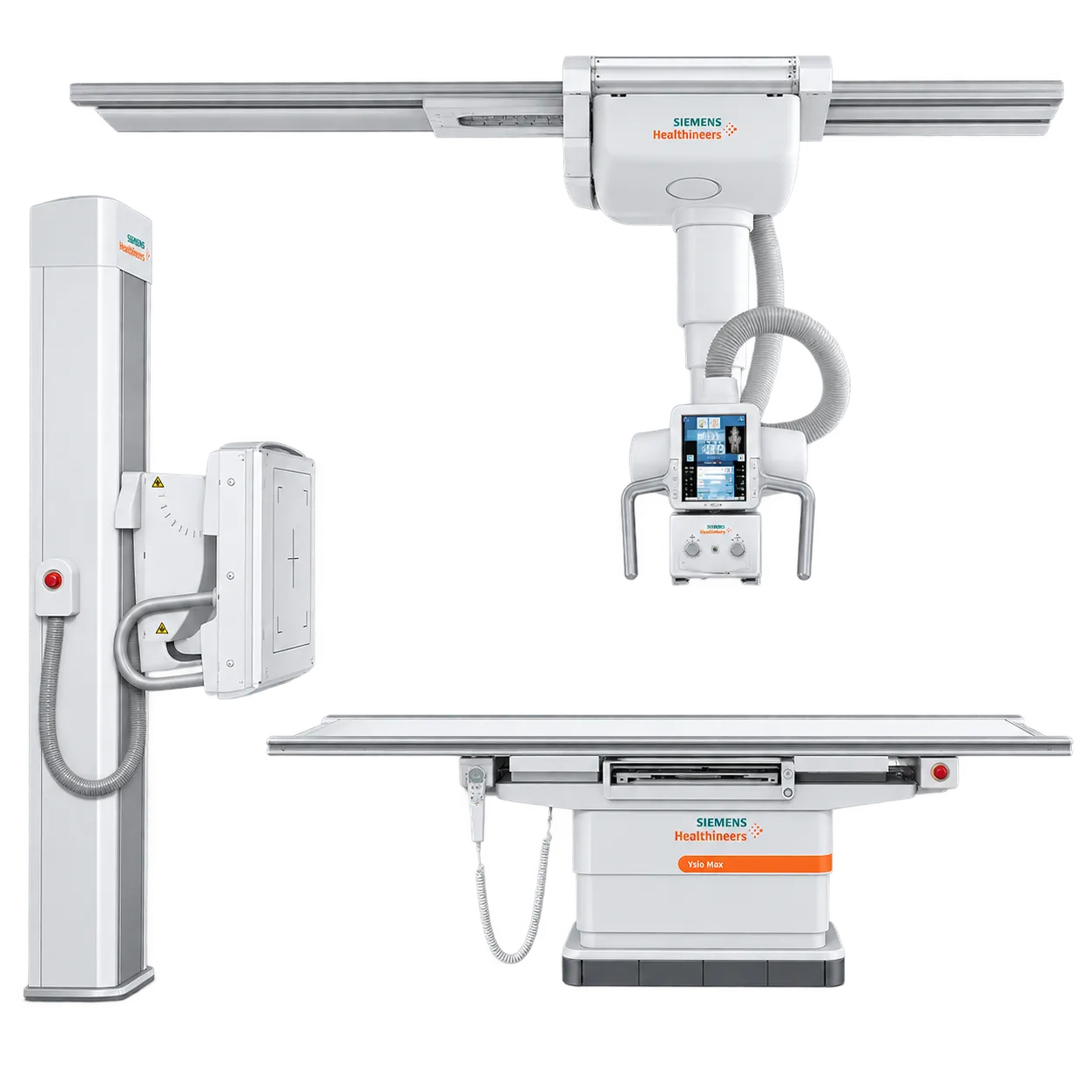
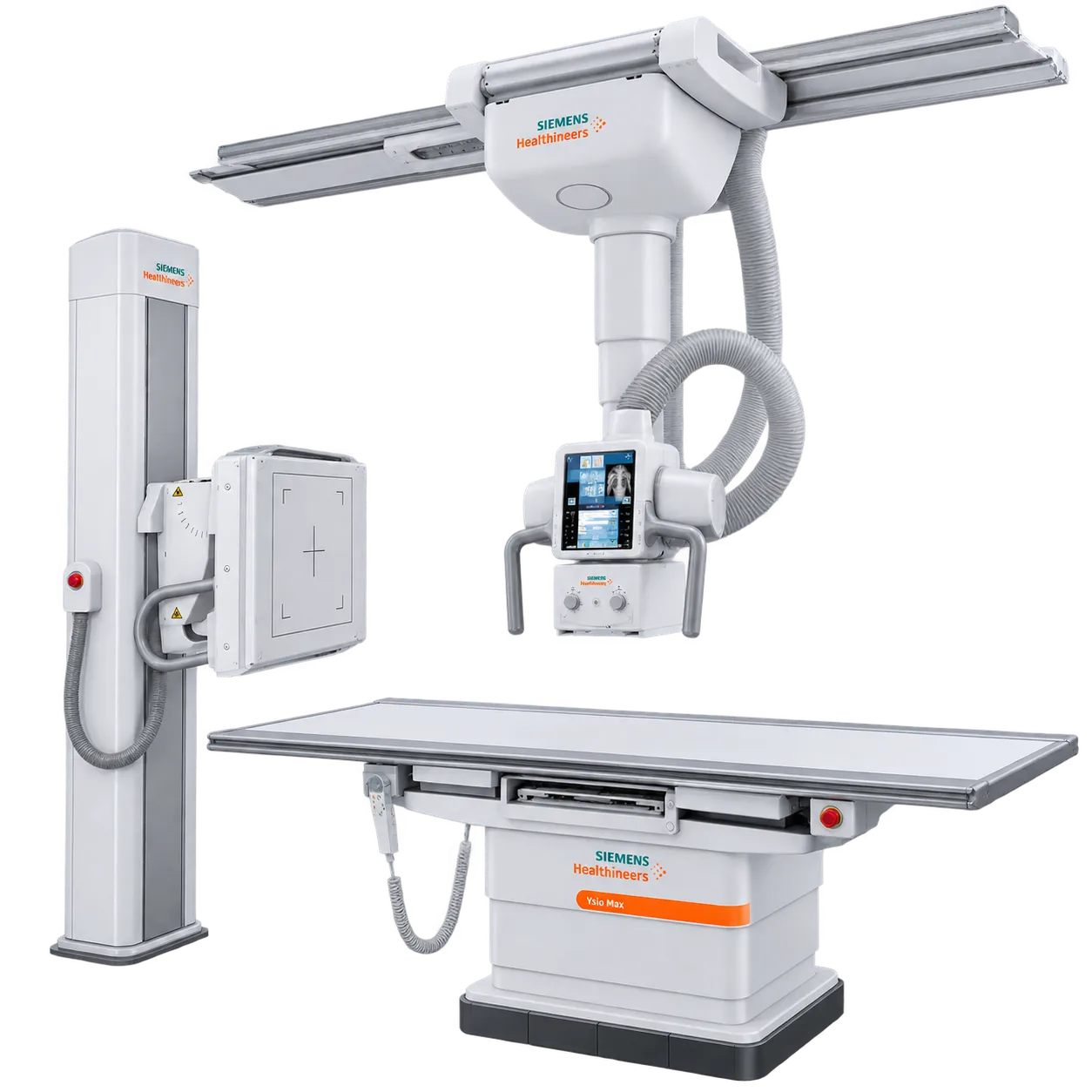
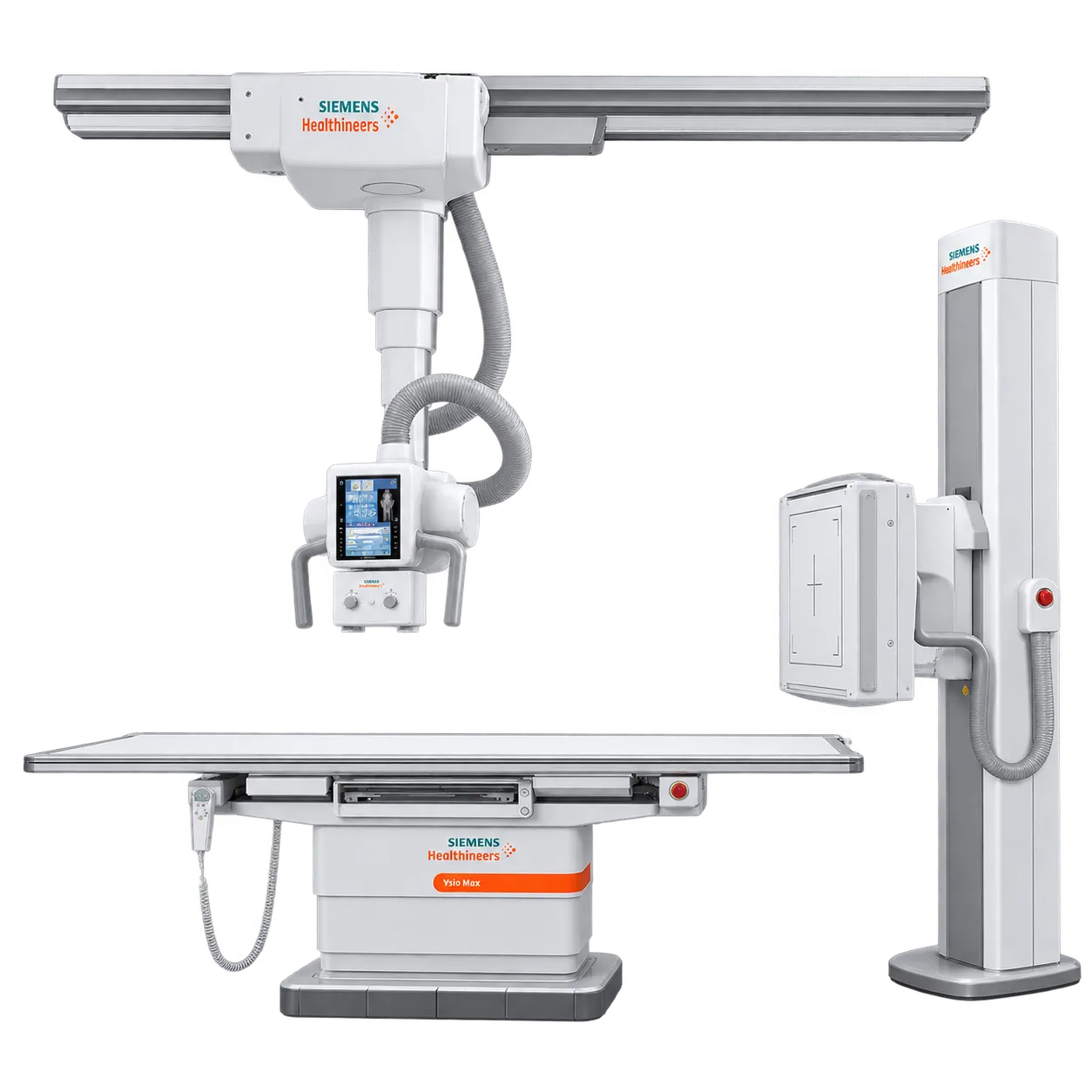
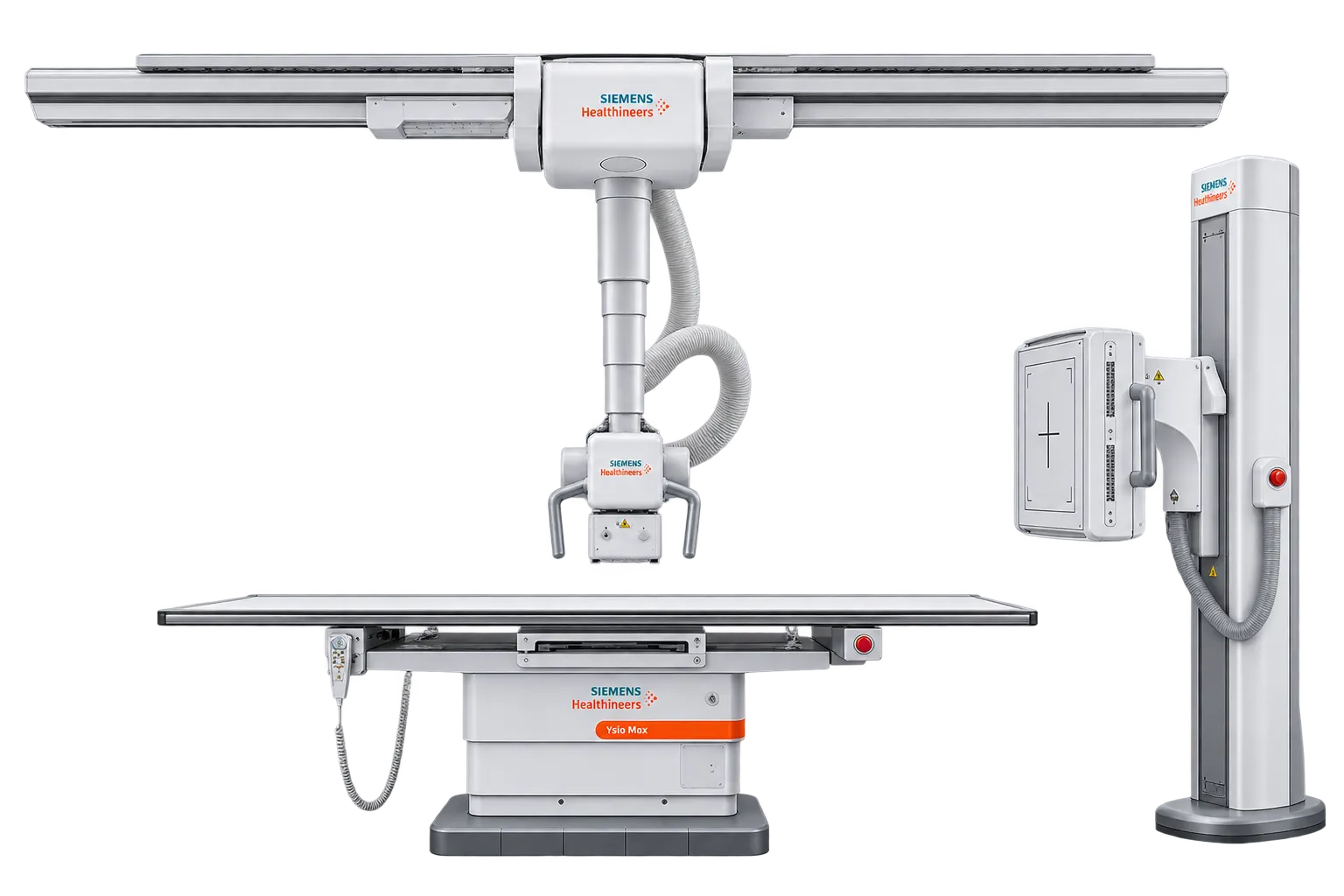
General diagnostic radiography across chest, abdomen, pelvis, spine, extremity and skeletal work is what this room serves, at the volumes typical of a district general department, an outpatient imaging centre or a busy private practice. All clinical judgement, including whether an examination is justified, remains with the referring and reporting clinicians, and Medigear.uk supplies configuration and condition detail rather than clinical guidance.
High-volume general lists benefit most from automated positioning, since the time and physical effort saved per examination compound across the session and the consistency gain applies to every study.
Serial and follow-up imaging benefits from reproducible geometry, because comparison between studies is easier where the projection has not shifted between attendances.
Departments with varied staffing, including rotating, agency or newly qualified radiographers, gain from geometry that is reproduced from stored programmes rather than depending entirely on individual technique.
Services monitoring repeat rates will find positioning-related repeats among the categories most directly addressed by driving setup from the examination rather than by hand.
Departments concerned with staff musculoskeletal health and retention should weigh the reduction in manual tube handling, which is a recurring physical demand of the role rather than an occasional one.