
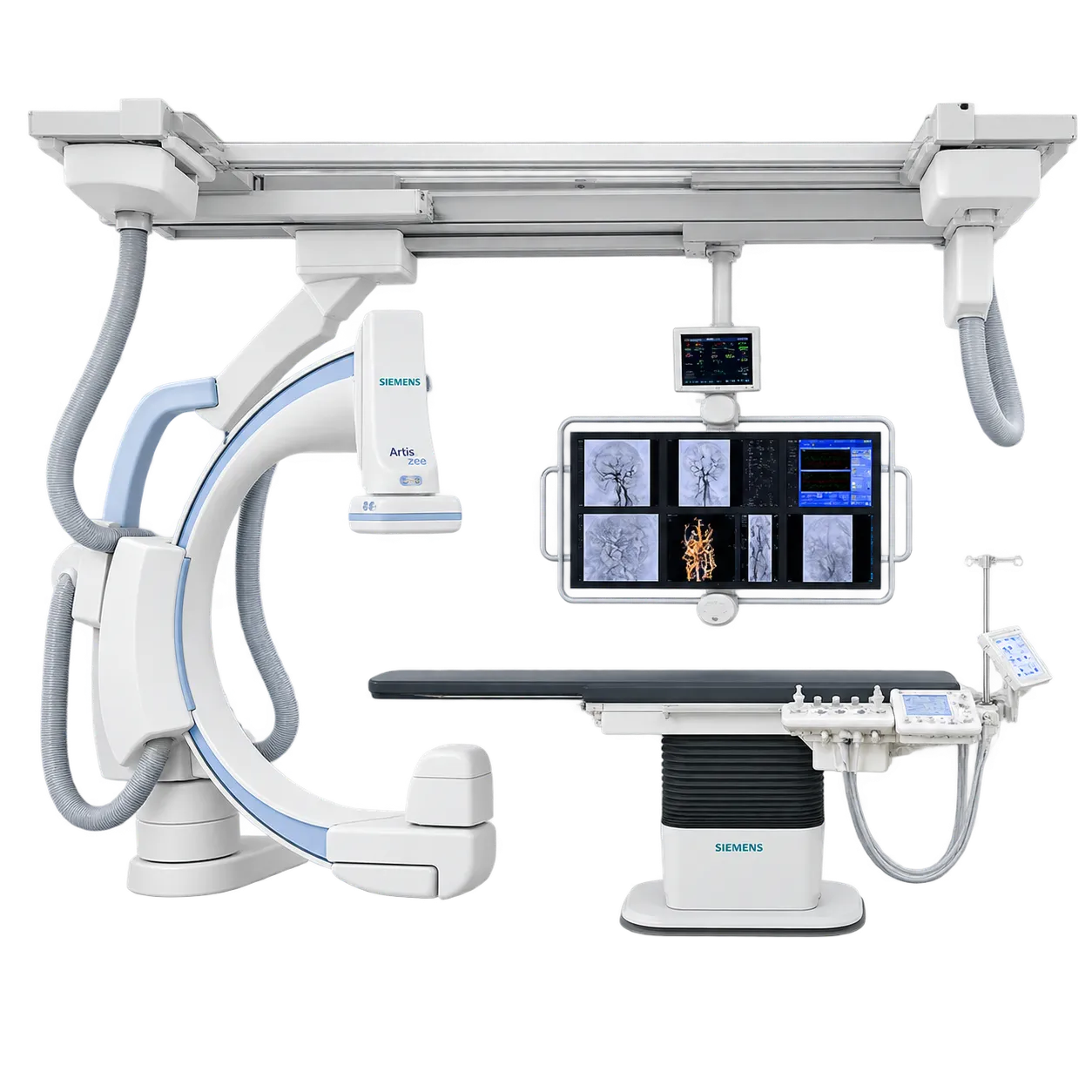
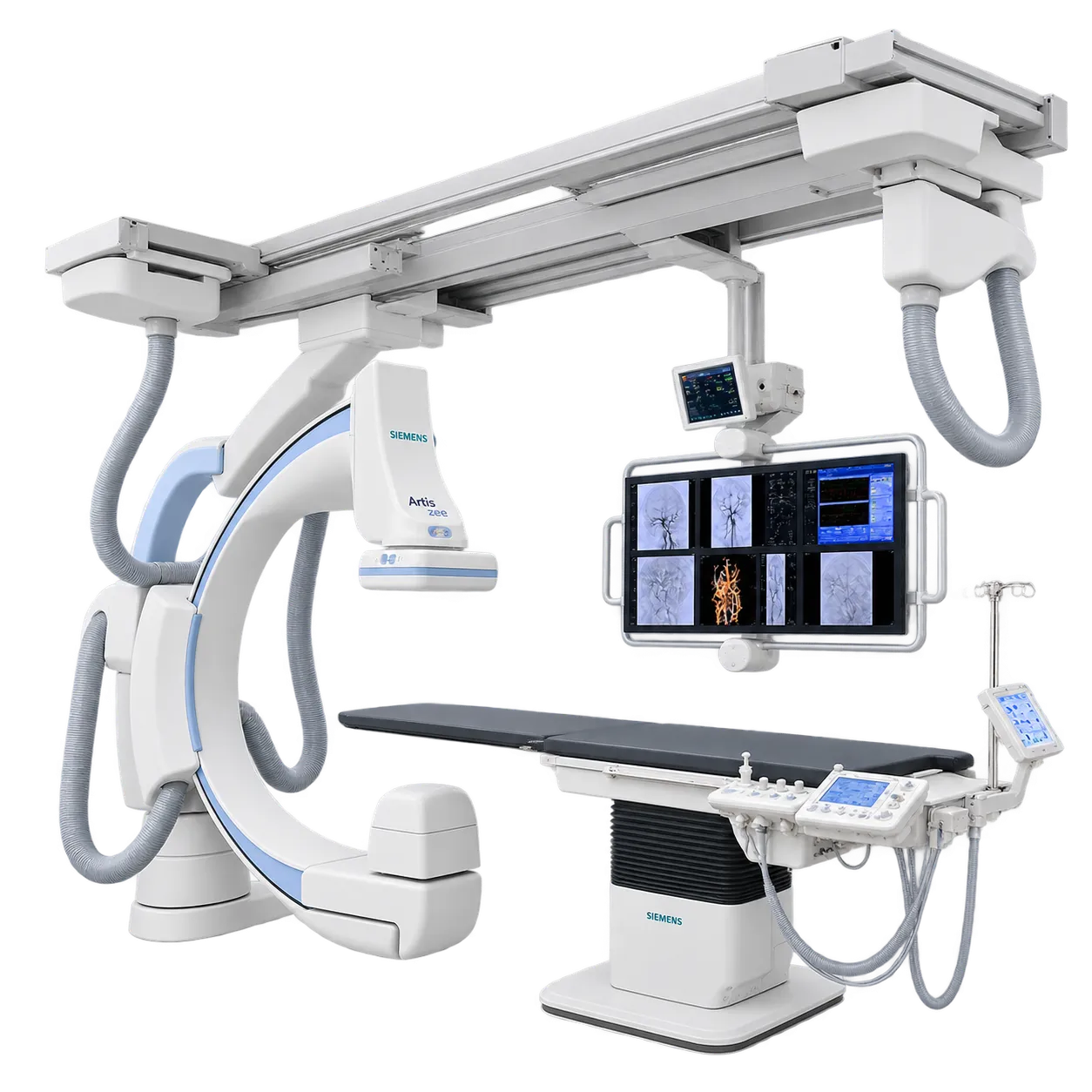
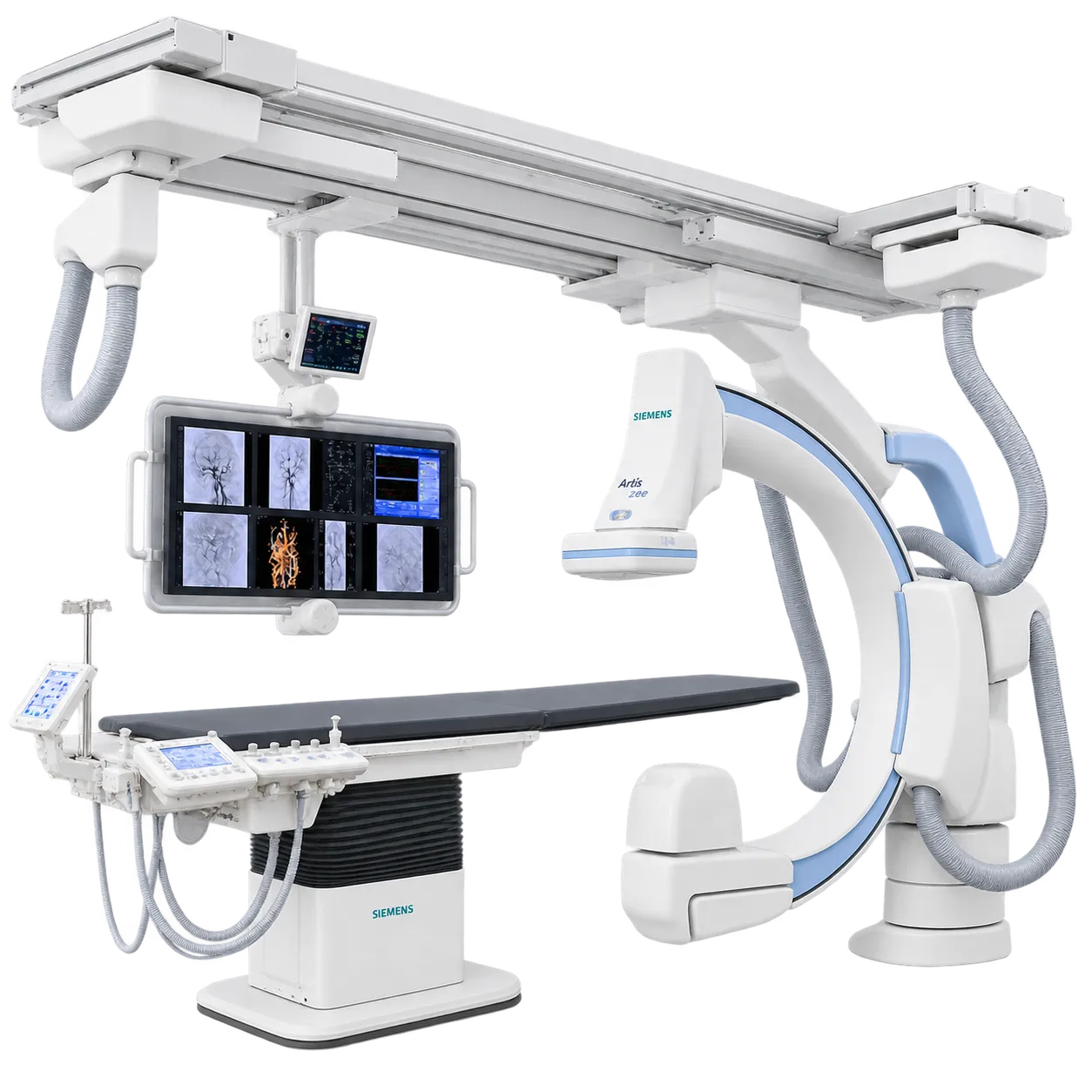
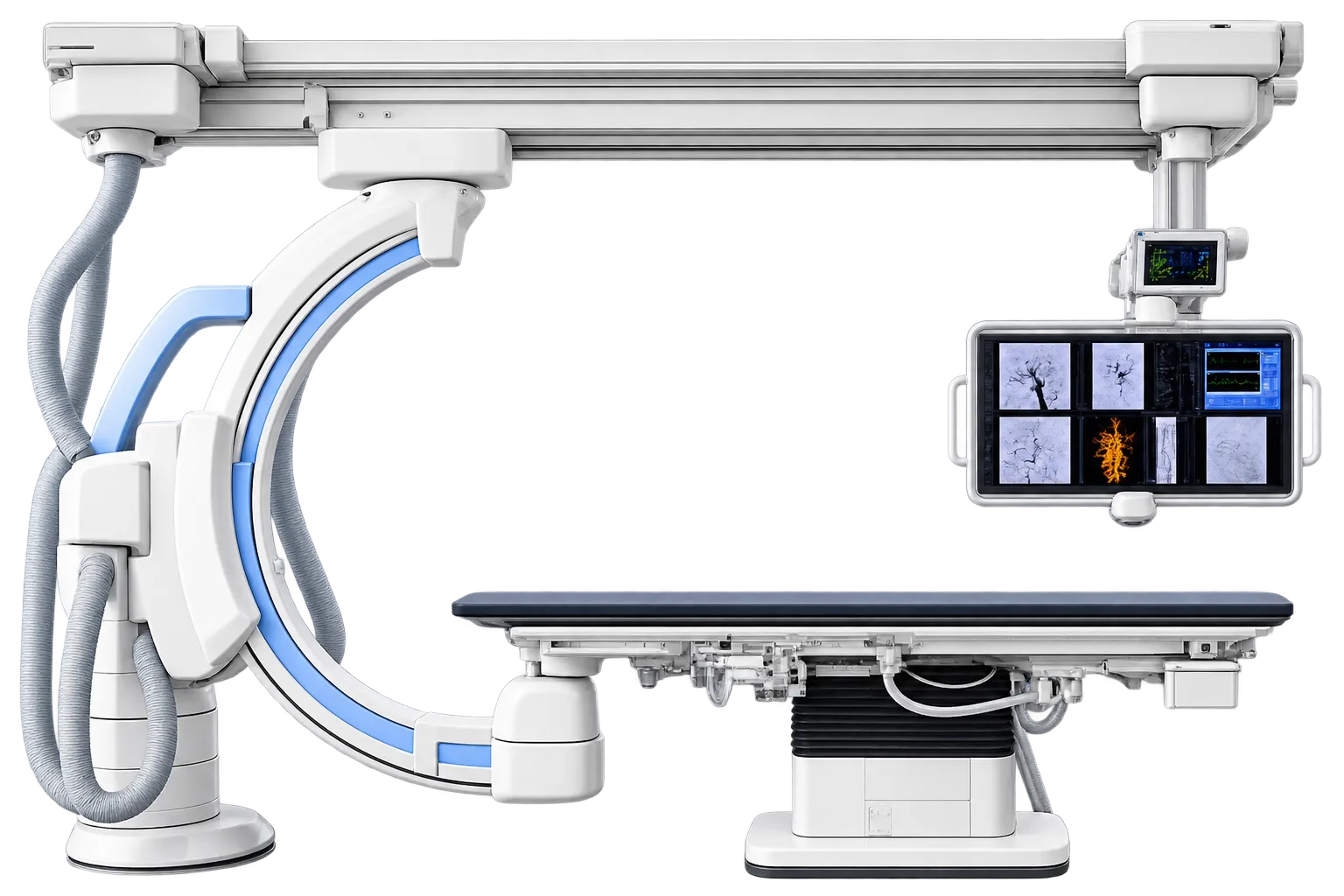
Vascular, neurointerventional and cardiac procedures are what a flat detector suite of this type serves, with the range depending on configuration and enabled licences. All clinical judgement, including whether a procedure is indicated, how it is conducted and what dose is appropriate, remains with the clinical team, and Medigear.uk supplies configuration and condition detail rather than clinical guidance.
Neurointerventional work is among the applications that benefit most from the display arrangement, since these procedures depend heavily on comparing live imaging against reference runs and roadmaps, frequently in rapid succession and under time pressure.
Complex vascular and endovascular procedures place similar demands, combining live guidance with reference material and physiological data across long cases where the cumulative cost of turning between screens is greatest.
Cardiac work benefits from having haemodynamic and physiological traces in the same visual field as the live image rather than on a separate monitor requiring the operator to look away.
Procedures involving anaesthesia or large teams gain from the ceiling suspension, which keeps the floor clear around the table and preserves head-end access.
Services planning a room should assess the display configuration alongside the imaging chain rather than treating it as an accessory, since it determines how the suite is actually worked. Medigear.uk supplies the configuration detail so that assessment can be made properly.