
Practices Short of Bench Space
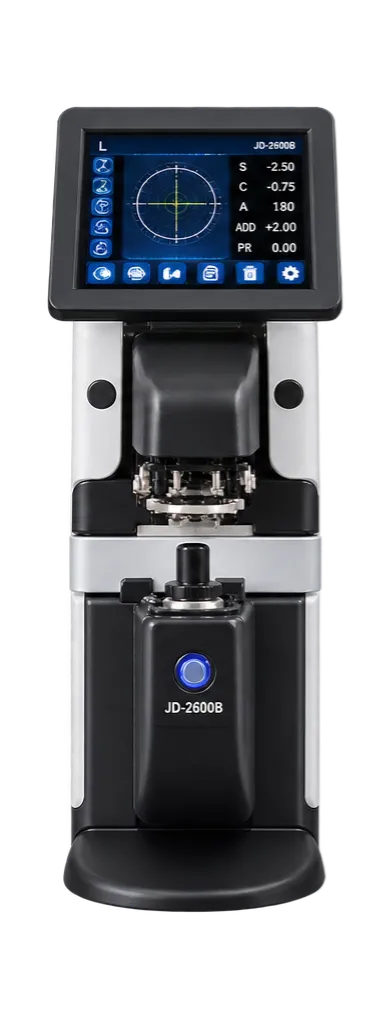
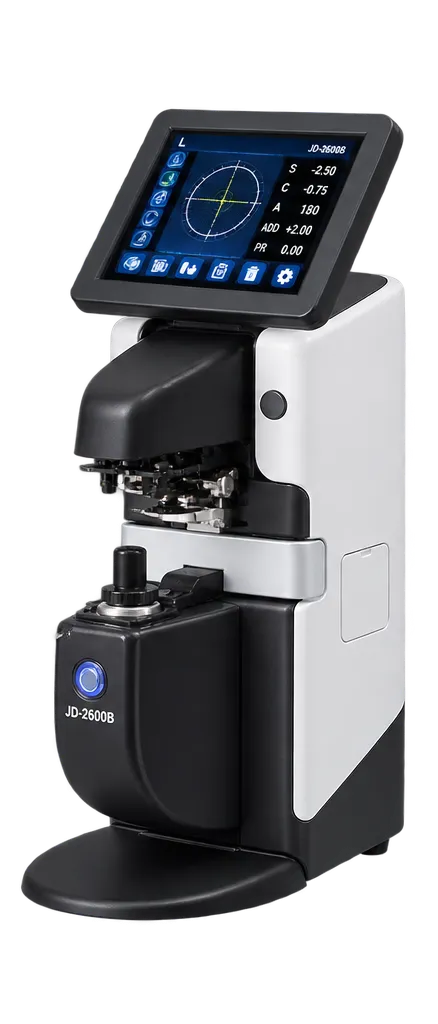
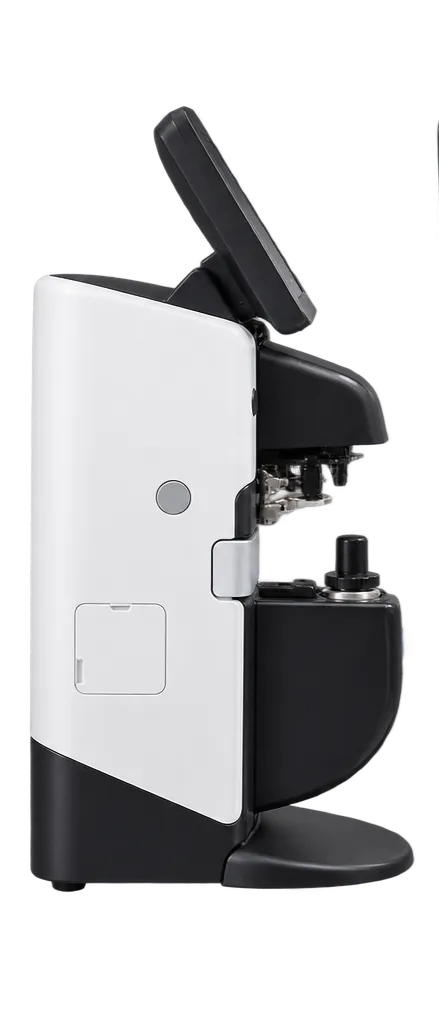
The smaller screen is the reason to choose this version, and for a dispensing room already crowded with equipment that can matter more than a specification line suggests. The measurement capability is unchanged, so a practice giving up screen area gives up nothing in what the instrument can actually read. Whether the smaller display suits the people who will use it daily is best judged by seeing one in person.
Verifying Dispensed Spectacles
Checking that a glazed pair matches the prescription is the core use. Sphere to 25D, cylinder to 9.99D and a 0.01D step where wanted give the resolution to confirm a lens properly, and a 0.1s measurement adds almost nothing to a collection appointment. For a practice that verifies every job before handover, that combination is what keeps that discipline sustainable across a week.
Progressive Lens Work
Progressive lenses are the difficult case for any lensmeter, and both a progressive mode and automatic recognition are provided. The manufacturer describes a graph assisting the operator with accuracy and speed across near and far vision. Reading the near and distance portions of a varifocal reliably is where a weaker instrument slows a practice down and creates avoidable disputes with a laboratory.
Contact Lens and Laboratory Checks
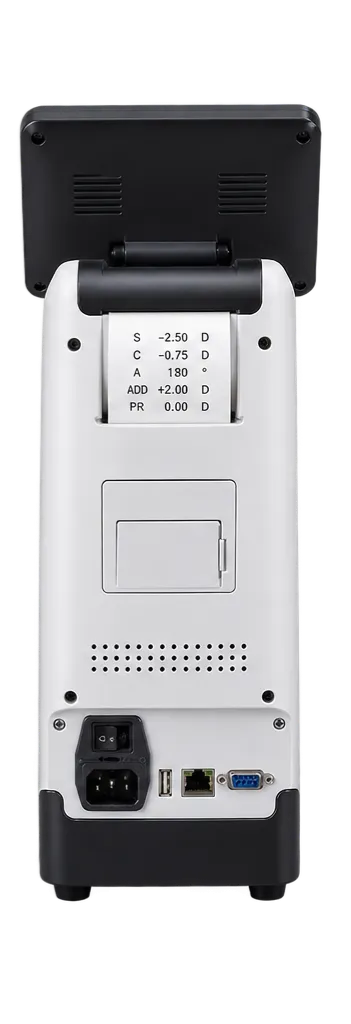
Soft and hard contact lens measurement extends the instrument to a contact lens clinic, and the built in thermal printer produces a record for the file or the laboratory. For a practice or glazing lab dealing with returns and remakes, a printed measurement is often the very evidence that settles where a job actually went wrong.