
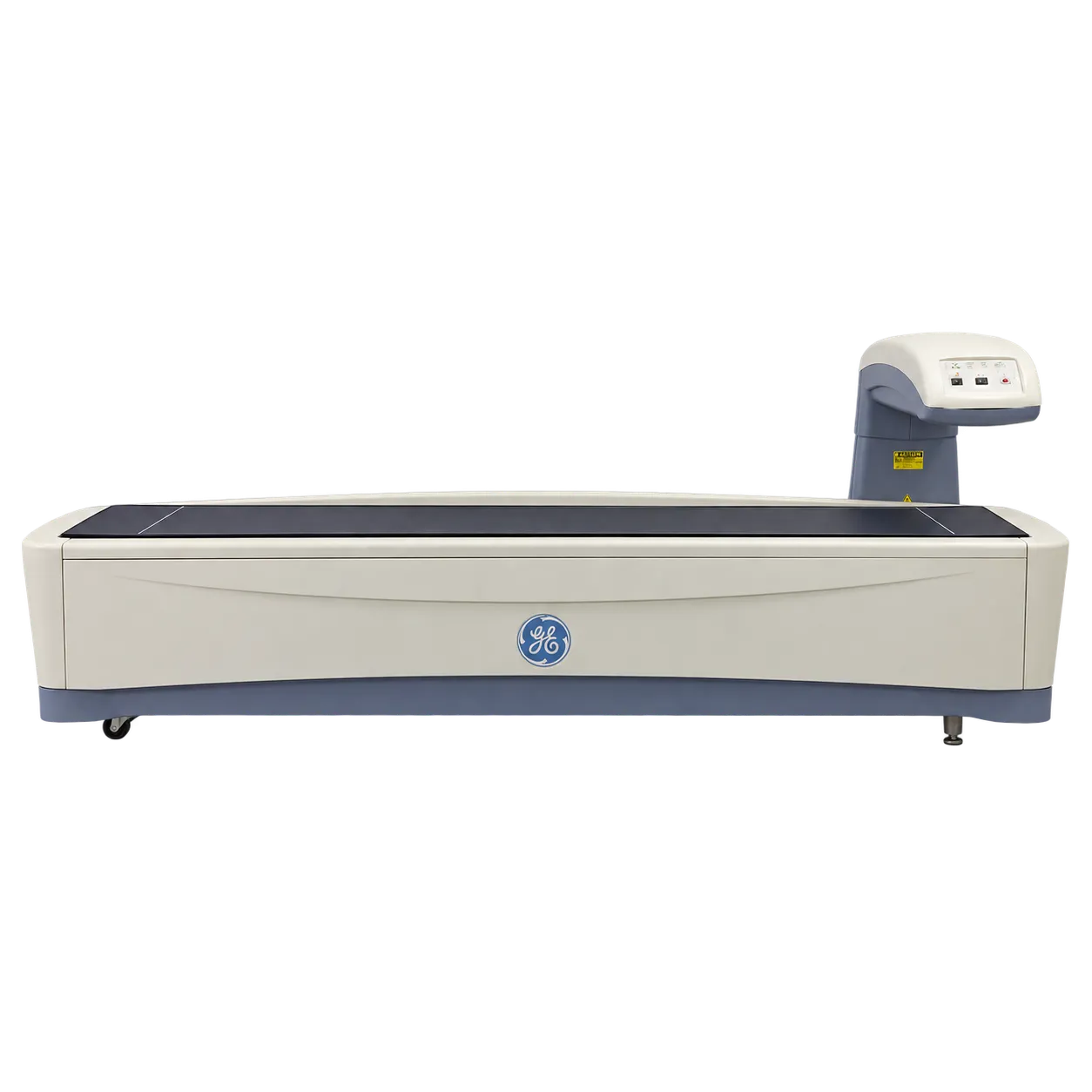
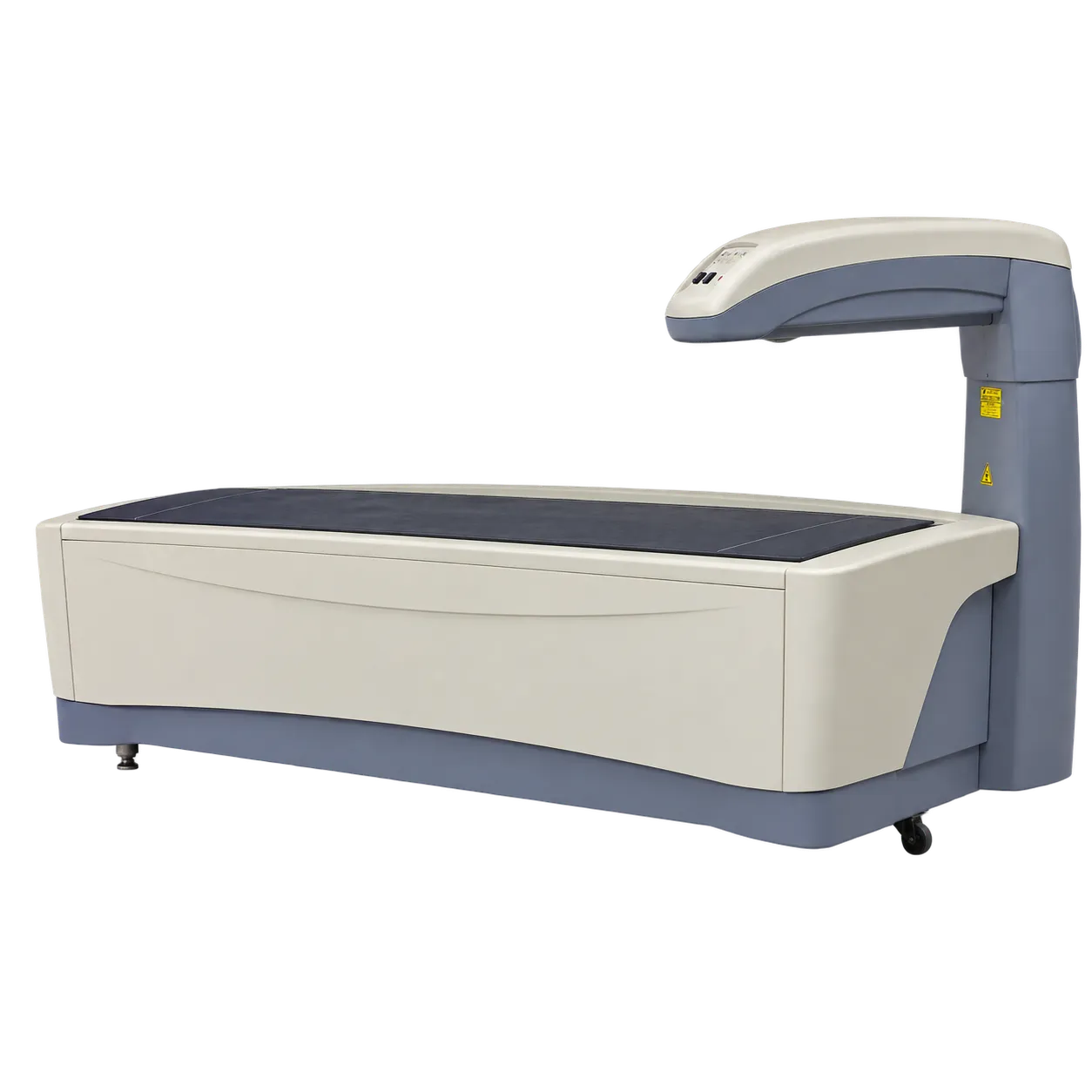
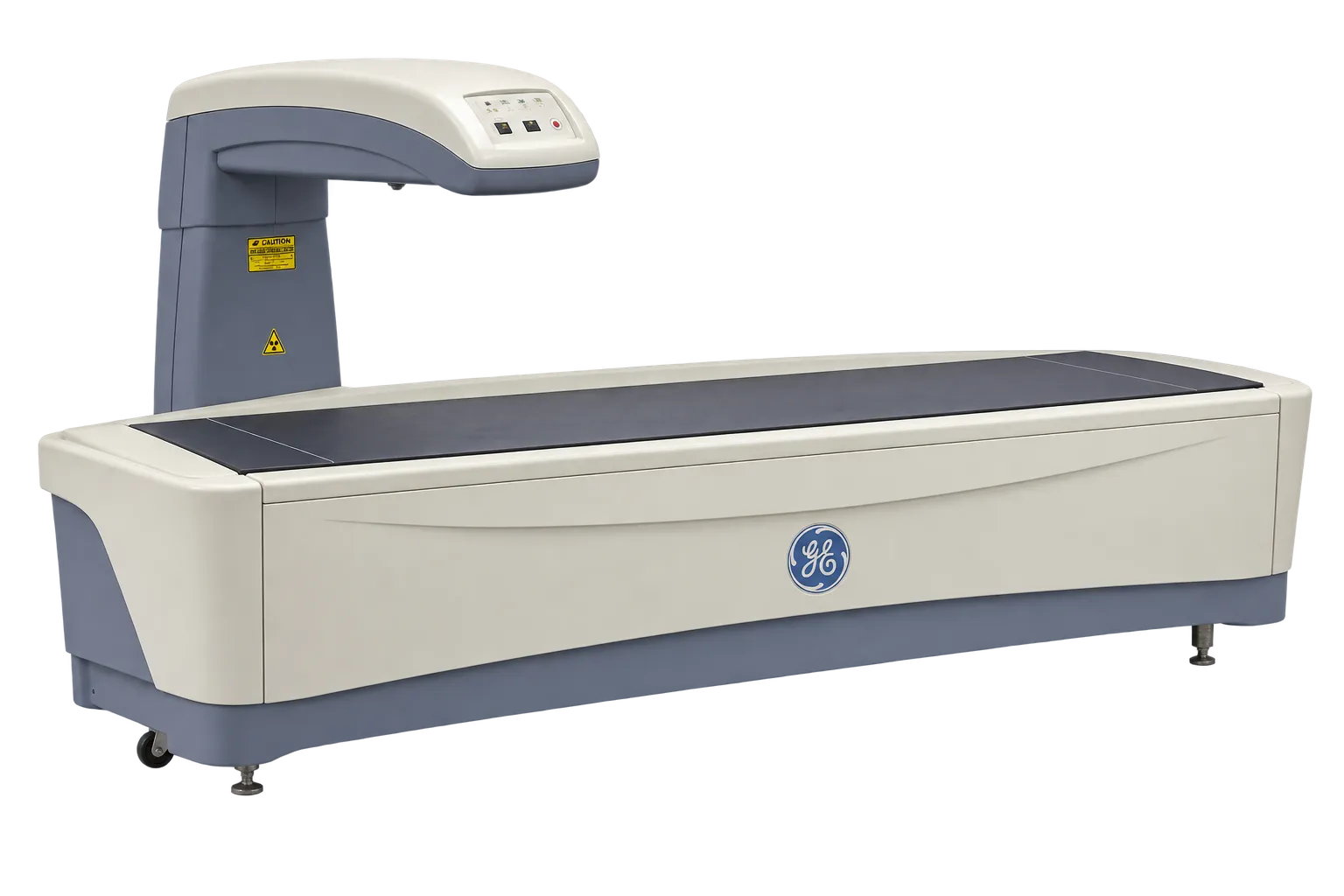
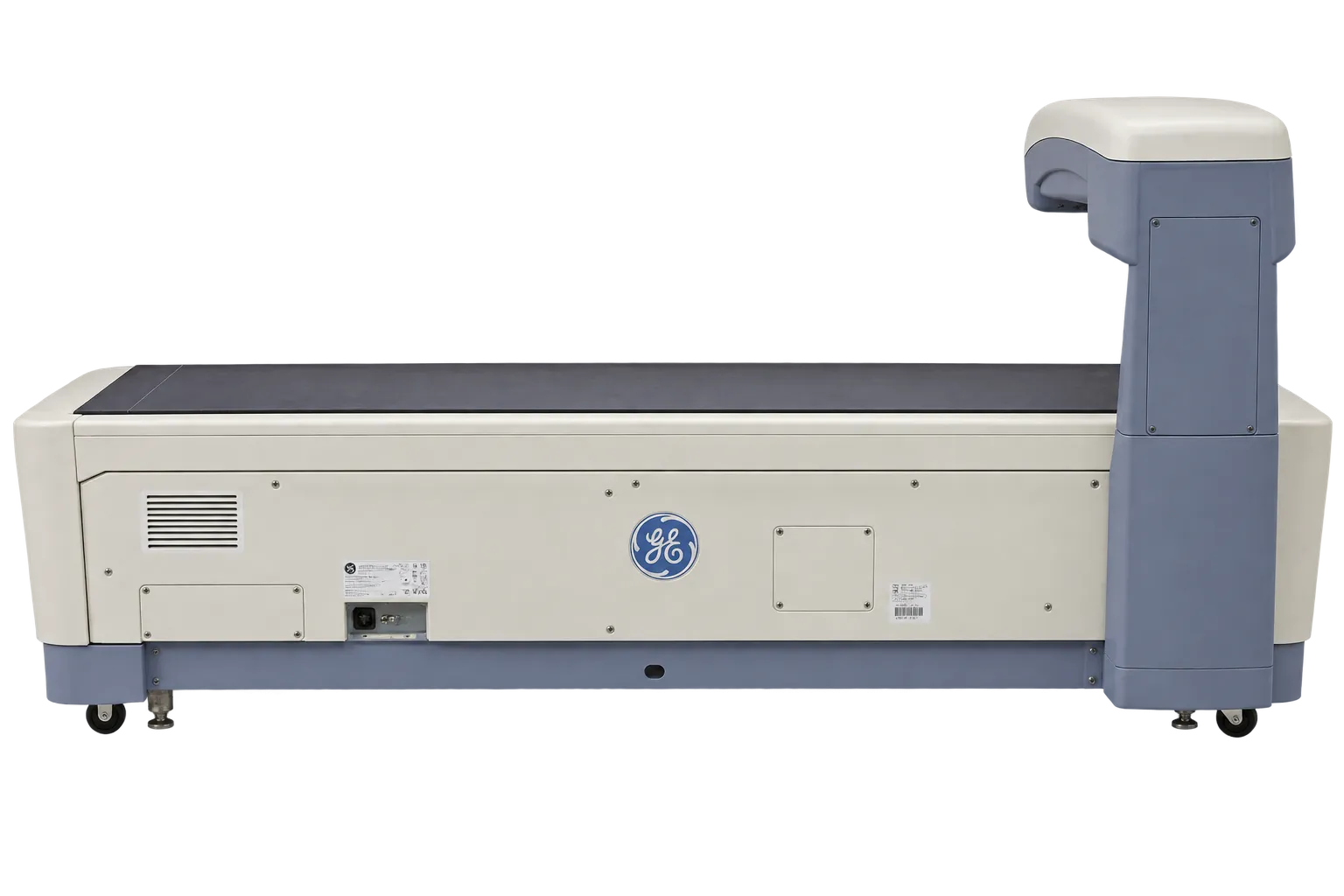
Osteoporosis diagnosis and monitoring is the core of what this platform serves, through AP spine and proximal femur acquisition, with forearm scanning where the primary sites are unmeasurable. All clinical judgement, including whether an examination is justified and how a result is interpreted, remains with the referring and reporting clinicians, and Medigear.uk supplies configuration and condition detail rather than clinical guidance.
Fracture liaison services and secondary prevention pathways are a natural fit for a platform at this price position, where the requirement is reliable throughput on standard sites rather than the fullest available feature set. Where a service needs to establish or expand densitometry capacity within a constrained capital budget, the specification gap against a current generation machine matters less than it would elsewhere in imaging, because the measurement itself does not differ.
Vertebral assessment through lateral spine imaging identifies existing deformity that changes risk categorisation independently of the density figure, and is supported where the licence is enabled. It is among the options most often absent on used systems and is confirmed rather than assumed.
Total body composition work, covering lean and fat distribution, extends the platform into metabolic, nutritional, sports and research settings, where network integration requirements are often lighter and the price position of an established design counts for more. A scanner physically capable of an acquisition still cannot take a clinical referral unlicensed.
Services planning capital cycles should price this unit against its likely remaining service window rather than against a current machine's specification. The measurement will not date, the design will not improve with the build year, and the console position and parts supply determine how many years of use the price is actually buying.