
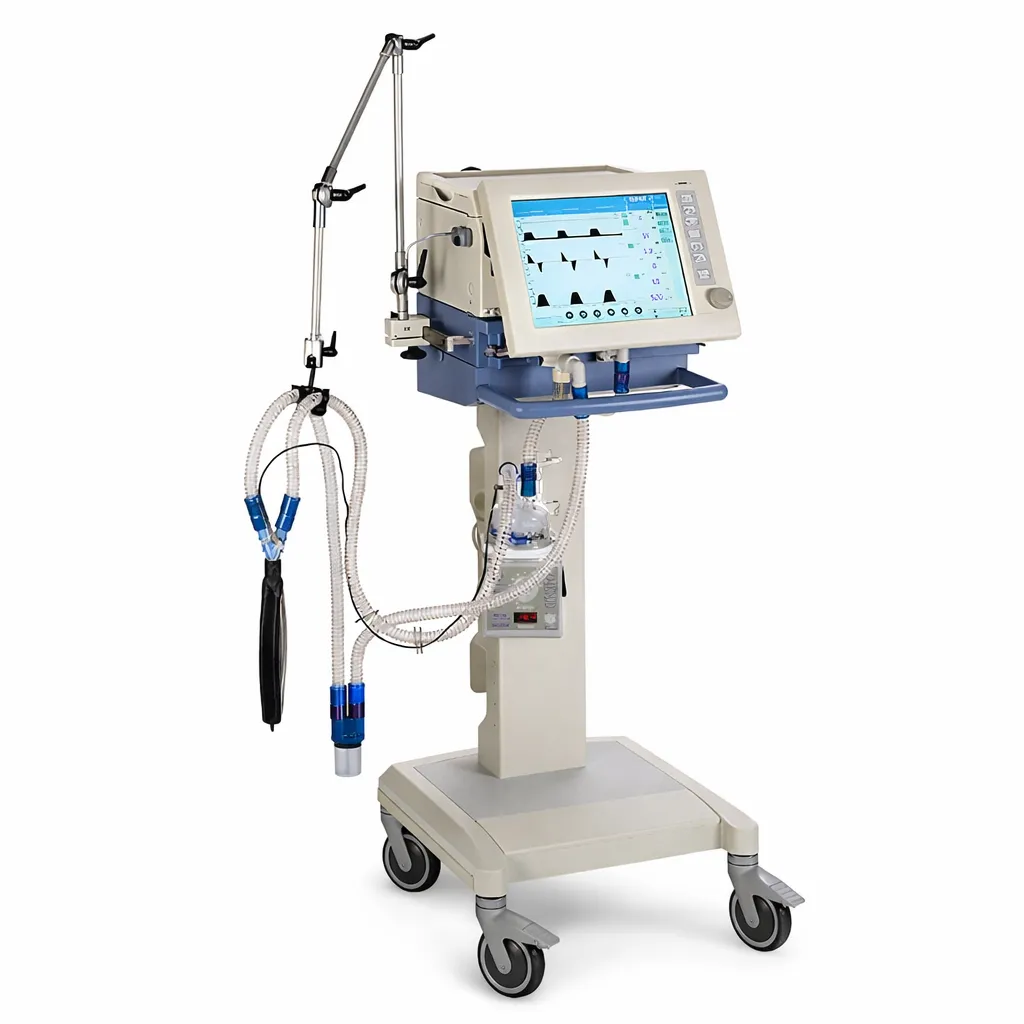
Mechanical Ventilation for ICU Patients with Acute Respiratory Failure
Acute respiratory failure requiring invasive mechanical ventilation is one of the most frequent indications for ICU admission. The Evita 4's AutoFlow technology and lung-protective ventilation modes directly address the dual challenge of maintaining adequate gas exchange while minimising ventilator-induced lung injury. Intensive care units managing high volumes of medical and surgical patients with respiratory compromise benefit from the system's mode flexibility, waveform monitoring, and configurable alarm system, which together support safe ventilation management across varying patient acuity.
Post-Operative Ventilatory Support in Surgical and Cardiac ICUs
Patients recovering from major cardiac, thoracic, or abdominal surgery frequently require short-term mechanical ventilation and monitored weaning before extubation. The Evita 4's spontaneous breathing modes — including CPAP and BIPAP with AutoFlow — support gradual respiratory muscle reactivation and controlled weaning protocols. Cardiac surgical ICUs and post-anaesthesia care units rely on the system's smooth transition between controlled and assisted ventilation modes to optimise patient recovery trajectories and reduce ventilator dependency duration.
Neonatal and Paediatric Intensive Care Ventilation
Mechanically ventilating neonates and small children demands precise tidal volume delivery, rapid respiratory rate capability, and highly sensitive trigger systems to detect spontaneous breathing effort. The Evita 4's paediatric and neonatal ventilation configurations provide the clinical precision required in neonatal intensive care units and paediatric ICUs. The system's flow sensor sensitivity and low dead-space circuit options support safe ventilation in patients from premature neonates through to adolescents within a single ventilator platform.
Emergency Department Ventilation for Critical Stabilisation
Critically ill patients presenting to emergency departments with respiratory failure, trauma, or neurological compromise frequently require immediate invasive ventilation before ICU transfer. The Evita 4's straightforward interface, rapid mode selection, and robust alarm system support confident ventilatory management in time-pressured emergency environments. Emergency departments with high acuity caseloads benefit from the system's clinical breadth and its ability to maintain ventilation safely during intra-hospital transport preparation.
Ventilatory Weaning and Spontaneous Breathing Trials
Prolonged mechanical ventilation increases the risk of ventilator-associated pneumonia, diaphragmatic atrophy, and extended ICU stays. The Evita 4's spontaneous breathing trial support, automatic tube compensation, and real-time respiratory mechanics monitoring enable structured weaning protocols that promote earlier, safer extubation. ICUs focused on reducing ventilator days and improving patient outcomes use the Evita 4's weaning capabilities as a core component of their liberation-from-ventilation strategy.