
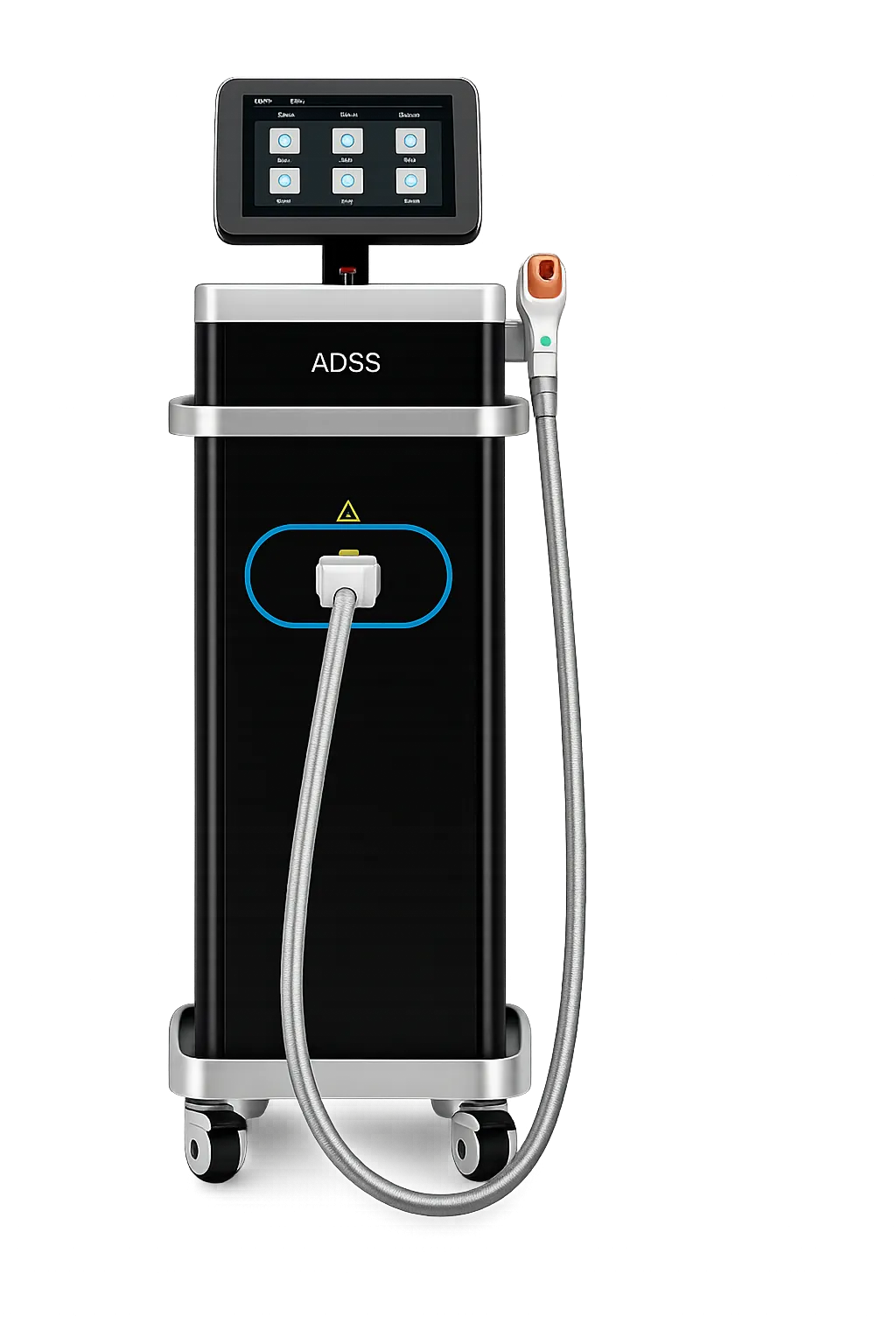
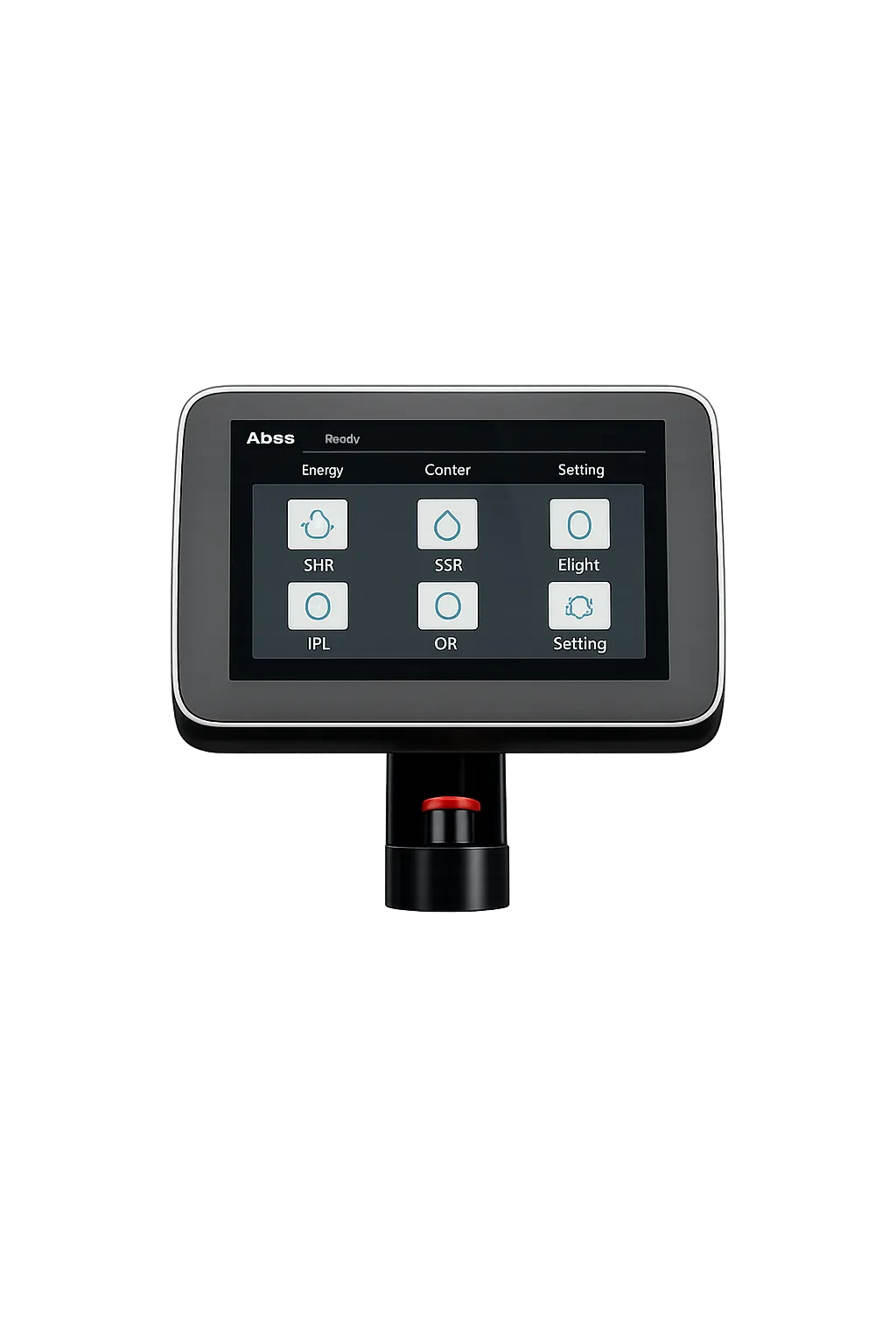
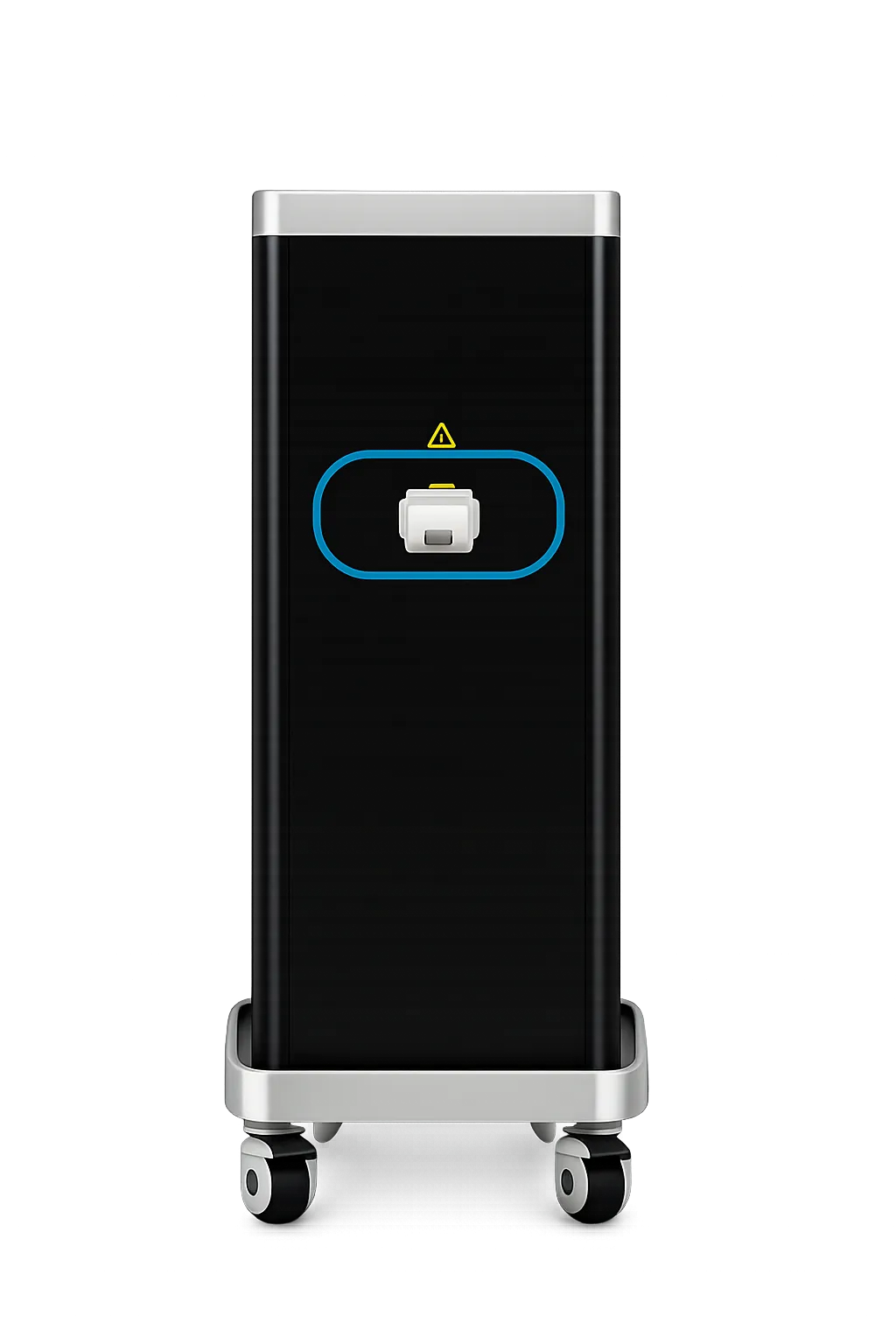
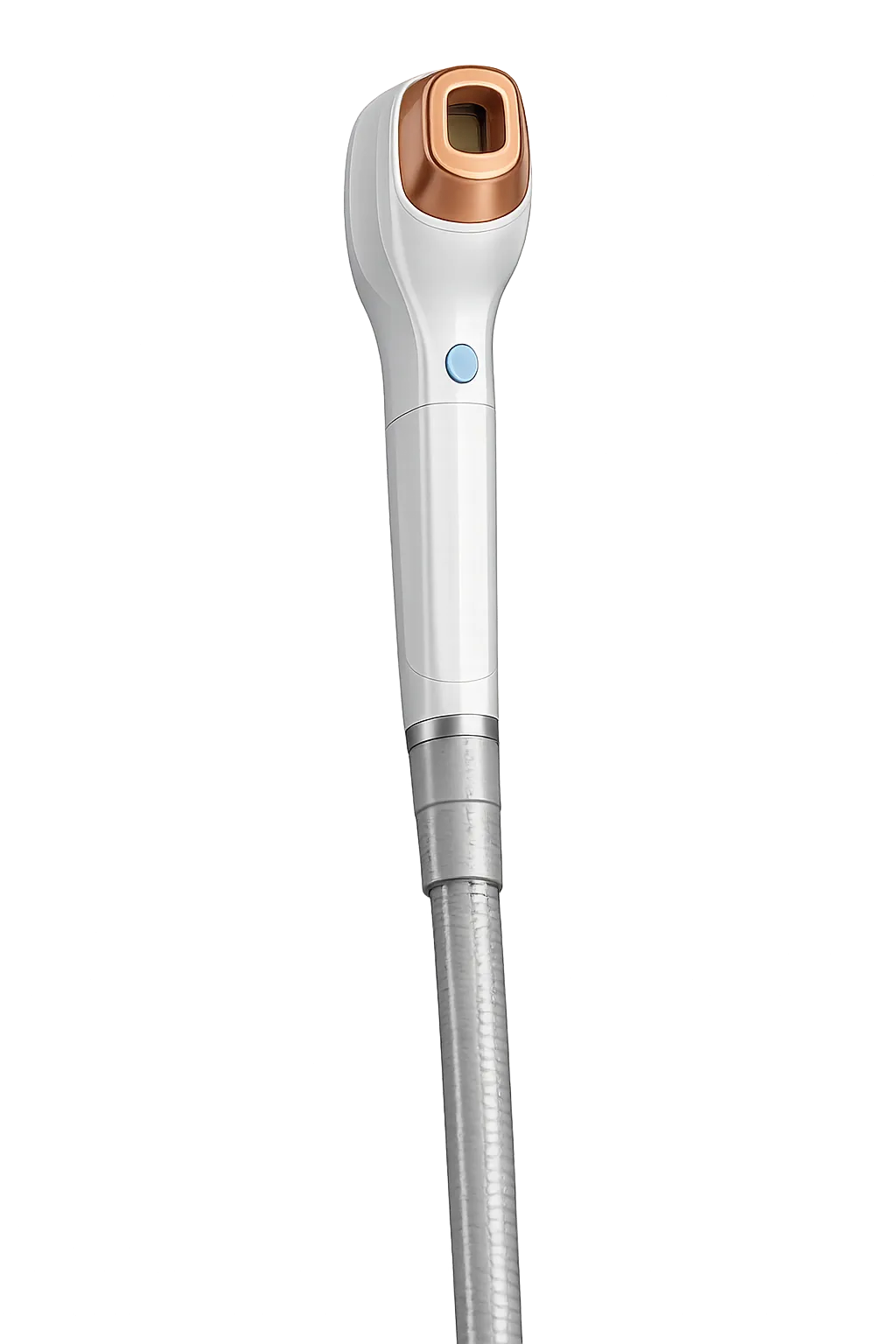
The ADSS 4D TECLASER serves UK aesthetic clinics, dermatology practices, hair-removal centres, and medical-grade salons offering diode laser hair removal across the full Fitzpatrick skin-type range. The 4-wavelength architecture is the platform's defining advantage: clinics with mixed-Fitzpatrick clientele — common in multi-ethnic UK urban catchment areas — can treat the full case mix on one machine rather than running separate 808nm and 1064nm platforms.
In standard body hair removal (legs, back, chest, underarms, bikini), the 808/940nm mixed output covers Fitzpatrick I-IV at high efficiency. The 12×16 mm large spot supports fast coverage on body areas, with the high 1-10 Hz repetition rate further reducing session times. Course response follows established diode laser protocols: 6-8 sessions at 4-6 week intervals typically achieve 80-95% reduction in body hair density on Fitzpatrick I-IV.
For darker Fitzpatrick V-VI skin types, the 1064nm wavelength is the safety-critical addition. At 1064nm, melanin absorption is lower across both the follicle and epidermis, which means higher fluences can be delivered to the follicle without epidermal burn risk. This makes the 4D TECLASER appropriate for the South Asian, African, and Caribbean clientele that conventional 808nm-only diode platforms cannot safely treat at therapeutic fluences. Test-spot protocols 48-72 hours before first session remain essential.
In facial hair removal — upper lip, chin, jawline, neck — the smaller-area technique uses the same handpiece with adjusted parameters. The 755nm wavelength is particularly useful here for light/thin facial hair where 808nm provides insufficient melanin absorption. Course intervals on facial work typically run longer (6-8 weeks) because facial hair cycles run differently from body hair, and clinics should set patient expectations accordingly.