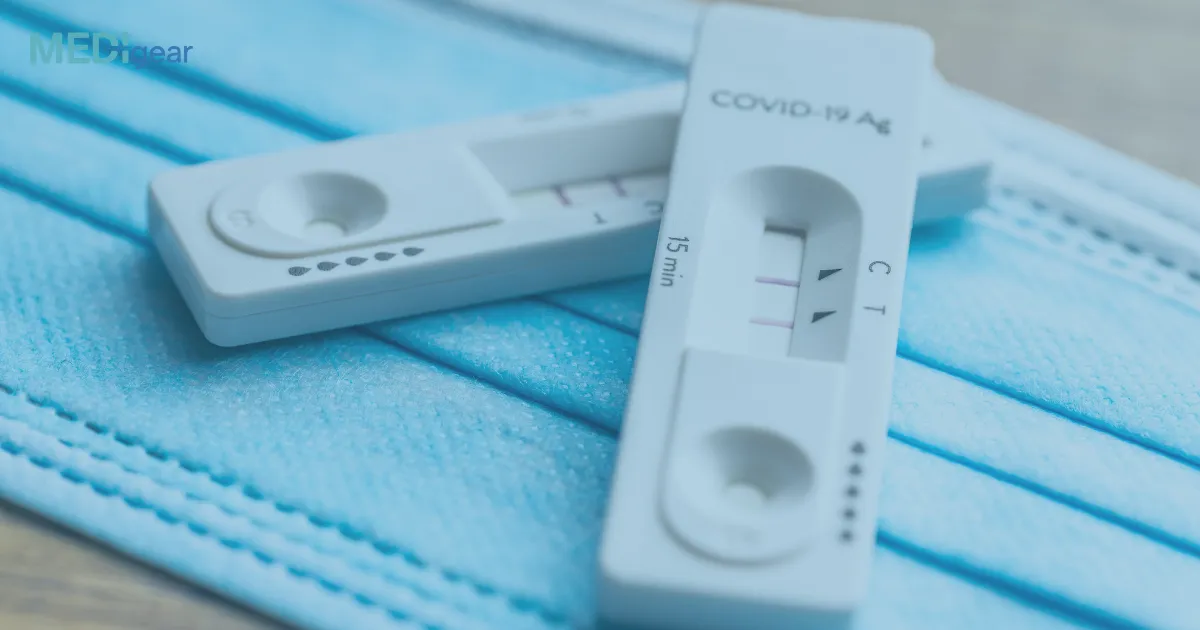
Diagnostic testing plays a crucial role in detecting infectious diseases and controlling outbreaks. Two of the most commonly used testing methods are PCR testing and antigen testing. Although both are used to identify infections, they work in very different ways and are suited for different clinical situations.
Understanding the differences between PCR and antigen tests helps patients, clinicians, and public health professionals choose the most appropriate diagnostic approach.
1. What Is PCR Testing?
PCR (Polymerase Chain Reaction) testing is a molecular diagnostic method that detects the genetic material (DNA or RNA) of a pathogen.
How PCR Works:
- A sample (often nasal or throat swab) is collected.
- The pathogen’s genetic material is extracted.
- PCR amplifies specific genetic sequences, creating millions of copies.
- Even very small amounts of viral or bacterial RNA/DNA can be detected.
Because of this amplification process, PCR tests are considered highly sensitive and accurate.
Key Characteristics:
- Detects genetic material directly
- Extremely sensitive
- Can identify infection at very early stages
- Requires specialized laboratory equipment
2. What Is Antigen Testing?
Antigen testing detects specific proteins (antigens) found on the surface of a virus or bacterium.
How Antigen Tests Work:
- A sample is collected, typically using a nasal swab.
- The test identifies pathogen-specific proteins in the sample.
- Results are generated within minutes.
Antigen tests are often referred to as rapid tests due to their quick turnaround time.
Key Characteristics:
- Detects surface proteins of the pathogen
- Faster results
- Easier to perform
- Generally lower sensitivity than PCR
3. Key Differences Between PCR and Antigen Testing
|
Feature |
PCR Testing |
Antigen Testing |
|
Target |
Genetic material (DNA/RNA) |
Pathogen proteins |
|
Sensitivity |
Very high |
Moderate |
|
Accuracy |
Higher |
Lower than PCR |
|
Result Time |
Hours to days |
Minutes |
|
Equipment |
Specialized laboratory |
Point-of-care or home use |
|
Early Detection |
Yes |
Limited |
|
Cost |
Higher |
Lower |
4. Accuracy and Sensitivity
PCR tests can detect extremely small amounts of a pathogen, making them the gold standard for diagnosis.
Antigen tests require a higher concentration of the pathogen to yield a positive result, meaning they may miss infections during early or late stages.
This difference explains why PCR is preferred when diagnostic accuracy is critical, while antigen tests are useful for rapid screening.
5. When PCR Testing Is Preferred
PCR testing is typically recommended when:
- Early infection detection is required
- Symptoms are mild or just beginning
- Confirmatory testing is needed
- Clinical decisions depend on high accuracy
- Screening is performed in hospitals and laboratories
PCR tests are widely used in confirmatory diagnosis and epidemiological surveillance.
6. When Antigen Testing Is Used
Antigen testing is most useful when:
- Rapid results are needed
- Screening large populations
- Testing symptomatic individuals with high viral load
- Access to laboratory facilities is limited
- Frequent, repeat testing is required
Antigen tests are especially valuable for point-of-care testing and outbreak control strategies.
7. False Negatives and Confirmatory Testing
Because antigen tests are less sensitive, false-negative results can occur, particularly in early infection.
In such cases, PCR testing is often used as a confirmatory test to rule out infection definitively.
PCR testing has a much lower false-negative rate when samples are collected properly.
8. Role in Public Health and Disease Control
Both PCR and antigen tests play complementary roles:
- PCR tests ensure accurate diagnosis and surveillance.
- Antigen tests enable rapid screening and quick isolation decisions.
Using both strategically improves disease detection and containment efforts.
Final Thoughts
PCR and antigen testing differ significantly in accuracy, speed, and application.
PCR testing offers high sensitivity and early detection, making it ideal for definitive diagnosis.
Antigen testing provides rapid, accessible results, supporting large-scale screening and timely decision-making.
Understanding these differences allows healthcare providers and individuals to choose the right test for the right situation — improving clinical outcomes and public health response.