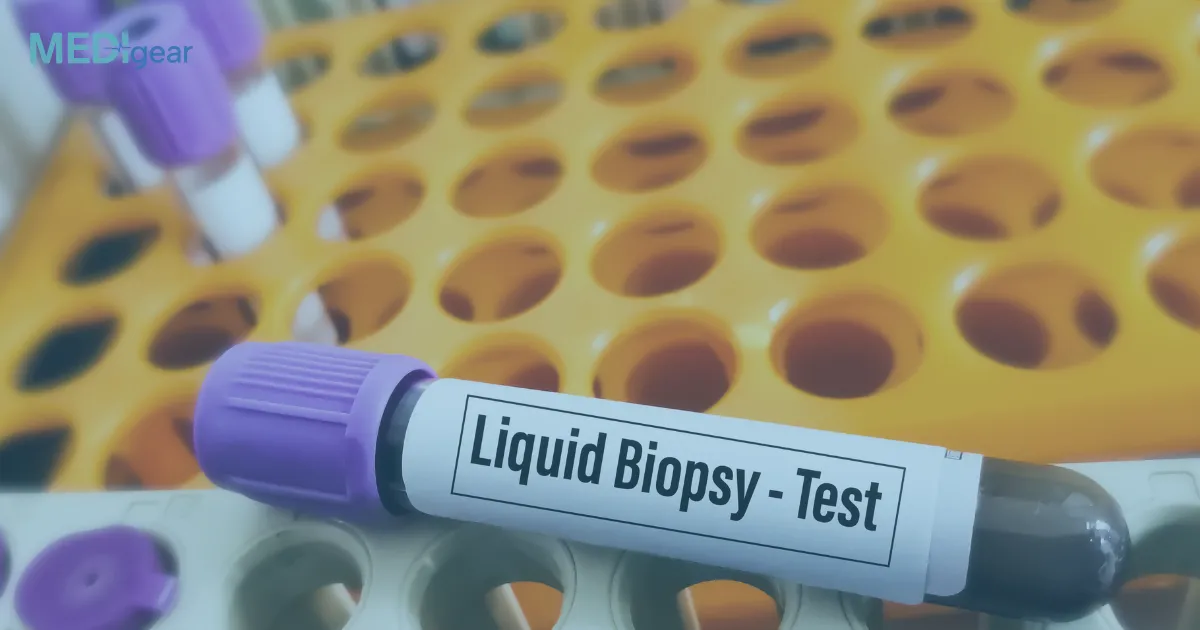
Early cancer detection significantly improves treatment success and survival rates. Traditional tissue biopsies, while effective, are invasive and may not always capture the full complexity of a tumor.
Liquid biopsy is an advanced diagnostic approach that overcomes many of these limitations by detecting cancer-related biomarkers in body fluids, most commonly blood.
This minimally invasive technology is transforming oncology by enabling earlier diagnosis, real-time disease monitoring, and personalized cancer care.
1. What Is a Liquid Biopsy?
A liquid biopsy is a laboratory test that analyzes biological material released by tumors into the bloodstream or other body fluids.
Instead of surgically removing tissue, clinicians can detect cancer-related changes using a simple blood draw.
The test looks for biomarkers such as:
- Circulating tumor DNA (ctDNA)
- Circulating tumor cells (CTCs)
- RNA fragments
- Exosomes
- Cancer-associated proteins and metabolites
These biomarkers provide molecular information about the tumor without direct tissue sampling.
2. How Cancer Biomarkers Enter the Bloodstream
As cancer cells grow and divide, some die or shed material into the circulation.
Fragments of DNA, whole tumor cells, and vesicles containing genetic material can be detected in blood, often before tumors are large enough to be identified on imaging.
Because these biomarkers reflect ongoing tumor activity, liquid biopsy provides a dynamic snapshot of disease progression.
3. How Liquid Biopsy Detects Cancer Early
a. Identification of Tumor-Specific Genetic Mutations
Liquid biopsy detects mutations, copy number variations, and epigenetic changes linked to cancer development.
These genetic alterations can be identified at very low concentrations, allowing detection during early or pre-symptomatic stages.
b. High Sensitivity Through Advanced Molecular Techniques
Technologies such as:
- Polymerase chain reaction (PCR)
- Next-generation sequencing (NGS)
- Digital droplet PCR
enable identification of minute quantities of ctDNA—sometimes at levels below 0.1% of total circulating DNA.
c. Detection Before Clinical Symptoms Appear
Because molecular changes occur before tumors cause physical symptoms, liquid biopsy can reveal cancer earlier than conventional diagnostic methods, supporting timely intervention.
4. Applications of Liquid Biopsy in Oncology
Early Cancer Screening
Liquid biopsy is being studied and used for early detection of cancers such as lung, breast, colorectal, prostate, and ovarian cancer—particularly in high-risk individuals.
Monitoring Disease Progression
Repeat testing allows clinicians to:
- Track tumor burden
- Detect minimal residual disease
- Identify early relapse
This ongoing monitoring is not feasible with repeated tissue biopsies.
Guiding Targeted Therapy
Liquid biopsy identifies actionable mutations that help match patients with targeted drugs or immunotherapies.
Assessing Treatment Resistance
Genetic changes associated with drug resistance can be detected early, allowing treatment adjustment before clinical deterioration.
5. Advantages Over Traditional Tissue Biopsy
Liquid biopsy offers several key benefits:
- Minimally invasive and lower risk
- Repeatable, enabling real-time monitoring
- Faster turnaround time
- Captures tumor heterogeneity better than single-site tissue samples
- Accessible when tissue biopsy is not possible
These advantages make it ideal for both early detection and long-term disease management.
6. Limitations and Challenges
Despite its promise, liquid biopsy has limitations:
- Very early tumors may release extremely low biomarker levels, challenging detection
- False negatives can occur in early-stage disease
- Some cancers shed fewer biomarkers into circulation
- Interpretation requires advanced laboratory infrastructure
For now, liquid biopsy is often used alongside imaging and tissue biopsy rather than as a sole diagnostic tool.
7. The Future of Liquid Biopsy
Ongoing research aims to improve sensitivity, expand cancer types detected, and standardize testing protocols. Future developments include:
- Multi-cancer early detection tests
- Artificial intelligence–driven data analysis
- Integration into routine cancer screening programs
- Personalized risk prediction models
As technology advances, liquid biopsy is expected to play a central role in population-level cancer screening and precision oncology.
Final Thoughts
Liquid biopsy represents a significant breakthrough in cancer diagnostics. By detecting cancer-related genetic material in blood, it allows earlier diagnosis, real-time monitoring, and personalized treatment planning—all with minimal invasiveness.
While not a complete replacement for tissue biopsy yet, liquid biopsy is rapidly becoming an essential tool in modern oncology, offering hope for earlier detection and improved survival outcomes.
Disclaimer:
This article is for informational purposes only and does not replace professional medical advice. Diagnostic and treatment decisions should always be made by qualified oncology and pathology specialists.