Medication errors are among the most significant safety concerns in hospitals worldwide, often resulting from manual miscalculations, incorrect drug concentrations, or infusion rate mistakes.
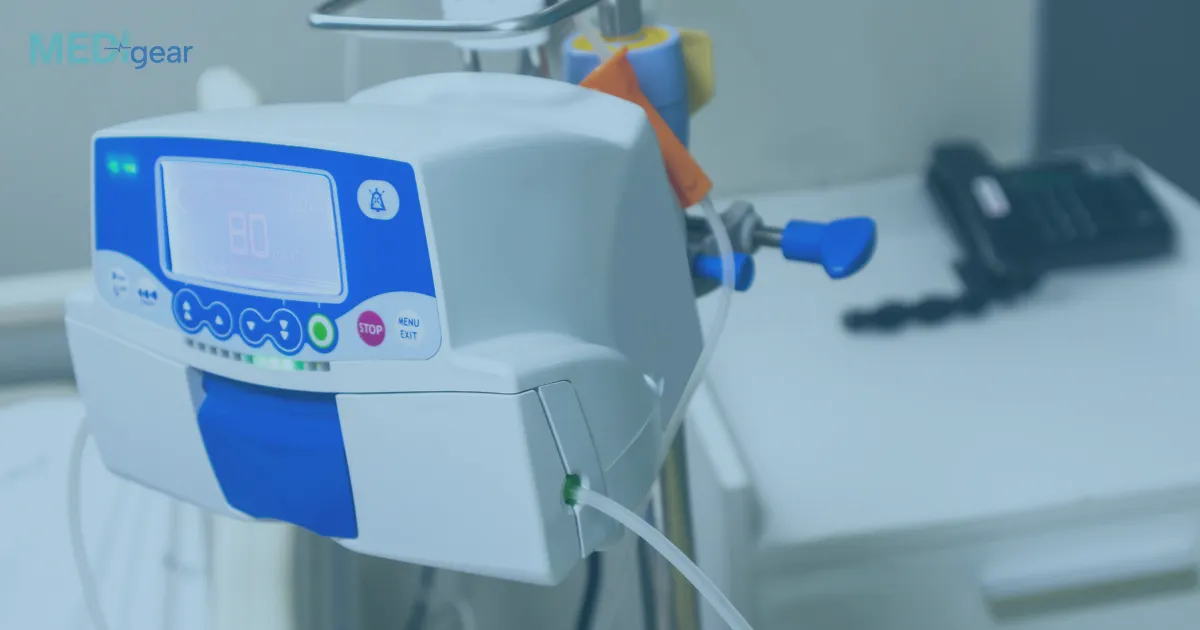
To combat these risks, healthcare facilities are increasingly adopting smart infusion pumps — advanced, computer-assisted drug delivery systems designed to ensure accuracy, safety, and efficiency in intravenous (IV) therapy.
By integrating digital controls, dose-error reduction software, and clinical decision support tools, smart infusion pumps have become a cornerstone of modern medication safety and hospital automation.
1. What Are Smart Infusion Pumps?
A smart infusion pump is an advanced medical device that precisely delivers fluids, nutrients, or medications into a patient’s bloodstream. Unlike traditional pumps, smart pumps are equipped with:
- Drug libraries containing pre-programmed dosing limits.
- Dose Error Reduction Systems (DERS) that alert users to potential dosing mistakes.
- Integration with hospital electronic health record (EHR) systems for accurate order verification.
They are widely used for administering antibiotics, chemotherapy, anesthetics, insulin, and critical care infusions, where precision is vital.
2. The Challenge of Medication Errors
According to the World Health Organization (WHO), medication errors cause at least one adverse event per 300 hospital admissions globally.
In IV therapy, errors often stem from:
- Manual entry of incorrect infusion rates or doses.
- Confusion between similar drug names or concentrations.
- Misprogrammed pump settings or decimal-point errors.
- Lack of double-check systems in high-stress environments.
Smart infusion pumps are designed specifically to address these vulnerabilities by introducing automated safety checks and data-driven accuracy.
3. Key Features That Enhance Safety and Accuracy
a. Drug Libraries and Dosing Limits
Each smart pump includes a customizable drug library—a database of commonly used medications with clinically approved dosing ranges for specific patient populations (adult, pediatric, or neonatal).
If a clinician enters a value outside the safe range, the pump triggers an immediate alert before the medication is administered.
This prevents dangerous overdoses, underdoses, and rate-setting errors that may otherwise go unnoticed.
b. Dose Error Reduction Systems (DERS)
The DERS continuously cross-checks input values against the hospital’s approved medication protocols.
It detects and alerts clinicians to inconsistencies such as incorrect concentration, rate, or volume, effectively serving as a real-time safeguard during IV programming.
Studies show that DERS-equipped pumps can prevent up to 60–70% of potentially harmful infusion errors before they reach the patient.
c. Integration with Electronic Health Records (EHR)
Modern smart pumps connect with hospital EHR systems through wireless data networks, allowing medication orders to flow directly from the physician’s prescription to the pump — minimizing transcription errors.
This closed-loop communication ensures:
- Accurate medication selection.
- Automatic dose verification.
- Audit trails for tracking infusion events and alerts.
Integration also supports real-time monitoring, enabling pharmacists and clinicians to review infusion data remotely for ongoing safety assurance.
d. Barcoding and Patient Verification
Some smart infusion systems are integrated with barcode medication administration (BCMA) technology.
Before an infusion begins, the nurse scans the medication and the patient’s wristband to verify the match.
If the system detects a mismatch between the prescribed drug and patient ID, it prevents infusion initiation, reducing human error.
e. Alarm and Alert Systems
Smart pumps include audible and visual alerts for occlusions, air-in-line detection, or completed infusions.
Alerts help clinicians intervene promptly, minimizing the risk of underdelivery, overdosing, or equipment malfunction.
4. Enhancing Clinical Workflow Efficiency
Beyond safety, smart infusion pumps improve overall workflow by automating calculations and minimizing repetitive tasks.
Features like auto-titration, preloaded drug profiles, and wireless updates reduce setup time and support standardization across departments.
This efficiency allows nurses to focus more on patient care rather than manual pump programming, reducing fatigue-related errors.
5. Real-World Impact on Medication Safety
Clinical studies demonstrate that hospitals using smart infusion pumps experience:
- Up to 70% reduction in serious IV medication errors.
- Significant decrease in adverse drug events (ADEs).
- Improved compliance with institutional dosing guidelines.
For example, implementing networked smart pumps in intensive care units (ICUs) has been shown to reduce programming errors by over 50%, while maintaining consistent dosing precision across multiple caregivers.
6. Limitations and Future Directions
Despite their benefits, smart infusion pumps are not error-proof.
Challenges include:
- User overrides when alerts are ignored.
- Incomplete drug libraries if not updated regularly.
- Network downtime that can interrupt communication with EHR systems.
The future of infusion safety lies in:
- AI-powered dose prediction models.
- Automated calibration and self-learning systems.
- Closed-loop integration with pharmacy and lab systems for continuous error prevention.
These innovations will further enhance the accuracy, reliability, and adaptability of infusion therapy.
Final Thoughts
Smart infusion pumps have revolutionized medication administration by combining automation, clinical intelligence, and digital connectivity.
Through features like drug libraries, dose-error reduction systems, and EHR integration, they have dramatically reduced the risk of medication errors — improving both patient safety and clinical workflow.
As hospitals continue to embrace connected technologies, smart infusion pumps will remain a critical component of safe, data-driven, and error-resistant healthcare delivery.
Disclaimer:
This article is for informational purposes only and does not substitute professional medical advice. Always refer to institutional protocols and manufacturer guidelines when operating infusion devices.