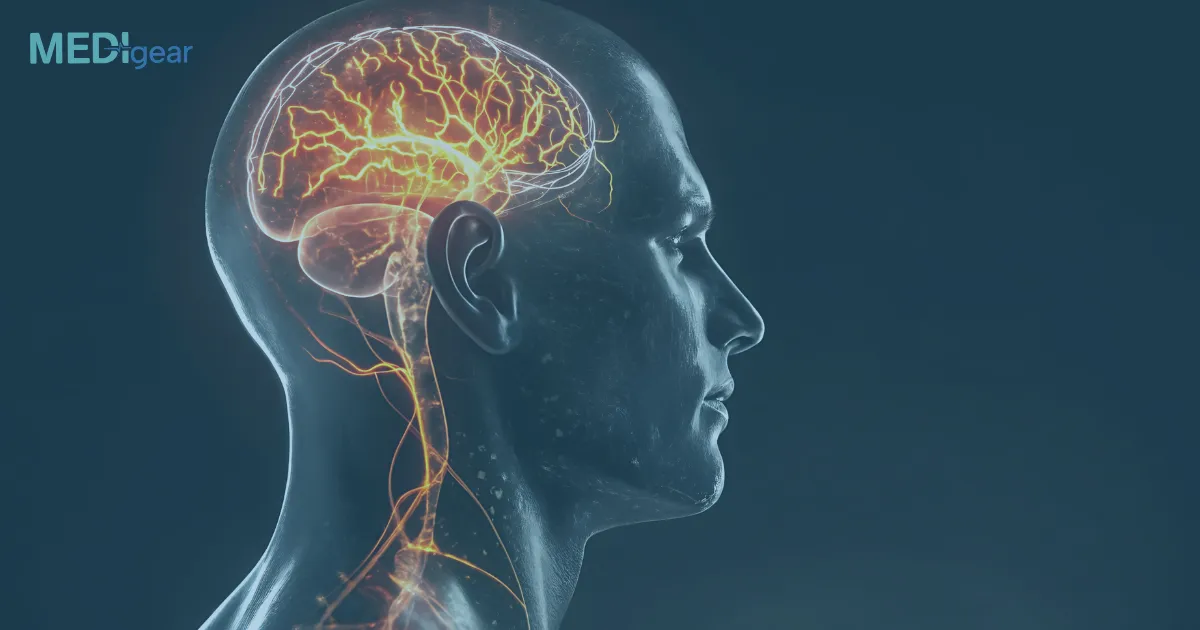
Neuroprosthetics represent one of the most exciting frontiers in neuroscience and biomedical engineering. These advanced devices connect directly with the nervous system to restore lost sensory or motor functions caused by injury, disease, or amputation.
By bridging damaged neural pathways with artificial interfaces, neuroprosthetics can restore sensory perception, allowing individuals to feel touch, temperature, or movement once again — transforming rehabilitation and quality of life for patients with neurological impairments.
1. What Are Neuroprosthetics?
Neuroprosthetics, also known as neural prostheses, are implantable or external devices designed to interact with the nervous system to replace or restore neural functions that have been lost.
Unlike traditional prosthetics, which provide mechanical movement, neuroprosthetics use bioelectrical communication to stimulate or record neural activity.
Common applications include:
- Cochlear implants – restoring hearing in patients with severe hearing loss.
- Retinal implants – restoring partial vision in patients with retinal degeneration.
- Somatosensory prosthetics – restoring tactile sensation in amputees.
- Motor neuroprosthetics – enabling movement in paralyzed patients via brain-computer interfaces (BCIs).
2. The Science Behind Sensory Restoration
The human sensory system transmits information from sensory organs (like the eyes, ears, or skin) to the brain via electrical impulses.
When these pathways are disrupted — for instance, due to nerve injury or amputation — the brain no longer receives sensory input.
Neuroprosthetics mimic natural neural signaling by converting external stimuli into electrical signals that the brain can interpret.
The process involves three key steps:
- Signal Detection: Sensors detect external stimuli (pressure, sound, or light).
- Signal Processing: The neuroprosthetic system converts these signals into neural-compatible electrical impulses.
- Neural Stimulation: Electrodes transmit the signals to specific nerves or brain regions, restoring perception.
This technology effectively creates a synthetic sensory feedback loop, reestablishing lost communication between the body and brain.
3. Major Types of Sensory Neuroprosthetics
a. Cochlear Implants – Restoring Hearing
Cochlear implants are one of the most successful examples of neuroprosthetics in medicine.
They bypass damaged hair cells in the inner ear and directly stimulate the auditory nerve, sending sound information to the brain.
Modern cochlear implants can enable profoundly deaf individuals to perceive speech, music, and environmental sounds with remarkable clarity.
b. Retinal Implants – Restoring Vision
Retinal neuroprosthetics, such as the Argus II retinal implant, help patients with degenerative retinal diseases like retinitis pigmentosa.
These systems use a miniature camera embedded in eyeglasses to capture images, which are converted into electrical impulses and transmitted to the retinal ganglion cells, stimulating visual perception in the brain.
c. Somatosensory (Touch) Neuroprosthetics
Amputees using robotic limbs often lack sensory feedback, making control difficult.
Somatosensory neuroprosthetics address this by embedding electrode arrays that send touch-related electrical signals to remaining peripheral nerves or directly to the brain’s somatosensory cortex.
This allows users to “feel” texture, pressure, and motion, improving control, coordination, and the naturalness of prosthetic movement.
d. Brain-Computer Interface (BCI) Neuroprosthetics
BCI-based systems decode brain signals and translate them into commands for external devices — such as robotic arms or computers.
Recent advancements have enabled bidirectional BCIs, where the device not only receives commands from the brain but also sends sensory feedback back to the user, completing a realistic feedback cycle.
4. How Neuroprosthetics Recreate Sensation
The success of neuroprosthetic systems depends on how accurately they can replicate natural neural coding — the language of the nervous system.
Key mechanisms include:
- Electrical stimulation of peripheral nerves: Reawakens sensory pathways by mimicking natural nerve impulses.
- Direct cortical stimulation: Bypasses damaged nerves entirely by interfacing directly with the sensory cortex.
- Patterned stimulation algorithms: Reproduce specific sensory qualities like vibration, texture, or temperature.
Advances in microelectrode technology, neurofeedback algorithms, and biocompatible materials are making this process increasingly precise and stable.
5. Clinical Applications and Research Progress
Hearing and Vision Restoration
Cochlear and retinal implants have already restored sensory function for hundreds of thousands of patients globally.
Touch and Movement Rehabilitation
Ongoing research at institutions such as the University of Pittsburgh and DARPA’s Revolutionizing Prosthetics program is developing prosthetic hands capable of real tactile sensation — allowing users to feel what they touch.
Spinal Cord and Nerve Injury Recovery
Neuroprosthetics that stimulate spinal neurons have shown promise in helping paralyzed individuals regain partial movement and sensory feedback.
6. Challenges and Future Directions
While neuroprosthetics are advancing rapidly, several challenges remain:
- Long-term biocompatibility of implanted electrodes.
- Signal stability and precision in decoding and encoding neural data.
- Ethical considerations around brain implants and cognitive enhancement.
- Cost and accessibility for patients in low-resource settings.
The future lies in closed-loop neuroprosthetics — devices capable of both reading and stimulating neural activity dynamically.
Researchers are also exploring soft, flexible electrodes and AI-driven neural modeling to enhance accuracy and comfort.
Final Thoughts
Neuroprosthetics are redefining what’s possible in restorative medicine.
By reconnecting the brain with artificial systems, these technologies can restore lost senses, empower movement, and even enable communication in patients once thought beyond recovery.
As neuroscience, robotics, and AI converge, the boundary between biology and technology continues to blur — offering new hope for patients with sensory or motor impairments and paving the way for a future of personalized, neuroadaptive healthcare.
Disclaimer:
This article is for informational purposes only and does not replace medical advice. Patients considering neuroprosthetic solutions should consult a qualified neurologist, neurosurgeon, or rehabilitation specialist.