Brain-computer interfaces (BCIs) are transforming neuroscience, rehabilitation, and assistive technology by enabling direct communication between the brain and external devices.
A newer generation of these systems, known as hybrid BCIs, combines multiple physiological signals—most commonly EEG (electroencephalography) and EMG (electromyography)—to enhance control, accuracy, and responsiveness in neurotechnology applications.
Understanding EEG and EMG in BCIs
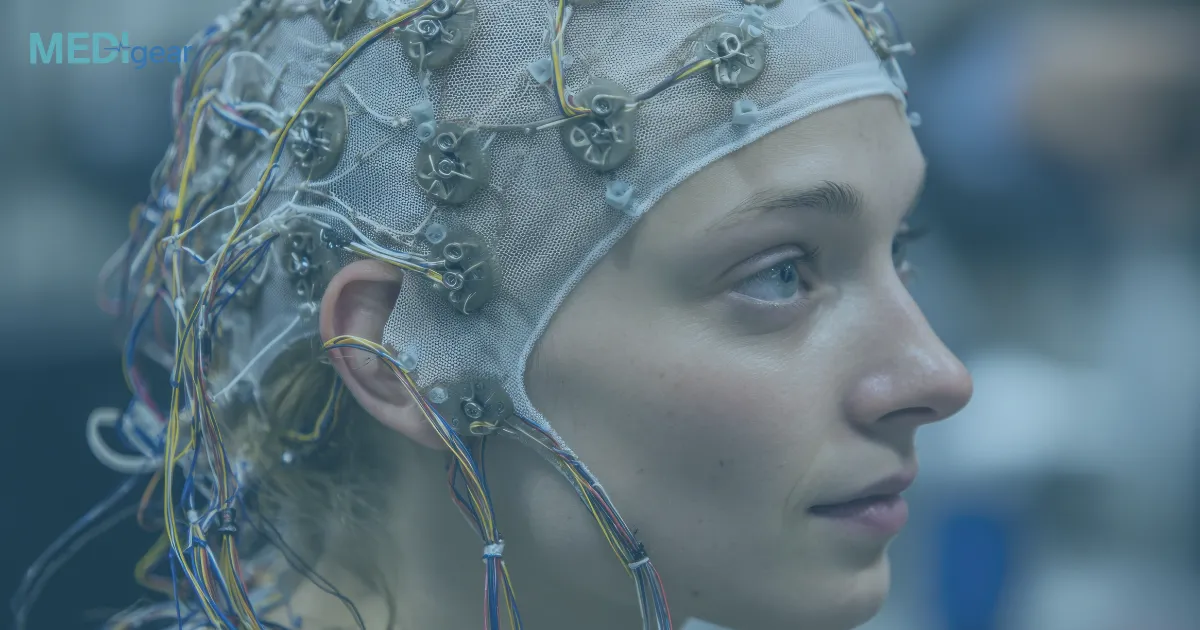
EEG measures electrical activity produced by neurons in the brain, providing insight into cognitive and motor intentions.
EMG, on the other hand, detects electrical signals from muscle activity, reflecting physical movement or residual muscle control.
Individually, each system has limitations:
- EEG signals can be noisy and slow to interpret in real-time.
- EMG depends on muscle activation, which may not be possible for all users, such as those with paralysis.
By combining both, hybrid BCIs integrate brain and muscle feedback to create a more reliable and responsive interface.
1. The Concept of Hybrid BCI
A hybrid brain-computer interface merges two or more input signals—typically EEG and EMG—to improve system performance.
This dual-signal approach leverages the strengths of both: EEG provides cognitive intent, while EMG confirms physical readiness or movement.
The integration allows for faster, more accurate control of external devices such as robotic arms, wheelchairs, or prosthetics.
2. How EEG and EMG Signals Work Together
Hybrid BCIs process EEG and EMG data simultaneously using real-time algorithms.
Here’s how the system works step by step:
- Signal Acquisition: Electrodes capture EEG signals from the scalp and EMG signals from muscles.
- Feature Extraction: The system identifies meaningful patterns (e.g., motor imagery in EEG or muscle contraction in EMG).
- Data Fusion: Advanced algorithms merge both signal streams, correlating brain intent with physical response.
- Command Execution: The system interprets the combined signals to control a device or trigger an action.
This integration reduces false activations and increases precision compared to using EEG or EMG alone.
3. Applications of Hybrid BCI Systems
Hybrid BCIs are increasingly used in neurorehabilitation, prosthetics, and assistive robotics.
- Stroke Rehabilitation: EEG detects motor intent, while EMG verifies partial muscle activity, helping guide robotic exoskeletons during therapy.
- Prosthetic Control: Users can operate prosthetic limbs with higher accuracy, combining mental command (EEG) and muscle signals (EMG).
- Communication Devices: For patients with limited motor control, EEG and EMG fusion improves responsiveness in communication systems.
- Gaming and Human-Computer Interaction: Hybrid BCIs offer enhanced control and immersive user experience.
4. Advantages of EEG–EMG Integration
- Improved Accuracy: Reduces false signals and misclassifications.
- Faster Response Time: EMG signals confirm EEG commands, allowing smoother transitions.
- Robust Performance: Maintains control even when one signal type weakens.
- Enhanced Adaptability: Suitable for users with partial motor abilities.
- Better Rehabilitation Outcomes: Promotes neuroplasticity through synchronized brain-muscle engagement.
5. Challenges and Future Directions
While promising, hybrid BCIs face challenges such as signal interference, calibration complexity, and user fatigue from electrode setups.
Ongoing research aims to:
- Simplify signal processing with AI-driven models.
- Develop wearable, wireless systems for daily use.
- Integrate additional biosignals (like EOG or fNIRS) for richer data fusion.
As algorithms evolve and hardware becomes more portable, hybrid BCIs are expected to play a vital role in neural rehabilitation, assistive mobility, and brain-controlled prosthetics.
Final Thoughts
Hybrid BCI systems represent a major step forward in neurotechnology by combining EEG’s brain-based intent with EMG’s muscle feedback.
This synergy bridges the gap between thought and action, creating faster, more precise, and user-friendly interfaces that could redefine rehabilitation, prosthetics, and human-machine interaction.
Disclaimer:
This blog post is for informational purposes only and does not replace professional medical or neurological advice. Always consult qualified healthcare specialists before using or testing neurotechnology devices.