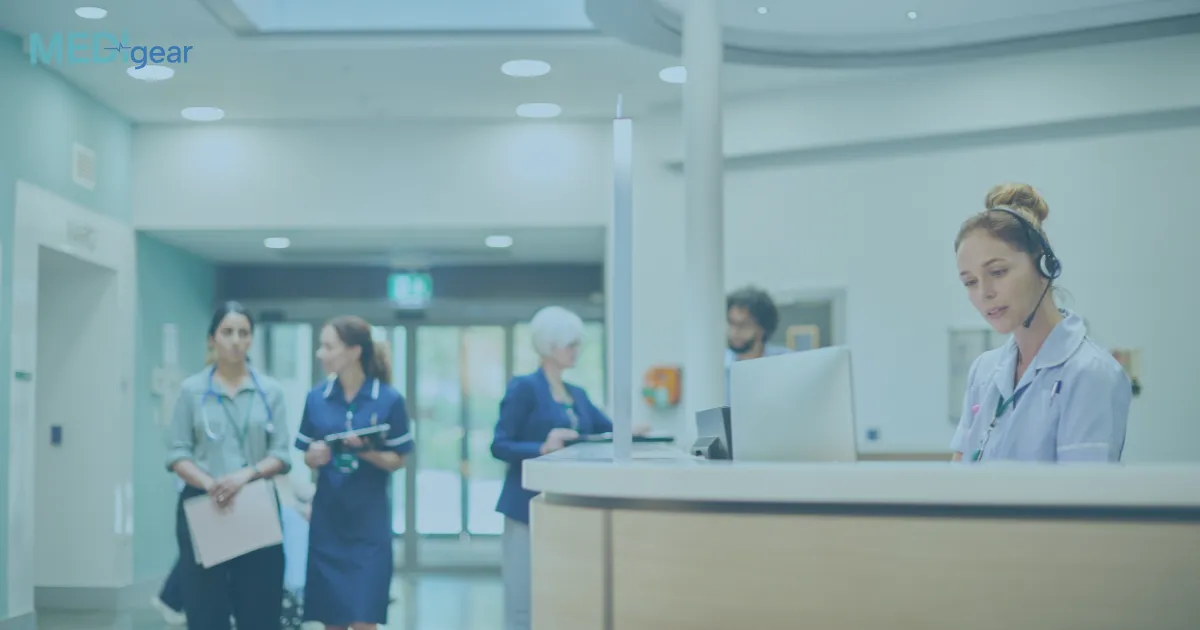
Modern hospitals depend on continuous patient observation, especially in ICUs, HDUs, emergency rooms, and post-operative wards. However, a nurse cannot remain physically present at every bedside all the time. A Nurse Station Monitoring System (NSMS) solves this challenge by centralizing real-time patient data from multiple bedside monitors into one location — the nurse station.
It is one of the most important technologies in modern patient safety and clinical workflow management.
What Is a Nurse Station Monitoring System?
A nurse station monitoring system is a centralized surveillance platform that connects multiple bedside patient monitors to a central computer at the nursing desk. It allows healthcare staff to observe vital signs of many patients simultaneously from one screen.
Instead of checking each bed manually, nurses and doctors can monitor:
- Heart rate
- ECG waveforms
- Oxygen saturation (SpO₂)
- Blood pressure (NIBP/IBP)
- Respiratory rate
- Temperature
The system works continuously (24/7) and provides instant alerts if any patient’s condition becomes unstable.
How It Works
1. Bedside Monitoring
Each patient is connected to a multi-parameter monitor that measures vital signs.
2. Network Transmission
The monitor sends data via:
- Wired LAN (hospital ethernet)
- Wi-Fi medical network
3. Central Station
All information is displayed at the nurse station on a central monitor or server-based software dashboard.
4. Alarm System
If any parameter crosses a safe limit, the system immediately:
- Generates audible alarms
- Shows visual alerts
- Highlights the patient bed number
Major Components
1. Central Monitoring Software
The main dashboard where staff observe multiple patients simultaneously. It shows waveforms, numerical values, and trends.
2. Central Display Workstation
High-resolution screen(s) that display all connected beds (commonly 16–128 beds).
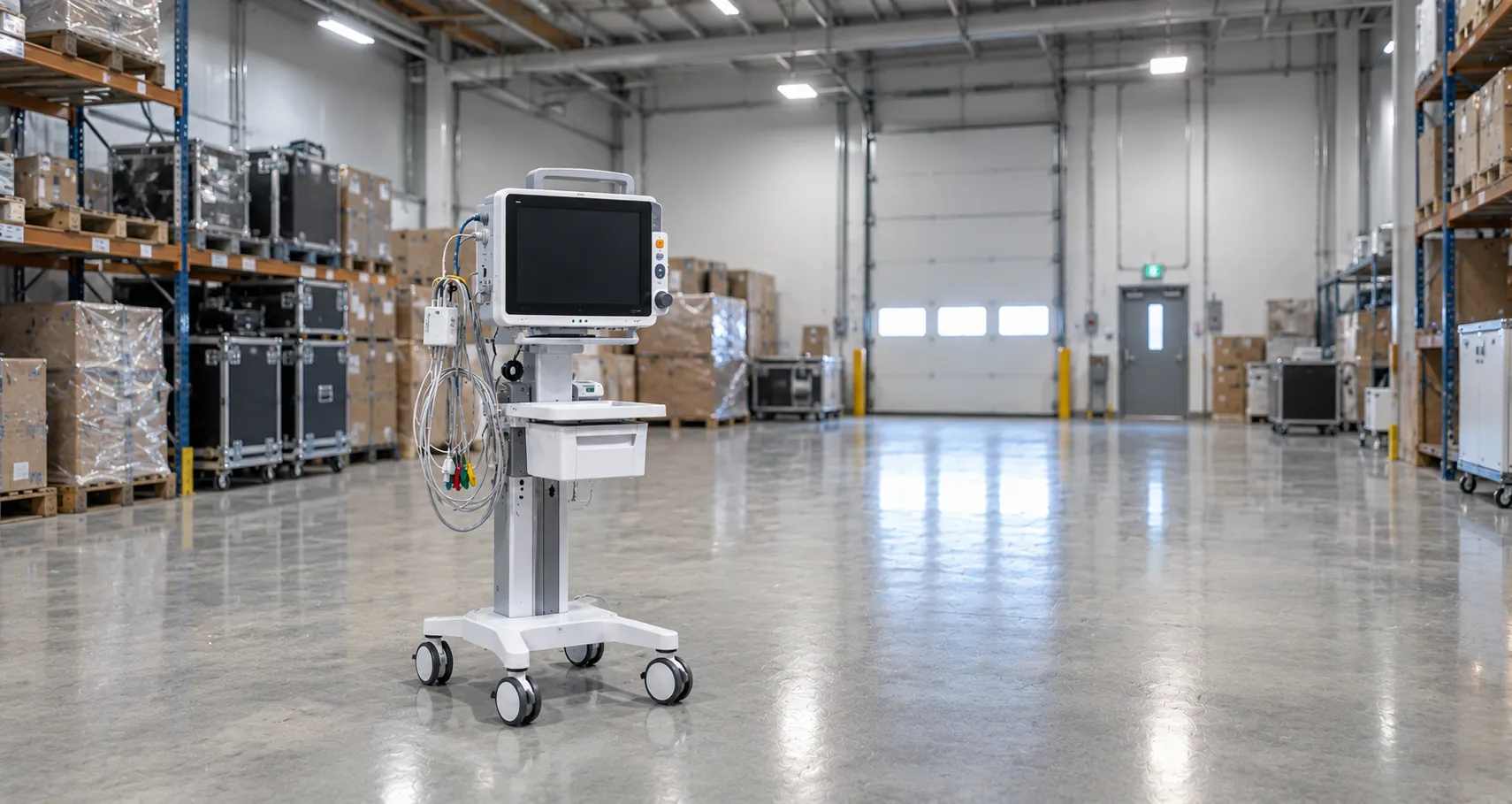
3. Bedside Patient Monitors
Multi-parameter monitors attached to each patient.
4. Server & Data Storage
Stores patient trends, alarms, and history for clinical review.
5. Networking System
Medical-grade routers, switches, and cabling to ensure uninterrupted communication.
Key Features
- Real-time vital monitoring
- Centralized alarm notification
- Patient trend analysis (hours/days)
- Arrhythmia detection
- Remote viewing from doctor cabins
- Bed-to-bed comparison
- Automatic event recording
- Nurse call integration (in some systems)
Clinical Areas Where It Is Used
- Intensive Care Unit (ICU)
- Neonatal ICU (NICU)
- Cardiac Care Unit (CCU)
- Operation theatre recovery room
- Emergency department
- Dialysis unit
- High Dependency Units (HDU)
- Step-down wards
Benefits for Hospitals
Faster Emergency Response
The system alerts nurses immediately during cardiac arrest, oxygen drop, arrhythmia, or respiratory distress.
Improved Patient Safety
Continuous surveillance significantly reduces unnoticed deterioration.
Reduced Nurse Workload
Nurses do not need to manually check each bed repeatedly.
Better Documentation
Automatic data storage helps in clinical decisions, legal records, and treatment evaluation.
Multi-Patient Monitoring
One nurse can safely supervise multiple patients simultaneously.
Benefits for Doctors
- Remote patient viewing from cabins
- Trend review before rounds
- Early diagnosis of deterioration
- Cardiac event detection
- Evidence-based treatment planning
Alarm Management
The system uses intelligent alarm settings including:
- High and low parameter limits
- Priority alarms (critical, medium, low)
- Event recall and review
- Alarm history logs
This helps avoid alarm fatigue while still ensuring patient safety.
Integration With Hospital Information Systems
Advanced nurse station systems can integrate with:
- Electronic Medical Records (EMR)
- Hospital Information System (HIS)
- PACS systems
- Nurse call systems
This creates a fully digital hospital environment.
Bedside Monitor vs Nurse Station Monitoring System
A bedside monitor is located at the patient’s bed and monitors only one patient. It provides local alarms and limited data storage.
A nurse station monitoring system is located at the central nursing desk and monitors multiple patients simultaneously. It allows remote viewing, long-term data storage, centralized alarms, and hospital-wide surveillance.
Who Needs It?
A nurse station monitoring system is essential for:
- Hospitals with ICU beds
- Multispecialty hospitals
- Cardiac hospitals
- Trauma centers
- Dialysis centers
- Large nursing homes
Future Trends
Modern systems now include:
- Mobile tablet monitoring
- Cloud monitoring
- AI-based early warning scores
- Predictive deterioration alerts
- Tele-ICU monitoring
Hospitals are moving toward centralized and remote patient surveillance, making nurse station monitoring a core infrastructure rather than an optional device.
Conclusion
A Nurse Station Monitoring System is not just a monitoring tool — it is a patient safety platform. By centralizing vital sign observation, reducing response time, and supporting clinical decisions, it plays a critical role in saving lives.
As healthcare shifts toward digital and smart hospitals, implementing a reliable nurse station monitoring system has become a necessity for any facility providing critical care.