
The NIDEK AL-SCAN is used for:
- Cataract surgery planning
- IOL power calculation
- Toric IOL assessment
- Pre-operative evaluation
- Refractive lens exchange
It helps improve refractive accuracy and post-surgery visual outcomes.
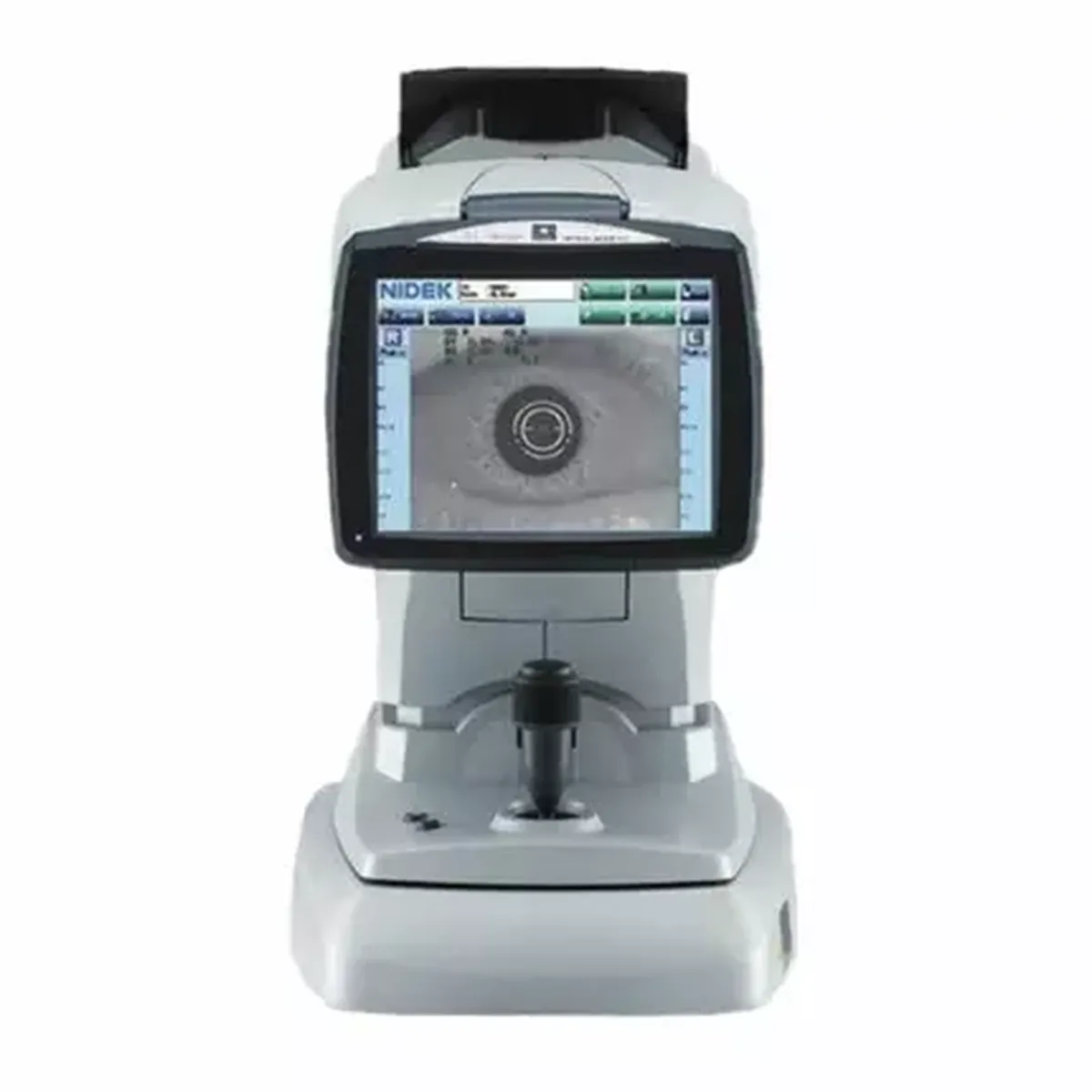
Fast, precise optical measurement for confident cataract planning.
The NIDEK AL-SCAN is a non-contact optical biometer designed for accurate axial length measurement and reliable IOL power calculation. It is widely used for cataract surgery planning and offers fast, automated measurements in a compact design.
The NIDEK AL-SCAN is an advanced optical biometry system that uses Partial Coherence Interferometry (PCI) technology to measure axial length with high precision. Accurate axial length measurement is essential for selecting the correct intraocular lens (IOL) during cataract surgery.
In addition to axial length, the AL-SCAN measures:
The device provides fast automatic alignment and quick data acquisition, improving clinic efficiency. As a non-contact system, it ensures patient comfort and reduces the risk of infection compared to ultrasound-based devices.
The NIDEK AL-SCAN is suitable for small clinics as well as high-volume cataract centers. Its user-friendly interface allows easy operation by trained technicians and ophthalmologists.
Key Features
The NIDEK AL-SCAN is used for:
It helps improve refractive accuracy and post-surgery visual outcomes.
1. What is the NIDEK AL-SCAN used for?
It is used to measure eye parameters and calculate IOL power before cataract surgery.
2. What technology does it use?
It uses Partial Coherence Interferometry (PCI).
3. Is the test painful?
No. It is completely non-contact and painless.
4. What parameters does it measure?
It measures axial length, keratometry, anterior chamber depth, white-to-white distance, and pupil size.
5. Can it measure dense cataracts?
It works in many cases, but very dense cataracts may require ultrasound backup.
6. Does it include IOL formulas?
Yes. It includes built-in IOL power calculation formulas.
7. Is it suitable for small clinics?
Yes. It is compact and easy to install.
8. Who can operate the device?
Trained ophthalmic technicians or ophthalmologists.